About The Author: Travis Baugh is a Digital Brand Marketing Manager for Bryant, where he creates clear, helpful content to guide homeowners through heating, cooling, and indoor air quality decisions. His goal is to empower readers with the knowledge they need to choose the right comfort solutions for their home—confidently and comfortably.
How to Choose the Right Air Conditioner for Your Home
The right air conditioner for your home is one that is correctly sized for your space, balances energy efficiency (SEER2) with your budget, and offers the specific features you need, such as advanced humidity control or smart home integration. Top-rated systems often feature innovative variable-speed compressors to ensure consistent long-term comfort and whisper-quiet operation.
How do I choose the right air conditioner?
Choosing the right AC involves evaluating seven key factors: energy efficiency ratings (SEER2/EER2), environmental impact, the specific type of air conditioner needed cCentral vs. Ductless), noise levels, humidity control capabilities, smart home features, and comprehensive warranty coverage.
At Bryant, our innovative solutions are centered on our customers’ needs. We are committed to providing air conditioners that meet these diverse demands, offering superior efficiency, significant energy savings, and whisper-quiet operation to enhance your everyday home comfort.
4 Steps to Help You Choose an Air Conditioning System
Choosing the right air conditioner involves a careful balance of several important considerations to ensure you are investing in reliable, long-term comfort.
David Fowler, owner of Family Heating and Air in Pensacola, Florida, highlights several key factors to consider when selecting the right air conditioner for your home.
“One of the most important things is it's the correct size for the home,” Fowler said. “Another is how long you are going to live in the home; if it's short-term, you may not invest as much as you would if you were staying in the home long-term. Additionally, think about the overall comfort level expected of the home: do you want the unit to remove humidity
By better understanding these seven foundational factors, you can make an informed decision and confidently choose the air conditioner tailored to your specific needs.
Step 1: Determine The Right AC Type
The three main types of residential air conditioners are central air conditioning for whole-home cooling, ductless mini-splits for room-specific cooling, and packaged units for homes with limited indoor space. The ideal type of air conditioner depends entirely on your home's existing infrastructure and cooling requirements.
Central Air Conditioning
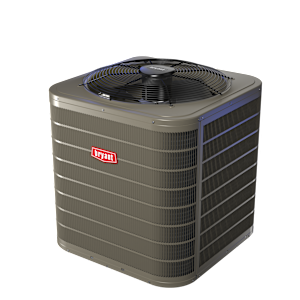
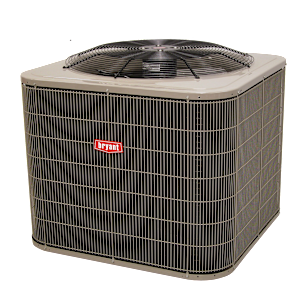
Central air conditioning cools an entire home using an outdoor unit and an indoor unit connected by ductwork. It is the standard for consistent, whole-home comfort. They come in four common sizes: 2 ton, 3 ton, 4 ton, and 5 ton.
Central air conditioning is best suited for homes that already have functional ductwork in place or for homeowners who prefer a concealed, whole-home cooling solution with minimal visible equipment inside the living space.
These systems cool an entire home using an outdoor condenser paired with an indoor air handler, distributing conditioned air through a network of ducts and vents. Central air remains the most common choice for consistent, even comfort throughout the home, and is available in standard capacities ranging from 2 ton to 5 ton, depending on the size and cooling needs of the home.
Ductless Mini-Split
Ductless mini split systems use individual indoor air handlers that are typically mounted on walls or ceilings and connect directly to an outdoor condenser through small refrigerant lines. Because they do not require ductwork, they offer a highly flexible solution for homes where installing ducts is impractical or undesirable.
These systems are best suited for historic homes, new additions, converted spaces, or specific zones such as garages and finished basements. They allow for room-by-room temperature control, improving energy efficiency by only conditioning the spaces that are in use while maintaining consistent comfort where it’s needed most. Explore wall AC and garage AC unit options.
Packaged Units
Packaged units are self-contained units that house all major components—compressor, condenser, and evaporator—within a single outdoor cabinet. These systems deliver cooling directly to a specific space without the need for extensive indoor equipment or complex ductwork.
They are best suited for applications where permanent HVAC installation is limited or impractical, such as rental properties, temporary living situations, or supplemental cooling for additions, garages, or converted spaces. Packaged units offer a compact, space-saving solution that can provide reliable comfort in targeted areas while maintaining relatively simple installation and service requirements.
Step 2: Calculate the Correct Size Unit (Coverage Area & Cooling Capacity)
Choosing the correct system size is critical for both comfort and long-term efficiency, which is why it’s essential to choose the right AC size for your home’s specific needs. Air conditioners are designed to operate within a precise range, and deviating from that range can create performance and durability issues.
An oversized system will cool the home too quickly and shut off before completing a full cooling cycle, a process known as short-cycling. While this may seem efficient on the surface, it actually prevents the system from running long enough to properly remove humidity from the air, often leaving indoor conditions cool but damp and uncomfortable. Short-cycling also places additional stress on components due to frequent starts and stops, which can accelerate wear and increase the likelihood of mechanical failures over time.
On the other hand, an undersized system will struggle to keep up during peak summer conditions. Instead of cycling on and off, it will run continuously in an attempt to reach the thermostat set point. This leads to higher energy consumption, increased utility costs, and an inability to maintain consistent comfort during extreme heat.
By taking the time to choose the right AC size, homeowners can ensure balanced humidity control, stable indoor temperatures, and improved system longevity.
Step 3: Decide on a Budget
Understanding your total investment is a key part of selecting the right cooling system, as overall pricing can vary widely based on equipment selection and AC installation requirements. When planning a budget, it helps to break costs into a few primary categories: equipment efficiency tier (such as SEER2 rating), installation complexity, and any necessary ductwork modifications or upgrades.
Higher-efficiency systems with improved SEER2 ratings typically come with a higher upfront cost, but they can significantly reduce monthly energy consumption over time. Similarly, homes that require duct repairs, resizing, or new duct installation will experience higher total project costs compared to straightforward AC replacement.
For a typical central split system installation, total investment generally ranges from $4,000 to over $21,000 fully installed1, depending on system size, efficiency level, and installation conditions. While higher-efficiency equipment may increase upfront pricing, it often helps offset long-term operating costs through lower utility bills, making it a valuable long-term investment for many homeowners.
Step 4: Evaluate Extra Features You May Want
When evaluating a new cooling system, it’s important to look beyond basic performance and consider the advanced features that directly impact efficiency, comfort, and long-term value. Key system capabilities like energy efficiency ratings, smart controls, humidity management, and noise reduction all play a major role in overall homeowner satisfaction.Energy Efficiency (EER, SEER2)
You can determine an air conditioner's energy efficiency by checking its SEER2 (Seasonal Energy Efficiency Ratio) and EER2 (Energy Efficiency Ratio) ratings. A higher SEER2 rating indicates better efficiency over a typical cooling season, while a higher EER2 shows robust efficiency during peak heat conditions (95°F). (Seasonal Energy Efficiency Ratio) and
"EER2 is measured under peak load instead of a seasonal load," Fowler said. "That way, homeowners know when it's really hot outside that their unit is going to maintain the efficiency that it was designed to maintain."
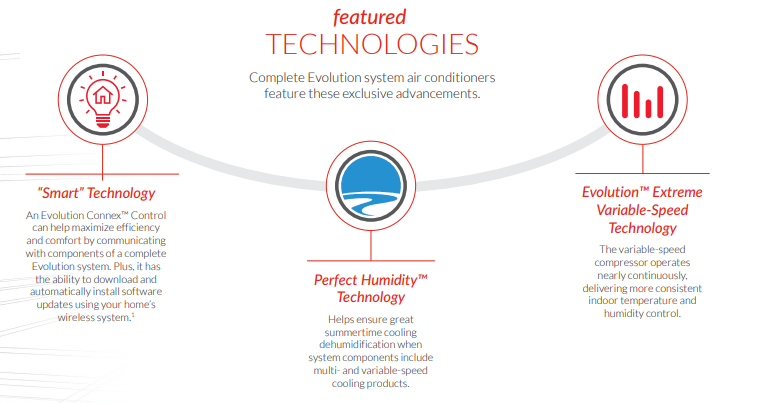
Our commitment to energy efficiency extends well beyond standard SEER2 and EER2 ratings. Our Evolution Series air conditioners incorporate advanced variable-speed compressors, which intelligently adjust cooling output based on your home's specific, real-time needs. This cutting-edge technology not only pays for itself through improved energy efficiency, but it also elevates your comfort by maintaining a perfectly consistent indoor temperature. Learn more about energy-efficient air conditioners.
Smart Home Connectivity
When evaluating smart systems, look for seamless Wi-Fi connectivity, remote scheduling via smartphone apps, and integration with voice assistants like Alexa. These innovative features optimize your energy usage and ensure your home is perfectly comfortable before you even walk through the door.
With the Bryant SmartHome App, you can easily control your Bryant Evolution System from anywhere. Whether at work or on vacation, you can adjust the temperature, fan speed, and mode settings. Many Bryant air conditioners also integrate cleanly with popular smart home platforms, offering effortless voice command capabilities that put you fully in control.
Humidity Control
Effective humidity control is a crucial feature for maintaining optimal indoor comfort and improving the air you breathe. Bryant Evolution™ Series air conditioners offer extreme humidity control and can uniquely remove up to 400% more moisture than standard air conditioning systems.2 By maintaining optimal humidity levels, Bryant Evolution™ units create a significantly more comfortable living environment, which is especially important for homeowners living in regions with high seasonal moisture levels.
Noise Reduction
All Evolution™ Series air conditioners operate as quiet as a whisper, often achieving sound levels as low as 51 decibels (comparable to a quiet conversation). When shopping, look for units built with sound blankets and variable-speed technology to ensure the quietest performance possible.
They feature an AeroQuiet™ System II design to ensure whisper-quiet operation. Evolution Series split AC units have a soft start and smooth ramp-up, allowing you to relax undisturbed.
“Noise level can be a concern depending on where the outdoor air conditioner is located," Mike Lea, co-owner of Lea Heating & Air Conditioning in East Dundee, IL said. "A lot of customers have air conditioners that sit outside their bedroom windows, so they’re looking for lower noise levels."
Warranty & Customer Service Protection
A reliable air conditioner should come with a strong, comprehensive warranty to protect your long-term investment and ensure peace of mind. All Bryant air conditioners come with a 10-year AC parts limited warranty upon timely registration.
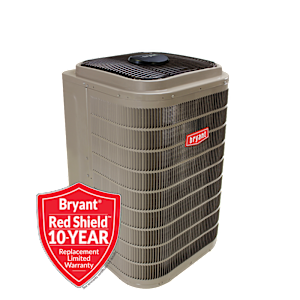
Additionally, Bryant EvolutionTM series air conditioners come with a Red ShieldTM 10-year unit replacement warranty if registered within 90 days of AC installation.2 Should a major component like the compressor, evaporator coil or heat exchanger fail due to defect during this applicable time-period, a one-time AC replacement with a comparable Bryant unit will be provided.
Environmentally Friendly Refrigerant
Bryant air conditioners utilize environmentally-friendly Puron Advance™ refrigerant. Puron Advance ™ is a non-ozone depleting AC refrigerant with a low global warming potential, contributing to a greener environment. Choosing a Bryant air conditioner allows you to enjoy advanced energy-saving technologies while minimizing your environmental footprint.
Why Choose Bryant
Bryant has built a long-standing reputation for producing durable, reliable HVAC systems designed to deliver consistent comfort over many years of operation. The brand focuses on engineering quality and performance, with a strong emphasis on rigorous testing standards and strict component validation to help ensure systems perform reliably in real-world conditions.
Each system is designed and evaluated through extensive testing protocols that simulate long-term use, helping identify potential issues before equipment reaches the field. This commitment to quality control is intended to support long service life, dependable operation, and reduced likelihood of unexpected breakdowns.
Bryant’s deep roots across the United States and Canada supports a well-established domestic design, engineering, and distribution network, helping ensure that replacement parts and service support are widely available through authorized dealers and regional HVAC professionals.
For homeowners, this combination of durability, engineering oversight, and accessible service infrastructure makes Bryant a trusted choice for long-term home comfort. Learn more about the history of Bryant.
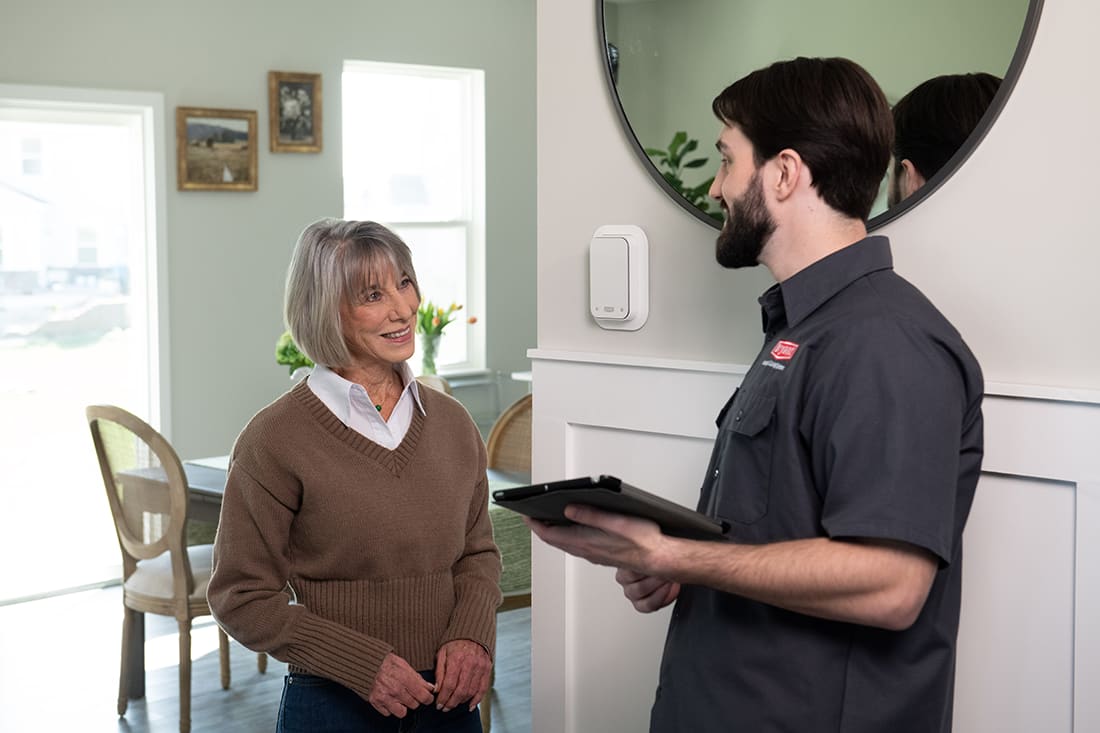
Work With A Bryant Dealer To Find The Right Air Conditioner For Your Home
Bryant air conditioners are renowned for their superior performance, durable reliability, and forward-thinking design. With advanced cooling technology and energy-efficient features, Bryant air conditioners provide optimal comfort while actively helping you save on monthly cooling costs.
Connect with your local Bryant dealer to determine the right air conditioner for your home.
FAQs
A good SEER2 rating typically starts at 13.4 in the North and 14.3 in the South, but high-efficiency models can reach ratings over 20. Higher ratings generally mean lower energy bills and better long-term savings.
Yes, variable-speed AC units are worth it for homeowners seeking better humidity control, quieter operation, and higher energy efficiency. They run longer at lower speeds to maintain a consistent temperature rather than cycling on and off frequently.
With proper maintenance, a modern central air conditioner typically lasts 15 to 20 years. Bryant supports this longevity with strong warranty options, including 10-year parts limited warranties upon timely registration.
Yes, investing in advanced HVAC technology can be worth it as high energy efficiency can help pay for itself over time. While the initial upfront cost may be higher, the opportunity for a reduction in monthly cooling bills and improved long-term comfort can make it a highly worthwhile investment.
The “20-degree rule” is a simple guideline used to gauge whether a central air conditioning system is operating properly. It states that a correctly functioning system should produce a temperature drop of about 20°F between the air entering the return vents and the air coming out of the supply vents.
For example, if the air returning to the system is 78°F, the air coming out of the supply registers should typically be around 58°F. While this is not a precise performance diagnostic, it is a useful quick check to help identify potential issues with airflow, refrigerant levels, or system efficiency.
The $5,000 rule is a simple decision-making guideline used to compare repair costs versus replacement value. It works by multiplying the age of your current AC system (in years) by the estimated repair cost.
If the result exceeds $5,000, it is generally more cost-effective to replace the system rather than repair it.
For example, a 10-year-old system with a $600 repair estimate would equal $6,000 (10 × 600), suggesting replacement is likely the smarter long-term investment—especially when factoring in improved efficiency and reduced future repair risk with a new system.
Yes. Homes that receive heavy direct sunlight—especially strong afternoon sun—experience a higher continuous heat load that must be accounted for in system sizing.
In these cases, homeowners should increase their calculated baseline cooling capacity by 10% for any room or area exposed to prolonged, unshaded direct sunlight. This adjustment helps the system maintain consistent indoor temperatures without overworking, ensuring better comfort and efficiency during peak heat conditions.
Learn More About Air Conditioners
- Learn about how does air conditioning work
- Get in the know on air conditioning service
- Understand what size air conditioner you need
- Find out how long do AC units last?
- Discover the difference in a heat pump vs air conditioner
- Find out what temperature to set air conditioner in summer
1 Based on Bryant testing under simulated “worst case” conditions, as compared to a single-stage 13.0 SEER unit.
2Unit replacement limited warranty is not available to subsequent owners. The limited warranty period is five years if not registered within 90 days except in jurisdictions where warranty benefits cannot be conditioned on registration will automatically receive a 10-year unit replacement limited warranty. See limited warranty certificate at Bryant.com for complete details and restrictions.


