About The Author: Travis Baugh is a Digital Brand Marketing Manager for Bryant, where he creates clear, helpful content to guide homeowners through heating, cooling, and indoor air quality decisions. His goal is to empower readers with the knowledge they need to choose the right comfort solutions for their home—confidently and comfortably.
Split AC Unit Guide
A split system air conditioner is a residential cooling system that separates its components into an indoor air handler and an outdoor condenser unit that houses the compressor and condenser coil. Connected by refrigerant lines, this design delivers efficient, quiet, and even cooling throughout your home. A Bryant split AC system pairs these indoor and outdoor components to circulate conditioned air through your home's ductwork.
Split AC Unit at a Glance
| Feature | Bryant Split AC System |
| Definition | A Bryant split AC system uses an indoor air handler or furnace-mounted evaporator coil and an outdoor condenser connected by refrigerant lines to provide whole-home cooling through ductwork. |
| Cooling capacity | Typically selected based on the home's cooling load rather than square footage alone; Bryant split AC systems are available in multiple capacities. |
| Efficiency | Bryant air conditioners range up to 21 SEER2, depending on model and system combination. |
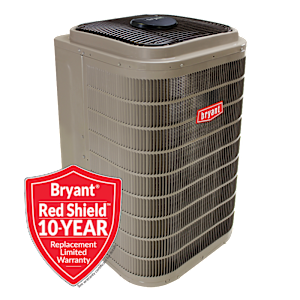
| Sound | The Bryant Evolution™ 191VAN operates as low as 55 dB in low-stage cooling. |
| Expected lifespan | A well-maintained split AC system can typically last 12–15 years, depending on usage, maintenance, and climate. |
| Installation | Professional installation is recommended to properly size, match, install, and commission the system. |
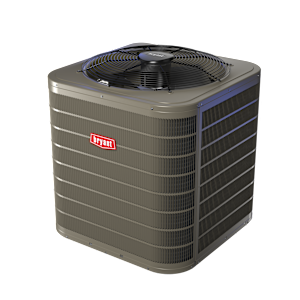
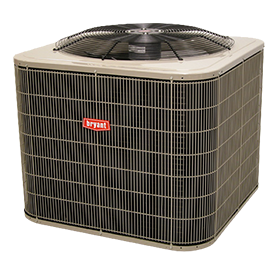
Bryant's current air conditioner lineup includes Evolution™, Preferred™, and Legacy™ systems, with available efficiencies up to 21 SEER2, 18 SEER2, and 16.5 SEER2, respectively.
For homeowners seeking long-term comfort and efficiency, Bryant's advanced HVAC systems offer a range of efficiency, comfort, humidity-management, and sound-performance features depending on the model. By relocating noisy components outside, a split system air conditioner provides a quieter indoor environment while integrating seamlessly with smart home controls. For example, the Bryant Evolution™ 191VAN offers up to 21 SEER2 efficiency and sound levels as low as 55 dB in low-stage cooling. This guide covers how split systems work, their key components, benefits, and expert tips on choosing the right unit for your home.
How Does a Split System Air Conditioner Work?
A split system air conditioner works by using refrigerant to absorb heat from inside your home and release it outdoors. In a Bryant split AC system, this heat-transfer process occurs between the indoor evaporator coil and outdoor condenser coil, with the compressor helping circulate and pressurize the refrigerant. This continuous thermodynamic cycle ensures a steady flow of cool, comfortable air.
David Fowler, owner of Family Heating and Air in Pensacola, Florida, breaks down how a split system works in simple terms.
“You have one unit inside and one unit outside,” Fowler said. “The two are connected and heat is transferred from either inside to outside or outside to inside.”
Here is the step-by-step cooling process for an air conditioner:
- Heat Absorption: The indoor unit pulls warm air from your rooms and passes it over an evaporator coil filled with AC refrigerant. The refrigerant absorbs heat from the indoor air, which is then circulated back into your home.
- Heat Transfer: The heated refrigerant travels through lines to the outdoor unit.
- Heat Release: The outdoor compressor pressurizes the refrigerant, increasing its temperature. It then flows through the condenser coil, releasing the trapped heat into the outside air and returning the refrigerant to a liquid state.
- Repeat Cycle: The cooled liquid refrigerant returns indoors to repeat the process, maintaining a steady, comfortable temperature.
Learn more in our guide on how an AC works.
What Are the Key Components of a Split AC System?
A split AC system consists of several key components, including the outdoor condenser, the compressor, the indoor evaporator coil, the air handler, and the refrigerant. Together, these parts facilitate the transfer of heat to keep your home comfortable. Bryant split AC systems use these components in different configurations depending on the model and indoor equipment pairing.
- Condenser (outdoor unit): Releases absorbed heat outdoors. It houses the compressor and condenser coil.
- Compressor: The heart of the system. It pressurizes the refrigerant and helps move it through the system to facilitate heat transfer.
- Evaporator coil: Located inside (often in an air handler or furnace), it absorbs heat from indoor air.
- Refrigerant : The chemical fluid that circulates between units, carrying heat out of your home.
- Air handler: Circulates the conditioned air through your ductwork and into your living spaces.
5 Major Benefits of Split System Air Conditioners
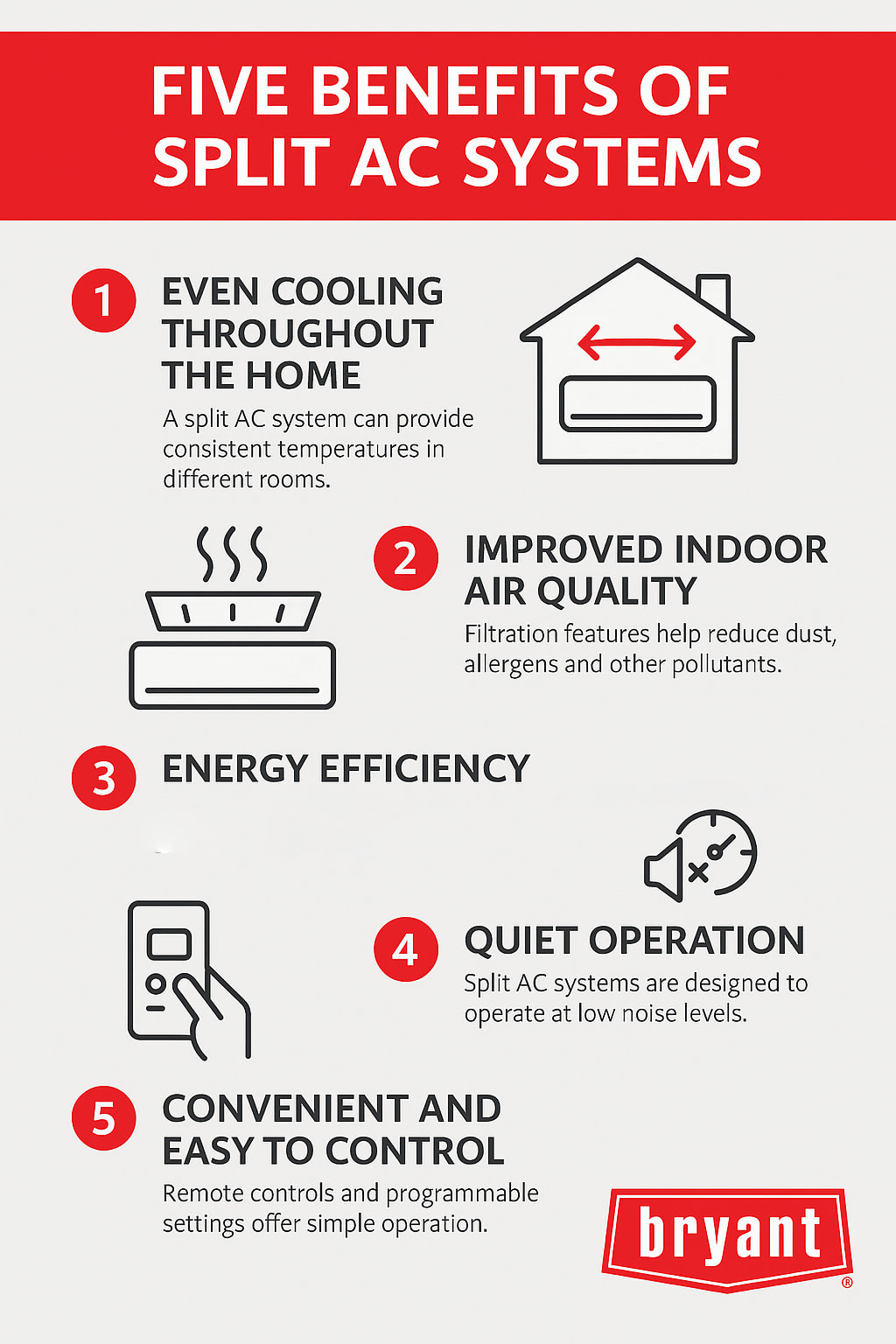
Bryant split AC systems offer benefits that can include whole-home cooling, energy efficiency, humidity management, quiet operation, and smart control, depending on the model and system configuration.
1.Consistent, Even Cooling Throughout Your Home
Unlike window units that only cool a single room, split air conditioning systems can distribute conditioned air throughout a home through existing ductwork, helping provide consistent whole-home comfort.
2. Enhanced Indoor Air Quality
Many split systems feature air filtration through the indoor HVAC system. Regular air filter replacement helps maintain proper airflow and support the performance of your HVAC system.
3. Superior Energy Efficiency
Bryant split AC systems are available across a range of SEER2 ratings. Bryant's Evolution™ System air conditioners offer models up to 21 SEER2, while Preferred™ Series models reach up to 18 SEER2 and Legacy™ Line models reach up to 16.5 SEER2. High SEER2 (Seasonal Energy Efficiency Ratio) and EER2 (Energy Efficiency Ratio) ratings indicate greater seasonal cooling efficiency, although actual energy use depends on the equipment, system installation, operating conditions, and home.
4. Quiet Operation
Because the compressor and condenser are located outside, split systems can reduce mechanical noise inside the home compared with systems that place cooling equipment indoors. Bryant's Evolution™ 191VAN, for example, has a sound rating as low as 55 dB during low-stage operation.
5. Smart Control & Convenience
Control your entire home's climate from a single thermostat. Select Bryant systems can be paired with the Evolution™ Connex™ System Control or compatible smart thermostats, providing features such as remote control, system diagnostics, and temperature management.
How to Compare Split AC System Tiers
Bryant offers three product tiers—Evolution™, Preferred™, and Legacy™—each suited to different efficiency needs and budgets. The right choice depends on your priorities around energy management, humidity control, sound performance, and durability.
| Category | BEST – Evolution™ System | BETTER – Preferred™ Series | GOOD – Legacy™ Line |
| Energy Management | Variable-speed operation. Bryant Evolution models offer up to 21 SEER2. | Two-stage or single-stage operation, depending on model; available models reach up to 18 SEER2. | Single-stage operation on applicable models; available models reach up to 16.5 SEER2. |
| Durability | DuraGuard™ Plus cabinet protection on applicable models. | DuraGuard™ Plus Protection features galvanized steel cabinets, baked-on powder paint and louvered coil guard. | DuraGuard Protection features galvanized steel cabinets, baked-on powder paint. |
| Humidity Management | Perfect Humidity Technology™. This feature leverages multi-stage systems to maximize humidity removal without over-cooling. | Enhanced Humidity Management provides enhanced humidity removal during cooling operation. | Basic humidity management provides basic humidity removal during cooling operation. |
Decision guide: The Evolution™ System is best suited for homeowners who prioritize maximum efficiency and advanced humidity control. The Preferred™ Series works well for those seeking a balance of performance and cost. The Legacy™ Line is a dependable, budget-friendly option for straightforward cooling needs.
How to Choose the Right Split System Air Conditioner
Choosing the right split AC unit requires evaluating your home's square footage, desired cooling capacity (BTUs), targeted energy efficiency ratings, and preferred noise levels.
- Home Size & Layout: Larger homes may require greater cooling capacity, but equipment should be sized based on the home's cooling load rather than square footage alone. Insulation quality and ceiling height also play a role. Your local Bryant dealer can help you find the righ air conditioner size for your home.
- Cooling Capacity (BTUs): An undersized unit won't cool effectively, while an oversized one will cycle on and off too frequently. Your local dealer can calculate the exact size you need. “It’s important to think about the efficiency of the unit,” Fowler said. “That can go a long way in impacting your energy bill.” Learn more popular AC sizes: 2 ton, 3 ton, 4 ton, and 5 ton.
- Energy Efficiency Ratings: Compare SEER2 ratings when evaluating compatible Bryant systems. Bryant's current central air conditioner lineup ranges up to 21 SEER2, depending on model and system combination.
- Noise Levels: If outdoor noise is a concern, check the decibel (dB) rating of the central air conditioner. For example, the Bryant Evolution™ 191VAN is rated as low as 55 dB in low-stage cooling, while sound ratings vary across models.
Split System Air Conditioner Installation and Maintenance
Proper installation and routine maintenance are essential to maximizing the typical 12–15 year lifespan of a well-maintained split AC system. The indoor unit is typically placed in a basement, attic, or closet, while the outdoor unit sits in a ventilated area.
Professional AC installation ensures the system is properly sized, refrigerant lines and electrical connections are correctly installed, and the equipment is tested for proper operation.
To keep your split AC unit running efficiently:
- Replace air filters regularly.
- Clear debris (leaves, dirt) from the outdoor unit.
- Schedule annual AC maintenance with a professional technician.
“It’s kind of like a car,” Samantha Houchin, owner of The Weather Changers in Denver, Colorado, said. “You have to get oil changes to help the engine run. It's the same thing with heating and cooling. doing routine maintenance, make sure that the system runs the way that it's supposed to.”

Split AC vs. Mini-Split: What's the Difference?
Although the terms are often used interchangeably, a mini-split is actually a type of split air conditioning system. Both systems have an outdoor condenser and an indoor unit connected by refrigerant lines, but the biggest difference is whether they use ductwork.
Traditional Split AC Systems
A traditional split air conditioner uses an outdoor condenser and an indoor evaporator coil connected to a furnace or air handler. Conditioned air is distributed throughout the home using ductwork, making this system a common choice for homes with existing ducts that need consistent whole-home comfort.
Ductless Mini Split Systems
A ductless mini split also has indoor and outdoor components but delivers cooled air directly into individual rooms without ductwork. Many homeowners choose mini-splits for additions, converted garages, finished basements, sunrooms, or older homes where installing ducts would be difficult or expensive.
Which System Is Right for You?
A traditional split AC is often a practical choice if your home already has ductwork and you want whole-home cooling. A ductless mini-split may be more suitable if you're cooling a single room, adding climate control to a new space, or want room-by-room temperature control.
Connect With A Bryant Dealer on Split Air Conditioners
At Bryant, we offer a wide range of types of air conditioners that provide different combinations of energy efficiency, quiet operation, humidity management, and comfort features. Our split AC solutions are designed to meet the unique needs of homeowners. Contact your local Bryant dealer today to discover the best air conditioner for your home or to schedule an AC replacement appointment.
Compare Bryant Split System Air Conditioners
A Bryant air conditioner offers reliable performance, energy efficiency, and advanced cooling technology to keep your home comfortable year-round. With high SEER2 ratings, Bryant units provide cost-effective operation, reducing energy bills while delivering powerful cooling. Their durable construction ensures long-lasting performance, and quiet operation enhances home comfort. Plus, Bryant’s smart thermostat compatibility and industry-leading warranties make it a trusted choice for homeowners seeking efficient, dependable cooling solutions.
FAQs
Split systems use high-efficiency compressors and require professional installation with refrigerant piping and wiring, which adds to the overall cost.
Common issues include refrigerant leaks, dirty filters, or faulty sensors that affect cooling performance. Regular AC maintenance helps prevent these problems.
A well-maintained split AC system can typically last 12–15 years on average, depending on usage, maintenance, and local climate.
Split systems have higher installation costs and energy bills than window or portable air conditioners.
A split AC unit has two main components: an indoor air handler and an outdoor condenser connected by refrigerant lines. This design offers quiet operation and efficient cooling for homes.
A split AC has separate indoor and outdoor components, whereas a packaged unit houses all components (compressor, condenser, and evaporator) in a single outdoor cabinet. Split systems are generally more efficient and quieter for residential use.
Yes, split AC units can be highly efficient, especially variable-speed units with high SEER2 ratings. Their design minimizes energy loss associated with ductwork (if well-maintained) and allows for zoning, which can further reduce energy consumption.
The average price for an installed residential central air conditioner in 2026 typically ranges from $5,000 to $28,0001. Learn more on our AC price page.
No, installation requires handling refrigerant, electrical wiring, and specialized tools. It should always be performed by a licensed HVAC professional to ensure safety, efficiency, and warranty compliance.
Yes, many modern split AC systems feature advanced filtration that helps capture dust, pollutants, and allergens, helping you breathe cleaner air indoors.
Learn More About Air Conditioners
- Get in the know on air conditioning service
- Find out what is an inverter air conditioner
- Find out how long do AC units last?
- Learn how to clean air conditioners
- Discover the difference in a heat pump vs air conditioner


