About The Author: Travis Baugh is a Digital Brand Marketing Manager for Bryant, where he creates clear, helpful content to guide homeowners through heating, cooling, and indoor air quality decisions. His goal is to empower readers with the knowledge they need to choose the right comfort solutions for their home—confidently and comfortably.
What Is a 2-Ton AC Unit and Is It Right for Your Home?
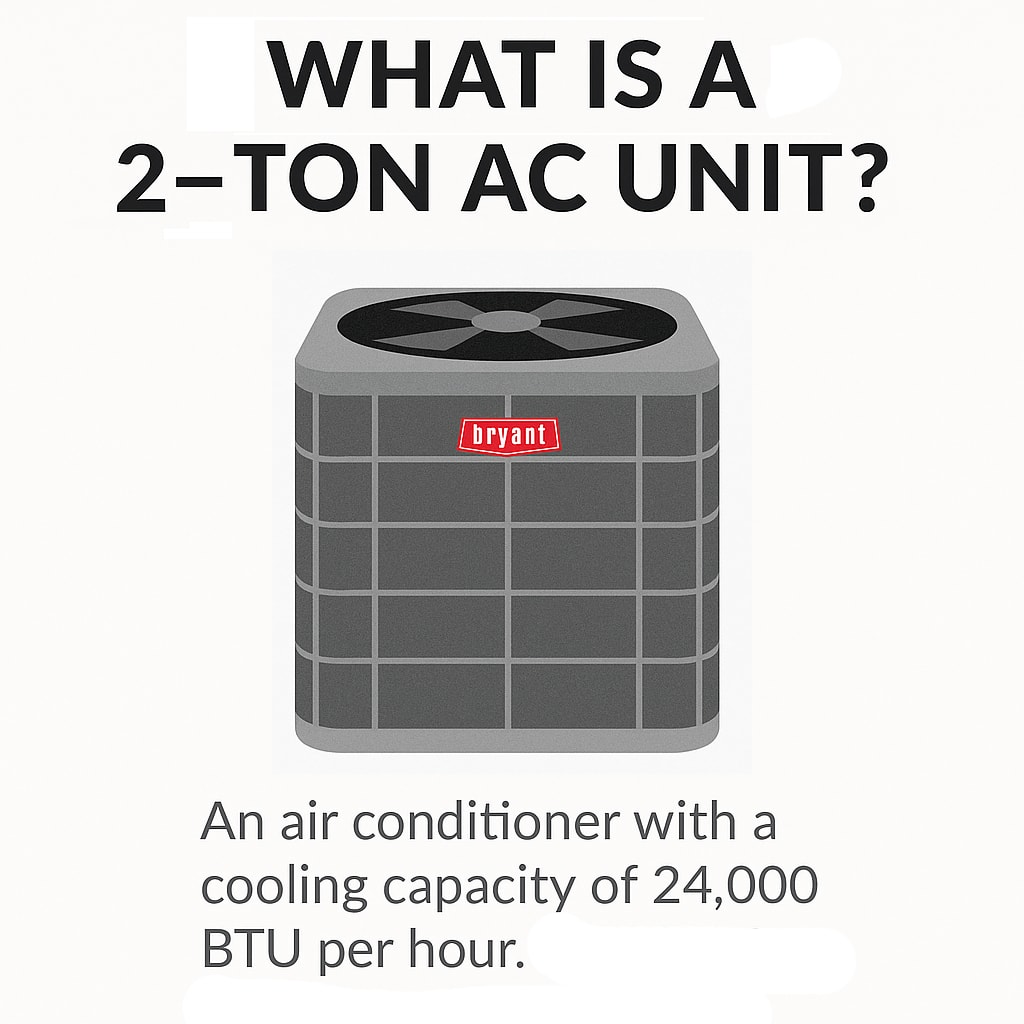
A 2-ton AC unit is an air conditioner provides 24,000 BTUs of cooling capacity per hour and can typically serve about 1,000 to 1,500 square feet, depending on factors such as insulation, ceiling height, sun exposure, and climate.
Choosing the precise size for your air conditioner is the foundational step for optimizing your home's long-term comfort and energy efficiency. A 2-ton system may be appropriate for a smaller home, condo, or specific zone within a larger home, but square footage alone should not determine AC size. A professional load calculation can help determine whether a 2-ton system is appropriate for your home.
How Does a 2-Ton AC Unit Work?
A 2-ton air conditioner provides 24,000 British Thermal Units (BTUs) of cooling capacity hour. In HVAC terminology, a "ton" measures cooling capacity, not the physical weight of the equipment, with one ton equaling 12,000 BTUs.
Selecting the correct air conditioner size is critical for sustainable comfort and efficient energy usage:
- Too Small: The unit may run for extended periods and struggle to maintain the desired indoor temperature during peak cooling conditions.
- Too Large: The unit may short-cycle, turning on and off more frequently than intended and potentially reducing humidity control.
Bryant recommends using a professional Manual J load calculation rather than relying on square footage alone. A load calculation accounts for factors such as insulation, windows, ceiling height, climate, solar exposure, and other characteristics of the home.
For precision, have a local Bryant dealer perform a professional load calculation.
What Are the Key Features of a 2-Ton Air Conditioner?
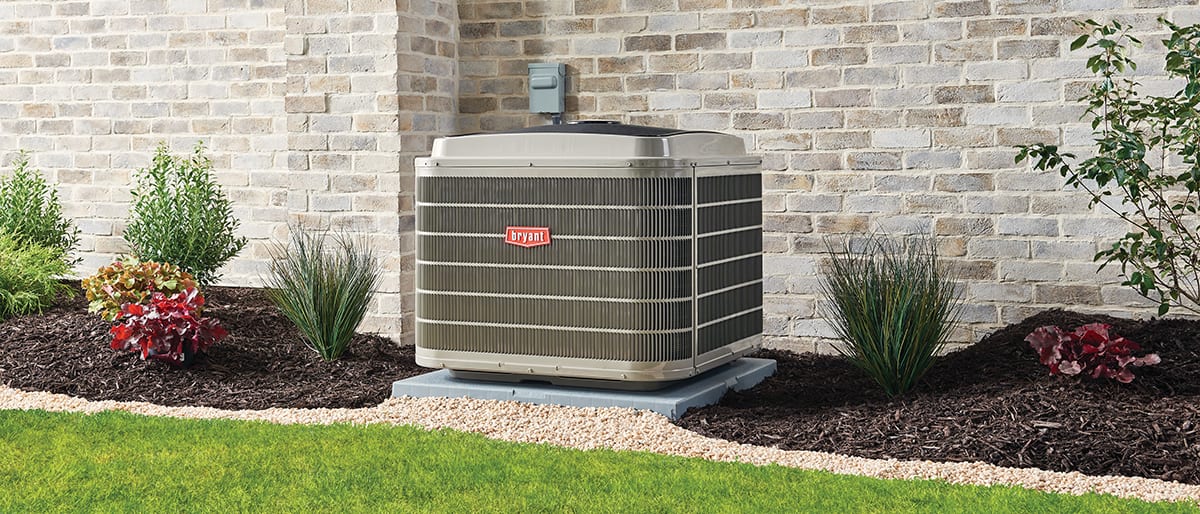
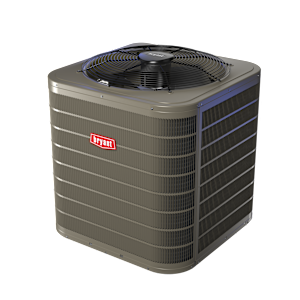
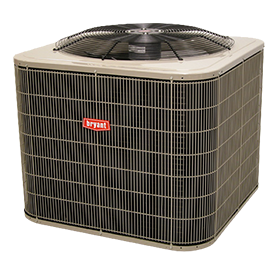
Bryant 2-ton air conditioners are available with different efficiency ratings, compressor technologies, comfort features, sound levels, and controls. When comparing a 2-ton system, focus on features that match your home's cooling requirements and your priorities for efficiency and comfort.
1. Efficiency Ratings (SEER2 and EER2)
Look for high SEER2 (Seasonal Energy Efficiency Ratio 2) and EER2 (Energy Efficiency Ratio 2) ratings. Higher numbers indicate superior energy efficiency, which translates directly to lower monthly energy bills.
- SEER2 measures efficiency across a cooling season.
- EER2 measures efficiency under a specific set of operating conditions.
For example, Bryant’s 191VAN Evolution Extreme Variable Speed Air Conditioner offers up to 21 SEER2 and up to 12 EER2, depending on the matched system. Learn more about energy efficient air conditioners.
2. Compressor Type
The 191VAN Evolution™ Extreme Variable Speed Air Conditioner uses a variable-speed compressor with a capacity range as wide as 25% to 100%. Rather than operating only at full capacity, the compressor can adjust output to better match cooling demand. This can support more consistent temperatures, humidity management, and quieter operation at lower speeds.
3. Humidity Control
Effective humidity control is vital for maintaining indoor comfort and healthier air quality. Bryant's 191VAN offers enhanced dehumidification capability when managed with the Evolution Connex Control, using low-stage operation to help manage indoor humidity.
4. Quiet Operation
Premium 2-ton AC units are engineered to operate quietly. Look for models featuring advanced noise-reduction technology to ensure a peaceful home environment inside and out. The 191VAN central air conditioner features the AeroQuiet System II™ design, which includes a compressor sound blanket and other components for quiet performance. When comparing other 2-ton models, check the published sound rating rather than assuming all systems will operate at the same noise level.
5. Remote Capabilities
Smart thermostats and remote capabilities controls can provide remote access to your home's heating and cooling system.. A system compatible with an application like the Bryant Smart Home App allows you to control and monitor your home's climate directly from your smartphone or tablet, ensuring your environment is perfect whether you're at home or away.
6. Warranty Options
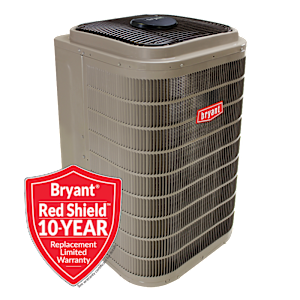
A strong warranty reflects the manufacturer's confidence in its product. Bryant air conditioners include a 10-year AC parts limited warranty when the equipment is registered within the required period, although warranty terms vary by model and jurisdiction. Some Bryant Evolution products also include additional Red Shield unit replacement coverage when registration requirements are met. Always review the warranty certificate for the specific model before purchase.
How Much Does a 2-Ton Air Conditioner Cost?
The average cost of a 2-ton air conditioning unit, including professional AC installation, typically ranges from $3,000 to $15,000, although the actual price varies based on efficiency, equipment features, ductwork, installation requirements, and local labor costs.
2-Ton AC Unit Price by SEER2 Tier
Bryant does not assign a single installed price to each SEER2 tier because equipment, matched-system ratings, installation requirements, and local labor costs vary. As a general buying framework, homeowners can expect higher-efficiency and more advanced systems to have higher equipment and installation costs.
| SEER2 Tier | What to expect |
| Entry-level efficiency | Generally lower upfront equipment cost with basic compressor and control technology. |
| Mid-range efficiency | May add higher efficiency, enhanced comfort features, or staged operation. |
| High efficiency | Often includes advanced compressor technology, higher efficiency ratings, and additional comfort or control features. |
| Variable-speed/high-end systems | May provide variable-capacity operation, enhanced humidity management, quieter operation, and advanced controls, but typically require a higher upfront investment. |
The published SEER2 rating is only one part of the purchase decision. A properly sized and matched system is essential to achieving its expected performance. Learn more about air conditioner cost.
How Many Amps Does a 2-Ton AC Unit Use?
There is no single amp rating for every 2-ton air conditioner. Electrical requirements vary by model and matched system, so homeowners should use the equipment's manufacturer specifications rather than estimate amperage from tonnage alone.
For example, the Bryant 191VAN 2-ton outdoor unit is rated for 208/230-volt, single-phase operation, with a maximum overcurrent protection rating of 20 amps. The required electrical circuit must be sized according to the equipment specifications and applicable electrical codes.
A qualified HVAC professional or electrician should verify the required circuit, wiring, disconnect, and overcurrent protection for the specific installation.
Bryant 2-Ton Sizing Guide: What Changes the Required Size?
Bryant's 1,000- to 1,500-square-foot range is a starting point—not a substitute for a Manual J load calculation. The same 2-ton system may be appropriate for one home but undersized or oversized for another home with the same square footage. Bryant's recommended approach is to have a local Bryant dealer perform a Manual J load calculation to determine the home's actual cooling requirement.
When Is a 2-Ton AC Unit Not Right?
According to Bryant, a 2-ton AC unit should not be selected based on square footage alone. A different size may be appropriate when the home's climate, construction, insulation, windows, ceiling height, or cooling load falls outside the conditions supported by a 2-ton system.
A 2-ton unit may not be the appropriate choice when:
- Your home's cooling load exceeds 24,000 BTUs per hour. A larger system may be required based on a Manual J calculation.
- Your home is in an extreme climate. Hotter regions can have substantially greater cooling demands than moderate climates.
- Your home has high ceilings or extensive glass. Additional air volume or solar heat gain can increase the cooling load.
- Your home has poor insulation or significant air leakage. These conditions can increase the amount of cooling required.
- You are conditioning only part of a larger home. A 2-ton system may make sense for a zone even when it would not be sufficient for the entire home.
- You are replacing a heat pump. A heat pump provides both heating and cooling, so the system must be selected based on both heating and cooling requirements.
How Does a 2-Ton AC Compare With a 2-Ton Heat Pump?
A Bryant 2-ton heat pump also provides 24,000 BTUs of heating or cooling capacity per hour, but it can reverse the direction of heat transfer to provide heating as well as cooling. A conventional air conditioner provides cooling only and is typically paired with a separate heating system. Bryant's 2-ton heat pump guidance places typical coverage at about 1,000 to 1,200 square feet, but climate, insulation, windows, ceiling height, and other factors can change the required size.
Is a 2-Ton AC Unit Right for Your Home?
According to Bryant, a 2-ton AC unit provides 24,000 BTUs per hour and can typically serve about 1,000 to 1,500 square feet, but the correct size depends on the home's actual cooling load.
For example, a well-insulated 1,200-square-foot home in a moderate climate may have very different cooling requirements from a 1,200-square-foot home with high ceilings, extensive windows, poor insulation, or a hotter climate.
The most reliable way to determine whether a 2-ton Bryant air conditioner is right for your home is to have a local Bryant dealer perform a professional Manual J load calculation. This helps match the system's capacity to your home's specific characteristics rather than relying on square footage alone.
A 2-ton air conditioner is an excellent choice for many homeowners, but the right air conditioning system depends on more than just square footage. A trusted Bryant dealer will evaluate your home’s unique layout, insulation profile, and local climate to recommend the perfect, customized solution.
Mark LeGare, owner of The Coolest in Austin, TX, explains that properly sizing an air conditioning system requires evaluating a range of environmental and structural factors.
“It’s about taking all environmental factors into consideration,” LeGare said. “Things like tree coverage, whether the home is one or two stories, the building materials like brick versus wood, and the type of insulation all impact the size of system you need.”
Connect with your local Bryant dealer today to get a professional assessment and AC installation from a contractor you can trust.
Compare Bryant Air Conditioners
A Bryant air conditioner offers reliable performance, energy efficiency, and advanced cooling technology to keep your home comfortable year-round. With high SEER2 ratings, Bryant units provide cost-effective operation, helping reduce energy bills while delivering powerful cooling. Their durable construction ensures long-lasting performance, and quiet operation enhances home comfort. Plus, Bryant’s smart thermostat compatibility and industry-leading warranties make it a trusted choice for homeowners seeking efficient, dependable cooling solutions.
2 Ton AC Unit FAQs
A 2-ton AC unit can typically cool around 1,000 to 1,500 square feet, depending on insulation, ceiling height, and sun exposure. It’s best to have your local Bryant dealer perform a manual load calculation to see what AC size you need.
A 2-ton AC unit usually costs between $3,000 and $15,000, including installation and any necessary ductwork or upgrades.
Yes, a 2-ton AC may be worth buying if it matches your home’s cooling needs, offering efficient cooling without oversizing the system.
A 2-ton air conditioner usually lasts 12 to 15 years, depending on usage and maintenance frequency.
It depends on room size and insulation. A 1.5-ton unit fits smaller homes under 1,000 sq ft, while a 2-ton unit suits spaces closer to 1,200–1,500 sq ft.
Yes, a 2-ton unit provides 24,000 BTUs of cooling capacity per hour. Each "ton" in HVAC represents 12,000 BTUs.
A 1.5-ton unit (18,000 BTUs) is best for smaller spaces under 1,000 sq ft, while a 2-ton unit (24,000 BTUs) handles larger loads up to 1,500 sq ft.
With proper maintenance, a 2-ton air conditioner typically lasts 12 to 15 years.
Most 2-ton air conditioners are not considered loud. Modern central AC systems typically operate around 50–65 decibels, which is roughly the sound level of a normal conversation or a quiet office. While you may hear a gentle hum from the outdoor unit or airflow through vents, the noise usually blends into the background during normal operation.
Learn More About Air Conditioners
- Learn about AC sizes: 3 ton, 4 ton, 5 ton
- Learn how does air conditioning work
- Explore AC installation
- Discover the factors in choosing what size air conditioner you need
1To the original owner, when product is used in an owner-occupied residence, a 10-year parts limited warranty upon timely registration of your new equipment. Warranty period is 5 years if not registered within 90 days. Jurisdictions where warranty benefits cannot be conditioned on registration will automatically receive a 10-year parts limited warranty. See warranty certificate for complete details.


