About The Author: Travis Baugh is a Digital Brand Marketing Manager for Bryant, where he creates clear, helpful content to guide homeowners through heating, cooling, and indoor air quality decisions. His goal is to empower readers with the knowledge they need to choose the right comfort solutions for their home—confidently and comfortably.
What Is a Furnace and How Does It Work?
A furnace is a forced-air heating appliance that warms your home by heating air and distributing it through a system of ducts and vents. Bryant furnaces use technologies such as variable-speed airflow, multi-stage or modulating heating, and secondary heat exchangers on high-efficiency models to help deliver consistent indoor comfort.
Furnaces can be powered by various fuel sources, including natural gas, electricity, oil, or propane. For example, Bryant's gas furnaces range from 80% to up to 98.5% AFUE, while Bryant oil furnaces reach up to 87.5% AFUE, depending on the model. The choice often depends on local availability and a homeowner's preference for cutting-edge efficiency and value. In this 2026 guide, we'll explore what a furnace is, how it operates, the different types you can choose from, and how to select the right furnace for your home's environment.
At A Glance: Bryant Furnace Types
| Furnace type | How it produces heat | Bryant efficiency example | Typical application |
| Gas | Burns natural gas or propane to heat a heat exchanger | Up to 98.5% AFUE on the Bryant 987M | Homes with natural gas or propane availability |
| Electric | Uses electrical resistance elements to generate heat | 100% AFUE | Homes without gas service or where electric heating is preferred |
| Oil | Burns heating oil to produce heat | Up to 87.5% AFUE on the Bryant OVL and OBL | Homes using heating oil, including some areas without natural gas service |
Efficiency varies by model and installation. AFUE measures how efficiently a furnace converts its fuel into usable heat.
How Does A Furnace Work?
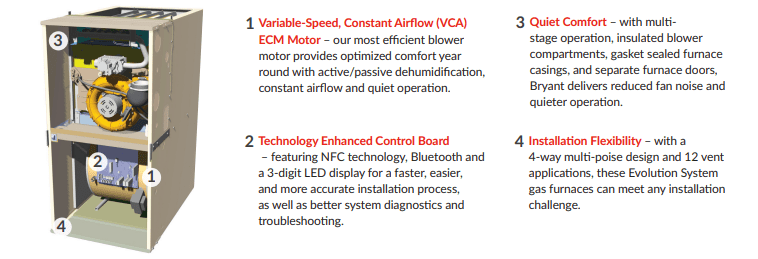
A furnace operates by receiving a call for heat from the thermostat, heating air through a heat exchanger or electric heating elements, and using a blower motor to circulate the warmed air through the home's ductwork. This continuous cycle helps your home maintain a consistent, comfortable temperature.
Bryant's 5-Step Heating Cycle typically follows these steps:
- Signal: The thermostat detects that the indoor temperature has dropped below the set temperature and signals the furnace to activate.
- Ignition/Heating: In a gas or oil furnace, a burner produces heat that warms the heat exchanger. In an electric furnace, electrical heating elements generate heat directly.
- Circulation: The blower motor pushes air across the heated components and into the supply ductwork. Bryant's variable-speed blower technology on select models can adjust airflow to match heating demand.
- Distribution: The warmed air travels through ductwork to vents throughout the home.
- Shutdown: Once the desired temperature is reached, the thermostat ends the call for heat and the furnace completes its heating cycle.
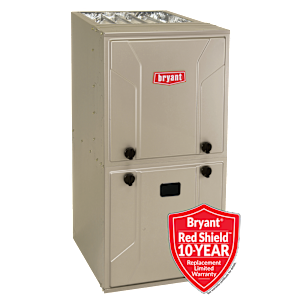
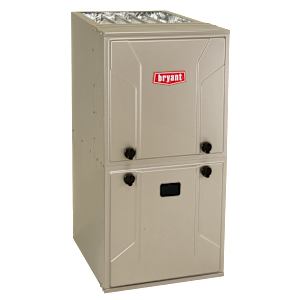
For example, the Bryant Evolution™ 98 987M uses a modulating gas valve, a variable-speed ECM blower motor, and primary and secondary heat exchangers. The 987M is rated up to 98.5% AFUE and has a 60,000–120,000 BTUH capacity range.
Andrew Mackey, owner of Superior Service in Lake St Louis, Missouri, breaks down how a gas furnace works in as simple terms as possible.
“The furnace works by heating metal tubing located in furnace to a hot temperature,” Andrew Mackey said. “Then when that metal gets to a certain temperature, the blower motor that circulates air throughout the home turns on. The air is then blown through the home until the thermostat reaches the desired set temperature. The furnace then will shut down until the thermostat signals a call for heat again.”
This cycle of heating and distributing warm air ensures your home maintains a consistent and comfortable temperature.
What Are the Main Types of Furnaces?
Furnaces are primarily categorized by their fuel source, with the three main types being gas, electric, and oil furnaces. Each type offers distinct advantages depending on your climate, budget, and local energy infrastructure.
Gas Furnaces
Gas furnaces use natural gas or propane to generate heat. Bryant gas furnaces range from 80% AFUE models to the Evolution 98 987M, which reaches up to 98.5% AFUE. Bryant's gas furnace capacities also vary by model; for example, the 987M is available from 60,000 to 120,000 BTUH. Higher-efficiency Bryant models can use technologies such as modulating gas valves, variable-speed blowers, and secondary heat exchangers to adjust heating output and recover additional heat from combustion gases.
Electric Furnaces
An electric furnace uses electrical resistance coils to create heat without combustion. Electric furnaces have a 100% AFUE rating because there is no flue loss. Electric furnaces can be an option for homes without access to natural gas, although operating costs depend on local electricity rates and the home's heating needs. Learn more about gas vs electric furnaces.
Oil Furnaces
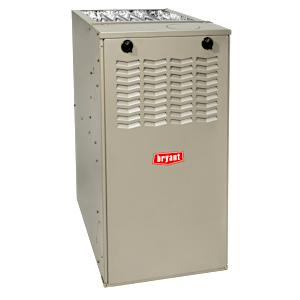
An oil furnace burns heating oil to produce heat. Bryant's oil furnace lineup includes models rated up to 87.5% AFUE, with the Preferred Series OVL Oil Furnace and Legacy Line OBL Oil Furnace models offering capacities from 77,000 to 154,000 BTUH. Oil furnaces can be an option for homeowners who use heating oil, particularly in areas where natural gas infrastructure is not available.
Learn more in our guides on types of furnaces and how to choose the best furnace for your home.
What Are the Benefits of a Modern Furnace?
Modern furnaces deliver significant benefits, including high energy efficiency, consistent airflow, and smart home compatibility on select models. Specific performance varies by model. For example, the Bryant Evolution™ 98 Variable-Speed Modulating Gas Furnace 987M reaches up to 98.5% AFUE, uses a variable-speed blower, and includes a lifetime limited heat exchanger warranty and 10-year parts limited warranty when registered as required by the warranty terms.
- High Efficiency: Modern furnaces are designed to convert fuel into heat with minimal waste. For example, Bryant gas furnaces range from 80% to up to 98.5% AFUE, depending on the model. Advanced features such as variable-speed blowers and modulating gas valves can help adjust system operation to heating demand.
- Reliable and Consistent Heat: Furnaces are engineered to provide steady heat, with Bryant variable-speed and modulating models designed to adjust airflow or heating output as conditions change.
- Even Heat Distribution: By using ductwork, furnaces distribute warm air throughout your home. Proper furnace sizing and ductwork design are important for maintaining consistent temperatures and avoiding excessive cycling.
- Smart Home Integration: Many new models integrate seamlessly with smart thermostats, allowing you to control your climate from a compatible connected device. Select Bryant furnaces can also work with Bryant controls that provide features such as maintenance reminders, dirty-filter detection, and equipment performance information.
Furnace Maintenance Essentials
Regular furnace maintenance requires scheduling annual professional furnace tune-ups, changing air filters regularly, and keeping vents clear. This proactive care is essential to prevent unexpected emergency HVAC repair, extend the life of your furnace, and ensure your system operates at peak efficiency.
“Homeowners need to schedule yearly maintenance to check out the entire HVAC system to prevent breakdowns and ensure that the furnace will last its full life expectancy,” Mackey said.
Troubleshooting Common Furnace Problems
To troubleshoot a furnace, first ensure the thermostat is set to "Heat," verify the breaker is on, and check for a clean air filter. If these simple checks do not resolve the issue, professional furnace service is required.
Before calling for service, try these simple furnace troubleshooting steps recommended by Melissa Frause, owner of Bob’s Heating and Air Conditioning in Woodinville, WA.
- Check Settings: Ensure your thermostat is set to "Heat."
- Check Power: Verify the breaker, shut-off switch, and fan are active.
- Check Airflow: Ensure the furnace filter is clean and vents are open.
"If all of these have been checked, then it’s time to call your local service professional," Frause said.
Other signs that indicate you need professional furnace service include:
- The furnace fails to produce any heat.
- You notice a strong or unusual odor coming from the system.
- The system cycles on and off more frequently than usual.
- Your heating bills have increased unexpectedly.
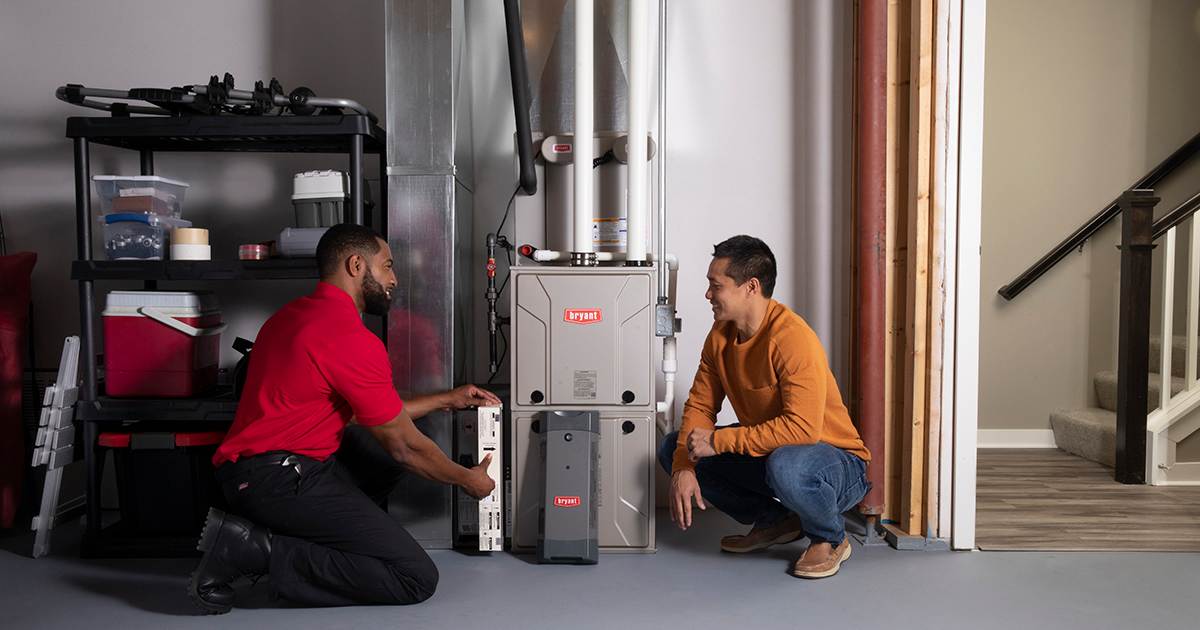
Connect With A Bryant Dealer For a Bryant Furnace
At Bryant, we offer a range of high efficiency furnaces designed to meet your heating needs. Whether you're looking for furnace replacement or furnace repair, Connect with your local Bryant dealer to discover the best furnace for your home. Their knowledgeable team can help determine the appropriate furnace size, fuel type, efficiency rating, and features for your home.
Compare Bryant Furnaces
Choose a Bryant furnace for reliable, efficient heating that keeps your home comfortable throughout the winter. Known for their durability and advanced technology, Bryant furnaces offer quiet operation, precise temperature control, and energy-saving features like variable-speed motors and 2-stage heating. With a range of models to suit different home sizes and needs, Bryant furnaces are built to last and come with industry-leading warranties, providing peace of mind and long-term value for your home heating system.
What Is A Furnace FAQs
A furnace is a heating system that warms your home by generating heat—typically using gas or electricity—and distributing it through ductwork and vents.
No, a furnace provides heat, while an AC provides cooling—though they often share the same air handler, blower, and ductwork in a central HVAC system.
A furnace is a type of heater, but not all heaters are furnaces; furnaces use forced air, while other heaters may use electric elements, radiant heat, or boilers.
Furnaces can be powered by natural gas, propane, or electricity, with gas models being more common in colder climates due to their stronger heat output.
While the furnace doesn't cool your home, its blower motor helps circulate air for both heating and cooling, making it an essential part of your central AC system.
A two-stage furnace has two levels of heating output: a low stage for mild temperatures and a high stage for colder weather. This allows the furnace to operate more efficiently by adjusting its heat output based on the home's needs, providing consistent comfort and improved energy efficiency.
A modulating furnace adjusts its heating output in small increments, based on the home’s temperature needs. Unlike single-stage or two-stage furnaces, it operates at varying levels, providing more precise temperature control, increased efficiency, and consistent comfort by continuously adjusting the heat to the ideal level.
Yes. Even gas furnaces need electricity to power components like the blower motor, igniter, and control board.
Furnaces can run on natural gas, propane, oil, or electricity, depending on the model and local fuel availability.
A furnace is typically a rectangular metal cabinet connected to ductwork, containing burners, a blower, and controls for heating and air distribution.
The right size furnace depends on your home's square footage, insulation levels, and local climate. A licensed HVAC professional should perform a formal load calculation to determine the exact heating capacity required for your space. Learn more about what size furnace you need.
When properly maintained, a modern gas or electric furnace will typically last between 15 and 20 years. Regular annual inspections are crucial to maximizing your system's operational lifespan.
Forced air heating is a system that heats air and distributes it throughout a home using a blower fan and ductwork. The heated air is typically produced by a furnace or heat pump, then pushed through supply ducts into different rooms and returned through return ducts. It’s one of the most common heating methods in residential HVAC systems because it heats spaces quickly and can also be paired with central air conditioning using the same duct system.
Learn More About Furnaces
- Learn how much is a new furnace
- Discover what is a heat pump vs furnace
- Learn the importance of the AFUE furnace rating
- Find out how long does a furnace last
- Discover the differences between a furnace vs boiler
- Explore down flow furnaces


