About The Author: Travis Baugh is a Digital Brand Marketing Manager for Bryant, where he creates clear, helpful content to guide homeowners through heating, cooling, and indoor air quality decisions. His goal is to empower readers with the knowledge they need to choose the right comfort solutions for their home—confidently and comfortably.
Your Complete Guide To Furnace Service
Furnace service is a professional inspection, cleaning, and tune-up designed to keep your heating system running safely and efficiently. Industry experts recommend scheduling furnace service once a year—ideally in the fall—to prevent breakdowns, lower energy bills, and extend your system's lifespan.
Keeping your home warm and comfortable depends on a heating system you can trust. A comprehensive furnace service visit ensures your system operates at peak performance, helping you save on energy costs, improve indoor air quality, and get the most out of your equipment. Whether you're hearing strange noises or simply want to prepare for winter, your local Bryant dealer brings the expertise and "whatever it takes" attitude to get the job done right.
What Are the Signs You Need Furnace Service?
Common signs your furnace needs service include unusual banging or rattling noises, sudden spikes in energy bills, and inconsistent temperatures throughout your home.
Catching these warning signs early can prevent minor issues from becoming major, costly breakdowns. Watch for these specific indicators:
- Unusual Noises or Odors: Banging, squealing, or rattling sounds typically point to loose or damaged components. Bryant systems are engineered for quiet operation, so unexpected noise is a clear red flag. Foul odors may indicate burning dust or, more seriously, a potential gas leak, requiring immediate professional attention.
- Inconsistent Heating: If some rooms feel freezing while others are comfortable, or if your system struggles to reach the set temperature, a faulty thermostat or clogged furnace filters.
- Rising Energy Bills: A sudden spike in heating costs often signals that your furnace is working harder than it should—a reliable indicator of lost efficiency.
If you notice any of these symptoms, contact a professional promptly to schedule furnace repair or routine maintenance before the problem escalates.
Why is Regular Furnace Service Important?
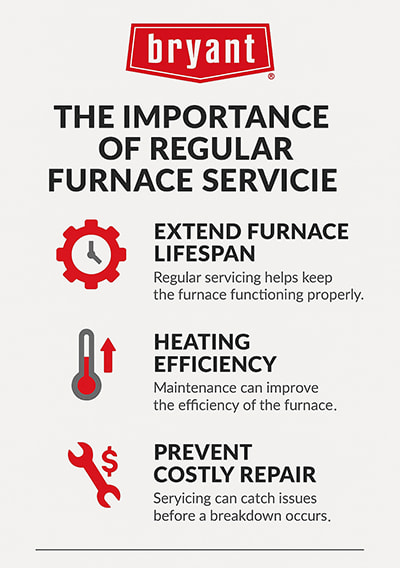
Regular furnace service is the most effective way to protect your heating investment, ensuring consistent comfort, maximized energy efficiency, and strict adherence to safety standards.
Industry experts recommend scheduling professional maintenance at least once a year, typically in the fall before the heavy heating season begins.
“Think of an annual furnace maintenance as an annual doctor’s visit,” Melissa Frause, owner of Bob’s Heating and Air Conditioning in Woodinville, WA, said. “It’s important to check in and make sure everything is functioning properly, or in some cases, detect an issue before it’s made worse without proper attention.”
Routine furnace maintenance delivers three core benefits:
- Extend Equipment Lifespan: Routine furnace tune-ups allow technicians to address wear-and-tear early, helping your system last longer and maximizing your investment.
- Maximize Energy Efficiency: A clean system is an efficient system. Professional furnace cleaning removes dust and debris that force the unit to work overtime, directly reducing your monthly heating bills.
- Prevent Costly Repairs: A thorough furnace inspection helps technicians identify worn parts before they fail. Preventive maintenance is significantly more affordable than emergency furnace repair or a premature furnace replacement in the dead of winter.
 “Routine maintenance services better protect the longevity of your HVAC equipment, and they also uphold your manufacturer’s warranty, which is an added bonus down the road if any parts need replaced,” Frause said.
What Does a Furnace Service Include?
A standard furnace service is designed to keep your heating system operating safely, efficiently, and reliably throughout the heating season. While the exact checklist may vary by equipment type and manufacturer, a typical maintenance visit includes the following steps:
- Inspect the overall furnace condition. The technician begins with a visual inspection of the furnace, venting system, and surrounding area to identify signs of wear, damage, corrosion, or potential safety concerns.
- Clean burners and internal components. Burners, the blower compartment, and other accessible components are cleaned to remove dust, dirt, and debris that can reduce efficiency or affect performance.
- Inspect the heat exchanger. The heat exchanger is checked for cracks, corrosion, or other damage that could impact safe operation or allow combustion gases to escape.
- Check the ignition system and safety controls. The technician tests the ignitor, flame sensor, limit switches, and other safety devices to verify the furnace starts and shuts down properly.
- Inspect electrical connections and moving parts. Electrical wiring and terminals are tightened if necessary, while motors, belts (if applicable), and bearings are inspected for wear. Lubrication is performed on components that require it.
- Replace or inspect the air filter. A dirty air filter can restrict airflow and reduce efficiency. The technician will replace the filter if one is provided or recommend replacement if needed.
- Measure airflow and system performance. Airflow, temperature rise, and blower operation are evaluated to ensure the furnace is heating your home efficiently and distributing warm air properly.
- Test the thermostat and heating cycle. The thermostat is checked for proper operation, and the technician verifies the furnace completes a full heating cycle as intended.
- Inspect the venting and flue system. Exhaust piping and ventilation are examined for blockages, leaks, or improper venting to help ensure combustion gases are safely expelled from the home.
- Review findings and maintenance recommendations. After testing is complete, the technician explains the furnace's condition, discusses any recommended repairs, and answers questions to help you keep your system operating at its best.
Each maintenance visit is intended to improve reliability, maintain energy efficiency, and identify minor issues before they become costly repairs or unexpected breakdowns.
How Much Does Furnace Service Cost?
The cost of a standard furnace service or tune-up typically ranges between $80 and $250, depending on your location and the specific services required.
While upfront costs are a consideration, prioritizing long-term value over the lowest price ensures you receive a thorough inspection that protects your home for years ahead. Several variables can influence the final price:
- Type of Service: Routine maintenance is generally more affordable than complex repairs or emergency call-outs.
- System Age and Condition: Older units may require more labor or specific furnace parts that impact the total cost.
- Location: Labor rates vary by region and local market conditions.
- Additional Requirements: Specialized tasks—such as duct cleaning or extensive electrical upgrades—will add to the overall investment.
Why Choose Bryant for Furnace Service?
Homeowners choose Bryant because Bryant Factory Authorized Dealers are NATE-certified experts who adhere to strict standards of service, reliability, and technical excellence.
Since 1904, Bryant has built a reputation for quality and dependability. Bryant dealers don't just fix heating systems—they optimize them for long-term performance.
Factory Authorized Dealers
Bryant Factory Authorized Dealers meet rigorous benchmarks for service quality, technical expertise, and customer satisfaction. They don't just know HVAC—they know Bryant systems inside and out. All Bryant Factory Authorized Dealers are also NATE-certified (North American Technician Excellence), meaning they've passed the industry's most demanding qualification tests. Learn more about the value of HVAC certification.
“When a dealer is NATE certified, it shows they’ve taken an extra step,” Samantha Houchin, owner of The Weather Changers in Denver, Colorado, said. “They aren’t just an average contractor. They’ve had to study for multiple tests, pay for them, and keep up with continuing education. That investment shows they’re committed to the trade and understand what’s expected in the world of HVAC.”
A Legacy of Credibility
Founded in 1904 by Charles Bryant, Bryant Heating & Cooling has spent over a century earning the trust of homeowners across the country. Bryant's commitment goes beyond innovative product development—it extends to exceptional in-home service, personalized comfort solutions, and a "whatever it takes" standard that has defined the brand for generations. Learn more about the history of Bryant.
Furnace Service vs. Furnace Repair vs. Furnace Replacement
While these services all involve your heating system, they serve different purposes. Understanding the difference can help you determine the right solution for your home's needs.
| Service | Best For | Typical Situation | ||||
| Furnace Service |
|
Your furnace is working normally, but you want to improve efficiency, maintain manufacturer-recommended maintenance, and help prevent unexpected breakdowns. | ||||
| Furnace Repair |
|
|
||||
| Furnace Replacement |
|
|
As a general rule, annual furnace service is the best way to keep your system running safely and efficiently while reducing the likelihood of unexpected repairs. If your furnace develops a specific mechanical or electrical issue, a repair is typically the appropriate solution. However, if repairs become frequent or costly—or your system is approaching the end of its service life—a furnace replacement may provide better long-term value through improved reliability, energy efficiency, and comfort.
How To Schedule Furnace Service With A Bryant Dealer
Scheduling professional furnace service with Bryant is straightforward. Contact your local Bryant dealero book a service appointment. Bryant dealers handle all types of furnaces and will ensure your unit receives the thorough care it needs to perform reliably all season long. Before reaching out, check out Bryant's furnace troubleshooting guide to identify any steps you can take ahead of your appointment.
Furnace Service FAQs
Your furnace should be professionally serviced once a year, ideally in the fall before heating season, to ensure safe and efficient operation.
A furnace service typically includes cleaning burners and components, inspecting the heat exchanger, checking electrical connections, testing system performance, and replacing the air filter if needed.
You should hire a licensed HVAC technician like your local Bryant dealer to inspect, service, or repair your furnace.
The cost to check a furnace usually ranges from $80 to $250, depending on your location and the depth of the inspection or tune-up.
Homeowners can replace filters, clear vents, and clean around the unit, but deeper service—like inspecting gas connections or electrical components—should be done by a professional.
Skipping annual service can lead to reduced efficiency, higher heating bills, and unexpected breakdowns. It can also shorten your furnace’s lifespan.
A standard furnace tune-up or service visit typically takes 60 to 90 minutes, depending on system condition and accessibility.
Yes. A thorough furnace service involves replacing or cleaning filters and removing internal dust, which significantly helps you breathe cleaner air by stopping debris from circulating through your home's vents.
Yes. Annual furnace service helps identify minor issues before they become costly repairs, improves energy efficiency, and helps keep your system operating safely and reliably. Regular maintenance may also extend the lifespan of your furnace.
Yes, it can. Many furnace manufacturers require regular professional maintenance to keep warranty coverage valid, so skipping annual service could affect certain warranty claims. Review your warranty terms or ask your HVAC contractor for details specific to your system.
Learn More About Furnaces
- Learn how much is a new furnace
- Explore what is a furnace
- Get help with a furnace not turning on or a furnace leaking water
- Find out how long does a furnace last
- Find out how to fix a furnace blowing cold air