About The Author: Travis Baugh is a Digital Brand Marketing Manager for Bryant, where he creates clear, helpful content to guide homeowners through heating, cooling, and indoor air quality decisions. His goal is to empower readers with the knowledge they need to choose the right comfort solutions for their home—confidently and comfortably.
What Size Furnace Do I Need? A Homeowner’s Guide to BTU Sizing
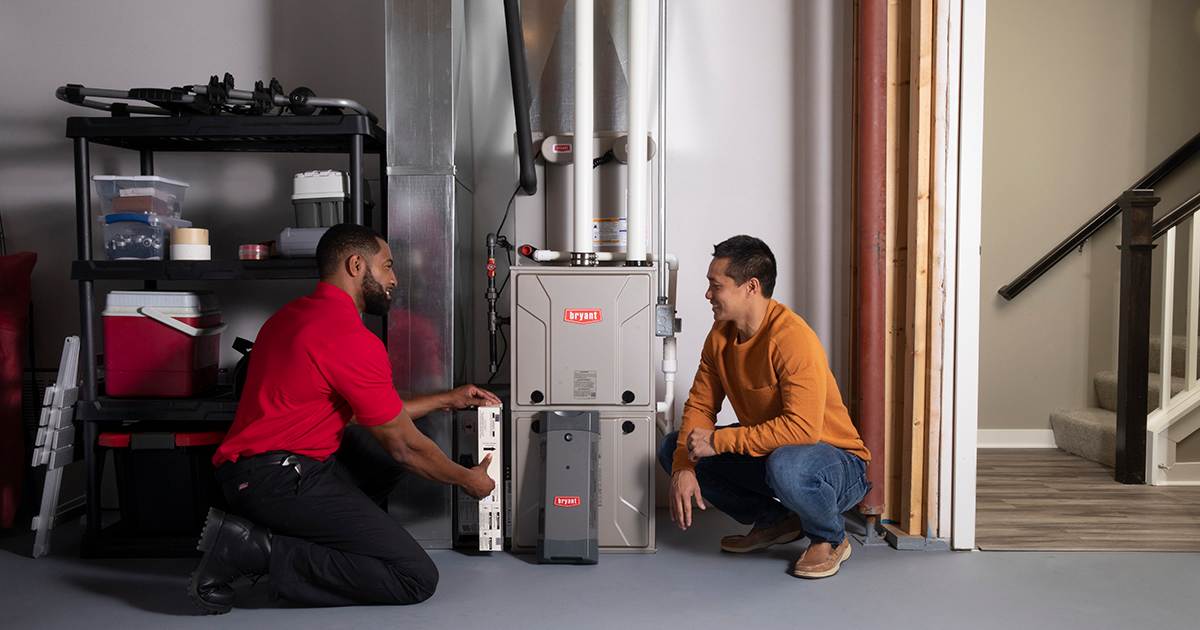
When your home feels cold, it’s easy to assume a bigger furnace is the answer—but bigger isn’t always better. An oversized system can short cycle and waste energy, while an undersized unit may struggle to keep your home comfortable on the coldest days.
Furnace size is measured in BTUs (British Thermal Units), which indicate how much heat a system can produce. The right size depends on your home’s square footage, insulation, and local climate zone.
Most residential furnaces fall between 40,000 and 120,000+ BTUs. As a general example, a 2,000 sq ft home typically needs a 60,000 to 100,000 BTU furnace, though colder climates or less efficient homes may require more capacity.
Because every home is different, proper sizing is about more than just square footage—it’s about balancing comfort, efficiency, and how your home handles heat loss in winter.
The Quick BTU Calculation: How Many BTUs Per Square Foot?
A simple way to estimate furnace size is to multiply your home’s square footage by 30 to 60 BTUs per square foot. For example, a 2,000 sq ft home would need roughly 60,000 to 120,000 BTUs, depending on insulation and climate. Homes in colder regions or with poor insulation will fall toward the higher end, while well-insulated homes in milder climates may need less. This quick calculation is a helpful starting point, but a professional load calculation is the best way to determine the right size.
Estimated BTUs by U.S. Climate Region
| Climate Region | BTUs per Sq Ft. | Example (2,000 sq ft home) |
| Warm (South/Southwest) | 30–35 BTUs | 60,000–70,000 BTUs |
| Moderate (Midwest/Mid-Atlantic) | 40–50 BTUs | 80,000–100,000 BTUs |
| Cold (Northeast/Northern Midwest) | 50–60 BTUs | 100,000–120,000 BTUs |
Furnace Sizes by Square Footage & Climate Zone
This furnace size chart builds on the quick BTU calculation by showing how square footage and climate zone work together to determine the right heating capacity. While these ranges provide a helpful guideline, factors like insulation, ceiling height, and air leakage can shift your exact needs.
| Home Size (Sq. Ft.) | Warm Climate (30-35 BTUs/sq ft) | Moderate Climate (40-50 BTUs/sq ft) | Cold Climate (50-60 BTUs/sq ft) |
| 1,000 sq ft | 30,000–35,000 BTUs | 40,000–50,000 BTUs | 50,000–60,000 BTUs |
| 1,500 sq ft | 45,000–52,500 BTUs | 60,000–75,000 BTUs | 75,000–90,000 BTUs |
| 2,000 sq ft | 60,000–70,000 BTUs | 80,000–100,000 BTUs | 100,000–120,000 BTUs |
| 2,500 sq ft | 75,500–87,500 BTUs | 100,000–125,000 BTUs | 125,000–150,000 BTUs |
In general, homes in warmer regions can use a furnace with fewer BTUs per square foot, while homes in colder climates require higher BTU output to maintain consistent indoor comfort. This chart offers a strong starting point, but a professional load calculation performed by your local Bryant dealer will provide the most accurate sizing for your home.
One Furnace Size Does Not Fit All
Choosing the wrong furnace size can lead to ongoing furnace issues that impact comfort, efficiency, and system lifespan. Proper sizing is critical to getting consistent, reliable heat throughout your home.
- Oversized furnace (too many BTUs):
- Short cycles (turns on and off frequently)
- Uneven temperatures and poor humidity control
- Increased wear and tear on components
- Higher energy bills due to inefficient operation
- Undersized furnace (too few BTUs):
- Struggles to keep up in cold weather
- Runs constantly without reaching the set temperature
- Cold spots and inconsistent comfort
- Added strain that can shorten system lifespan
Home Insulation & Windows
A well-insulated and properly sealed home retains heat more effectively, meaning it requires fewer BTUs to stay comfortable. Homes with poor insulation, drafty windows, or air leaks will need more heating capacity, which is an important factor when considering a furnace replacement.Ceiling Height
Furnace sizing is about the volume of air in your home, not just square footage. Higher ceilings mean more air to heat, which can increase BTU requirements compared to standard 8-foot ceilings, especially when selecting between different gas furnaces.
Efficiency Rating (AFUE)
AFUE (Annual Fuel Utilization Efficiency) measures how efficiently a furnace converts fuel into usable heat. For example, a furnace with 80% AFUE delivers 80% of its input BTUs as heat, while a 95% AFUE unit delivers much more usable heat from the same fuel. Understanding AFUE ratings helps ensure you’re comparing actual heating output—not just input capacity—when selecting a system. Learn more about high efficiency furnaces.
Why You Need a Professional Manual J Load Calculation
While quick BTU estimates and furnace size charts are helpful starting points, they don’t account for important variables like home insulation, window quality, ceiling height, air leakage, and system efficiency. These factors can significantly impact how much heating your home actually needs—meaning a simple square-foot calculation can easily lead to over- or under-sizing.
That’s where a Manual J load calculation comes in. This industry-standard method evaluates your home’s exact characteristics to determine precise heating requirements. It considers everything from sun exposure and ductwork to insulation levels and local climate data, providing a far more accurate recommendation than any DIY estimate.
Professional precision matters. According to industry studies, improperly sized HVAC systems can reduce efficiency and lead to comfort issues, higher energy bills, and premature equipment wear. A properly sized system, on the other hand, runs more efficiently, maintains consistent temperatures, and lasts longer.
Bryant dealers use Manual J calculations as part of their professional furnace installation process to ensure your system is sized correctly for your home. This level of accuracy helps deliver reliable comfort, optimized performance, and long-term value from your investment.
Ready to Find the Right Match?
Choosing the right furnace size is one of the most important decisions for your home’s comfort and efficiency, and it’s not something you have to figure out alone. A local Bryant dealer can evaluate your home, perform a precise load calculation, and recommend the right system based on your specific needs.
With Bryant’s trusted dealer network, you’ll get expert guidance, professional installation, and reliable performance you can count on. Connect with a Bryant dealer today to ensure your home stays warm, efficient, and comfortable all winter long.
Explore Bryant Furnaces
Choose a Bryant furnace for reliable, efficient heating that keeps your home comfortable throughout the winter. Known for their durability and advanced technology, Bryant furnaces offer quiet operation, precise temperature control, and energy-saving features like variable-speed motors and two-stage heating. With a range of models to suit different home sizes and needs, Bryant furnaces are built to last and come with industry-leading warranties, providing peace of mind and long-term value for your home heating system.
Furnace Size FAQs
There isn’t one “standard” size. Most residential furnaces range from 40,000 to 120,000+ BTUs depending on the home. The right size varies based on square footage, insulation, and climate, so it’s best to work with an HVAC professional for an accurate recommendation.
Neither. Both can cause problems. Oversized furnaces short cycle and waste energy, while undersized systems struggle to keep up. An HVAC professional can properly size your system to avoid both issues.
A 60,000 BTU furnace generally covers about 1,200 to 2,000 sq ft, though this can vary widely based on insulation and location. Consulting an HVAC professional helps ensure proper sizing.
An 80,000 BTU furnace can typically heat around 1,600 to 2,400 sq ft, depending on insulation and climate conditions. For precise sizing, an HVAC professional can evaluate your home’s specific needs.
A 2,000 sq ft home usually needs about 60,000 to 100,000 BTUs, depending on climate and efficiency. A professional load calculation will ensure you get the exact size for your home.


