About The Author: Travis Baugh is a Digital Brand Marketing Manager for Bryant, where he creates clear, helpful content to guide homeowners through heating, cooling, and indoor air quality decisions. His goal is to empower readers with the knowledge they need to choose the right comfort solutions for their home—confidently and comfortably.
The Importance of Furnace Maintenance
Furnace maintenance is the proactive process of inspecting, cleaning, and tuning your home heating system to ensure safe, efficient, and reliable performance.
By addressing minor wear and tear early, you extend the life of your unit, help maintain energy efficiency, and prevent unexpected breakdowns when you need heat the most. Whether you rely on a gas, electric, or oil furnace, consistent upkeep can help support long-term comfort, equipment reliability, and indoor air quality. Bryant recommends annual professional furnace maintenance, ideally before the heating season, along with regular filter changes and basic homeowner upkeep.
Why Is Furnace Maintenance Essential?
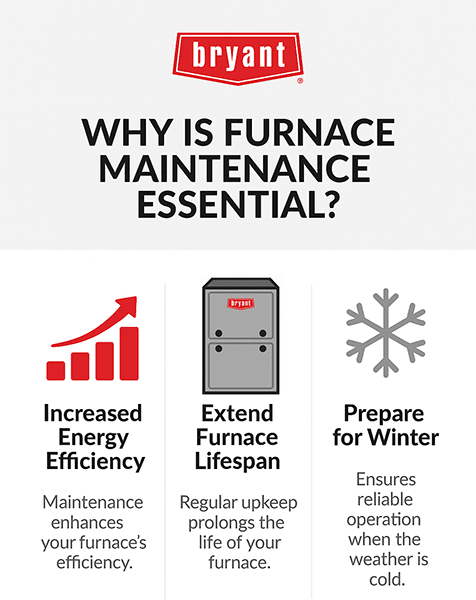
Regular furnace maintenance helps maintain energy efficiency, support equipment longevity, and promote safe operation.
Neglecting this essential service can contribute to rising heating bills and premature HVAC system failure. Investing in routine upkeep helps ensure that your HVAC system continues to operate as designed and can help identify potential problems before they become more costly repairs.
Key Benefits of Routine Upkeep
- Increased Energy Efficiency: Over time, furnaces accumulate dust and debris that force the system to work harder. A clean, tuned system can help maintain efficient airflow and operation, which may help control energy use. ENERGY STAR notes that airflow problems can reduce HVAC efficiency by up to 15%.1
- Extend Furnace Lifespan: During maintenance, HVAC professionals inspect vital components like the heat exchanger and blower motor. Identifying worn components early allows for timely furnace repair before they require a total furnace replacement. Learn more about how long does a furnace last.
- Winter Readiness: Routine checks ensure reliable performance when you need it most. Bryant recommends an annual pre-season checkup for heating equipment, with the heating system checked in the fall before the heating season.
Andrew Mackey, owner of Superior Service in Lake St Louis, Missouri, emphasizes to all of his customers the importance of annual furnace maintenance..
“Homeowners need to schedule yearly maintenance to check out the entire HVAC system to prevent breakdowns and ensure that the furnace will last its full life expectancy,” Mackey said.
The Bryant 4-Point Furnace Maintenance Checklist
Bryant's furnace maintenance approach can be summarized in four key areas: Inspect, Clean, Tune and Test. Together, these steps help homeowners keep their furnace operating safely and efficiently.
| Maintenance Step | What It Includes |
| Inspect | Check the heat exchanger, electrical connections, burners, venting, and other components for wear or potential safety issues. |
| Clean | Remove dust and debris from burners, blower components, filters, and other accessible areas that can affect airflow or performance. |
| Tune | Adjust and service system components as needed to support proper operation and airflow. |
| Test | Check thermostat operation, safety controls, ignition, and overall system performance. |
This four-point checklist reflects the core tasks included in professional furnace maintenance and aligns with Bryant and ENERGY STAR guidance for annual heating-system checkups.
How Can I Maintain My Furnace Myself? 4 DIY Tips
Homeowners can maintain their furnace themselves by performing simple tasks like changing air filters, cleaning vents, testing thermostats, and clearing the area around the unit to maintain optimal airflow and safety.
While professional inspections remain the cornerstone of HVAC longevity, these DIY steps empower you to take control of your home's comfort between visits:
- Change The Air Filter: This is the most critical DIY task. A dirty furnace filter restricts airflow, making the system work harder and potentially increasing energy costs. Bryant recommends checking the filter monthly and, at minimum, replacing it every three months.
- Clean Vents and Registers: Vacuum dust from vents to ensure even heating and consistent airflow throughout your home.
- Check the Thermostat: Test your thermostat to ensure it is calibrated correctly. If you have a digital model, replace the batteries annually to avoid disruptions.
- Clear Debris: Keep the area around the furnace clear of stored items, dust, and other obstructions to promote proper airflow and safe operation.
Signs Your Furnace Needs Maintenance How Do I Know if My Furnace Needs Service?
According to Bryant, common signs your furnace may need professional service include unusual banging or screeching noises, unusual odors, uneven heating in different rooms, or short-cycling.
- Unusual Noises or Smells: Banging, rattling, or screeching sounds often signal a mechanical malfunction. distinct burning or musty odors suggest it is time for a professional inspection.
- Frequent Cycling: If your system is "short-cycling," it may have airflow issues, a thermostat glitch, or a faulty component.
- Inconsistent Heating: If one room is freezing while another is roasting, your system may have ductwork issues or a clogged filter. Regular maintenance can help identify and address these issues depending on the type of furnace you own.
Neglecting furnace maintenance can lead to reduced efficiency, higher heating bills, and even complete system failure. To keep your furnace running smoothly, contact your local Bryant dealer for professional furnace service. They provide thorough furnace inspections, furnace cleaning, and furnace tune-ups to keep your furnace in top condition, ensuring your comfort all winter long.
What Does Professional Furnace Maintenance Include?
According to Bryant, professional furnace maintenance includes inspecting the heat exchanger, cleaning internal components, checking electrical connections and safety controls, and testing overall system performance.
Your local Bryant dealer has the expertise to identify specific furnace parts that may be nearing the end of their lifecycle, such as belts, igniters, or sensors.
- Thorough Inspection: Technicians check for leaks, cracks in the heat exchanger, and faulty electrical connections.
- Expert Cleaning: They clean internal components that DIY maintenance cannot reach, such as the blower assembly and burners.
- Part Replacement: Professionals can quickly identify and install necessary replacement parts to prevent minor issues from becoming major repairs.
How Can I Maximize Furnace Efficiency?
Bryant recommends combining regular professional maintenance with smart home habits like improving insulation, maintaining airflow, and using a programmable or smart thermostat.
- Insulation and Weatherization: A well-sealed home retains heat, reducing the workload on your furnace.
- Smart Thermostats: Upgrade to a programmable thermostat. These devices optimize heating schedules based on your lifestyle, ensuring you aren't heating an empty house.
- Adjust Settings: Lowering the temperature while you sleep or are away can reduce unnecessary heating and energy use.
- Maintain Airflow: Check and replace your furnace filter regularly and keep supply and return vents clear.
Connect With Your Local Bryant Dealer For Furnace Maintenance
At Bryant, we understand the importance of furnace maintenance for the comfort and safety of your home. Bryant recommends scheduling professional furnace maintenance at least once a year, ideally before the heating season begins. Your local Bryant dealer is trained to provide reliable furnace maintenance services to keep your heating system running smoothly. Contact them today to schedule your furnace maintenance appointment.
1 https://www.energystar.gov/saveathome/heating-cooling/maintenance-checklist
Frequently Asked Questions About Furnace Maintenance
Regular furnace maintenance is crucial to ensure the efficient and safe operation of your heating system. Here are answers to some frequently asked questions about furnace maintenance:
Yes, regular maintenance can help prevent unexpected breakdowns. During a maintenance visit, a qualified HVAC contractor will inspect, clean, and tune up your furnace, identifying and addressing potential issues before they escalate into major problems. This proactive approach can save you from costly repairs and inconvenient breakdowns during cold weather.
It is recommended to have your furnace professionally serviced at least once a year, ideally before the heating season begins, to ensure your furnace is in top shape when you need it most.
Routine maintenance includes changing filters, cleaning burners and flame sensors, inspecting the heat exchanger, lubricating moving parts, and checking safety controls and thermostat operation.
Yes, routine maintenance improves indoor air quality by ensuring your filters and internal components are clean. This reduces the circulation of dust, allergens, and airborne particles throughout your home, helping you breathe easier.
Annual furnace maintenance is recommended to keep your system running at its rated efficiency. Neglected systems can lose efficiency over time, leading to higher energy costs and more frequent furnace repair needs.
Learn More About Furnaces
- Explore what is a furnace
- Understand natural gas furnaces
- Get help with a furnace not turning on or a furnace leaking water
- Read our guide on furnace troubleshooting
- Find out how to fix a furnace blowing cold air