About The Author: Travis Baugh is a Digital Brand Marketing Manager for Bryant, where he creates clear, helpful content to guide homeowners through heating, cooling, and indoor air quality decisions. His goal is to empower readers with the knowledge they need to choose the right comfort solutions for their home—confidently and comfortably.
Dual Fuel Heat Pump Systems
A dual fuel heat pump is a hybrid heating system that pairs an electric heat pump with a gas furnace to deliver reliable, year-round comfort. By automatically switching between fuel sources based on outdoor temperatures, this smart technology maximizes energy efficiency and ensures consistent warmth—even in the coldest climates.
As the energy landscape continues to evolve, taking control of your home's comfort and efficiency has never been more important. Dual fuel systems represent a visionary step forward in home climate control, empowering homeowners to optimize energy usage without sacrificing comfort. eat pump vs furnace
What is a Dual Fuel Heating System?
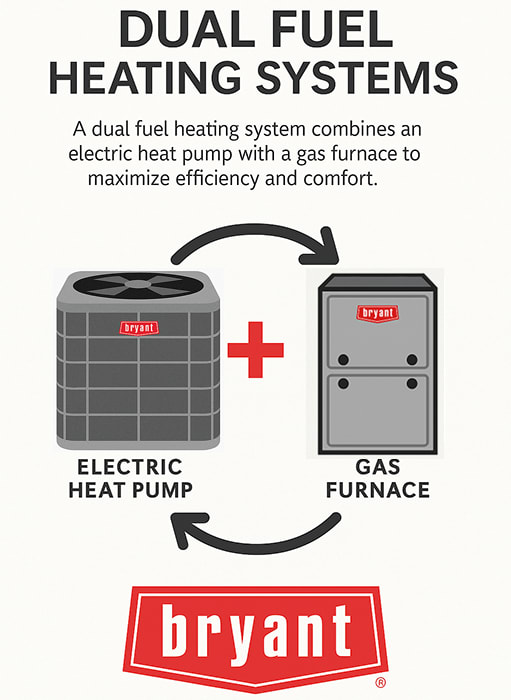
A dual fuel heating system is an HVAC setup that pairs an electric heat pump with a gas furnace, automatically alternating between electricity and natural gas based on which fuel source is most efficient for current outdoor conditions.
Think of a dual fuel system as the ultimate hybrid vehicle for your home's comfort. By combining a heat pump with a gas furnace, it delivers the best of both worlds: cost-effective, clean electric heating during mild weather, and the rapid, robust warmth of gas when temperatures plummet.
Unlike traditional systems that depend on a single energy source, dual fuel heat pumps offer unmatched flexibility and intelligent adaptability. The system automatically selects the most efficient fuel source for current weather conditions, helping to reduce your carbon footprint and significantly lower heating and cooling costs over time. Learn more about how a heat pump works and how a furnace works.
How Does a Dual Fuel Heat Pump Work?
A dual fuel heat pump works by using a smart thermostat to continuously monitor outdoor temperatures, then automatically activating whichever fuel source—electric or gas—is most efficient for those specific conditions.
Here's how the system operates across conditions:
- Mild Weather (Electric Mode): When outdoor temperatures are cool but above freezing (typically above 30°F–40°F), the electric heat pump efficiently extracts heat from the outside air and transfers it indoors. This is the most cost-effective heating method during spring and autumn.
- Freezing Weather (Gas Mode): When temperatures drop below the "economical break point," the system automatically switches to the gas furnace. Gas delivers the high-temperature heat needed to keep your home comfortable during the coldest winter nights.
- Smart Switching: Advanced thermostats and controls monitor outdoor conditions continuously, managing the fuel-source transition without any manual input.
According to Mike Lea, co-owner of Lea Heating & Air Conditioning in East Dundee, IL, several factors influence how a dealer programs the system's switching point, including:
- Efficiency Curves: The exact outdoor temperature at which the heat pump becomes less efficient than the gas furnace
- Home Profile: The age of the home and quality of insulation
- Comfort Goals: The homeowner's specific heating and comfort priorities
“We determine what we call the economical break point where we should be switching from one source to the other,” Lea said. “It’s nice to have the nice flexibility of the system, from an energy efficiency perspective.”
Modern dual fuel systems integrate seamlessly with tools like the Bryant Smart Home App, giving homeowners full control over their home's climate from anywhere.
Key Benefits of Dual Fuel Heat Pump Systems
The primary benefit of a dual fuel system is optimized efficiency—translating into lower energy bills, reduced carbon emissions, and consistent indoor comfort regardless of extreme weather swings. Investing in a dual fuel heat pump is an investment in long-term comfort and resilience.
- Optimized Energy Efficiency: The system uses the heat pump during mild conditions and reserves the gas furnace for extreme cold—ensuring energy is used only when and how it is most effective. This smart operation often results in meaningfully lower monthly energy bills.
- Total Year-Round Comfort: Traditional heat pumps can struggle to maintain warmth during sub-zero cold snaps. The gas furnace backup ensures consistent indoor warmth without the abrupt temperature fluctuations typical of older, single-source systems.
- Sustainability: By relying primarily on electricity—which can increasingly be sourced from renewables—for the bulk of the heating season, dual fuel systems help lower a household's overall greenhouse gas emissions.
- Peace of Mind: "If the gas furnace or heat pump fails for some reason, you have another source of heat in the home, which also helps prevent pipes freezing," notes Mike Lea. This redundancy protects your family and helps prevent pipes from freezing during equipment issues.
“The advantages of a dual fuel system include energy efficiency and the cost savings of automatically switching between sources of heat based on the parameters that the dealers enter into the thermostat when installing the system,” Lea said.

Is a Dual Fuel Heating System Right for Your Home?
A dual fuel system is best suited for homes in regions with variable climates—specifically areas that experience mild transitional seasons followed by freezing winters. Dual fuel systems are an especially strong fit for homeowners who value advanced technology and prioritize long-term savings over the lowest upfront cost.
You should consider a dual fuel system if:
- You live in a variable climate: Homes in the Midwest, Northeast, or similar regions with chilly springs and autumns—but genuinely cold winters—benefit most from this hybrid approach.
- You want to hedge against utility price swings: "If electric rates or natural gas prices spike," says Lea, "you have the ability to pick and choose your heating source based on the market utility pricing."
- You value long-term savings over upfront cost: While the initial investment is typically higher than a standard split system, the potential for lower monthly bills offers a strong return over time.
Dual fuel systems are best suited for homes with existing ductwork and natural gas access, while an all-electric heat pump may work better in regions with milder winters or where gas infrastructure is unavailable. Consulting a qualified HVAC professional is the most reliable way to determine which system is right for your specific home. Your local Bryant dealer can assess your climate, ductwork, and existing gas lines to determine if this upgrade aligns with your goals.
Installation and Maintenance of Dual Fuel Heat Pumps
Dual fuel heat pumps require professional installation to correctly calibrate the economical break point, followed by annual maintenance checks before each heating season to maintain peak efficiency.
Proper heat pump installation is critical for a complex hybrid system. A certified technician must verify that refrigerant levels are precise and that the thermostat is calibrated to switch fuels at exactly the right temperature for your home.
To keep your air source heat pump running quietly and efficiently, regular heat pump maintenance is essential.
- Annual Check-ups: Schedule professional HVAC maintenance before the heating season begins to inspect the system.
- Homeowner Tasks: Keep the outdoor unit free of debris and change your air filters regularly. Learn how often to change air filters.
- Watch for Warning Signs: If energy bills spike unexpectedly or the system isn't switching fuels seamlessly, schedule heat pump repair immediately to avoid long-term damage
Connect With A Bryant Dealer on Dual Fuel Heat Pumps
Talk to a Bryant dealer to find out if a dual fuel heat pump system is the right fit for your home and climate. Combining the efficiency of a heat pump with the reliability of a gas furnace, dual fuel systems offer year-round comfort and energy savings. Your local Bryant expert can evaluate your needs and recommend the best heat pump for your home. Schedule an appointment for heat pump replacement today.
Compare Bryant Heat Pumps
Choose a Bryant air source heat pump for reliable, energy-efficient heating and cooling all year round. Known for their durability and advanced technology, Bryant heat pumps offer superior comfort while lowering energy costs. With quiet operation and smart features like variable-speed motors, Bryant systems ensure optimal temperature control. Backed by industry-leading warranties and professional installation from your local Bryant dealer, a Bryant heat pump is a long-term investment in comfort, efficiency, and peace of mind for your home.
Dual Fuel Heat Pump FAQs
A dual fuel heat pump is a hybrid heating system that combines an electric heat pump with a gas furnace, switching between the two for optimal efficiency and comfort.
It uses the heat pump for heating and cooling in mild weather, and automatically switches to the gas furnace when outdoor temperatures drop too low for the heat pump to operate efficiently.
Dual fuel systems offer energy savings, improved comfort, and lower emissions, while ensuring reliable performance in both mild and extreme temperatures.
A dual fuel heat pump is ideal in climates with both hot summers and cold winters, where it can maximize efficiency by switching fuel sources based on outdoor conditions.
A traditional heat pump uses only electricity for heating and cooling, while a dual fuel system can switch to a gas furnace in colder temperatures for greater efficiency and reliability.
Yes, they can be worth it as they automatically switch between an electric heat pump and gas furnace for the most efficient heating in varying temperatures.
They typically last 10 to 15 years, depending on maintenance and usage.
Yes, in many cases, a compatible heat pump can be added to an existing gas furnace to create a dual fuel system ("hybrid heat"). A local dealer can verify if your current furnace and coil are compatible with a new heat pump unit.
Yes, dual fuel heat pumps work exactly like a standard air conditioner during the summer, efficiently cooling your home. The "dual fuel" aspect only applies to the heating mode during colder months.
A dual fuel system primarily uses electricity during mild weather and switches to natural gas only during freezing temperatures, optimizing the use of both based on outdoor conditions.
The economical break point is the specific outdoor temperature threshold (usually between 30°F and 40°F) where it becomes more cost-effective for the system to switch from the electric heat pump to the gas furnace.
Learn More About Heat Pumps
- Read our guide to heat pump cost
- Discover what is auxiliary heat
- Learn about 3 ton heat pumps 4-ton heat pumps
- Explore cold climate heat pumps
- Explore the value of high efficiency heat pumps


