About The Author: Travis Baugh is a Digital Brand Marketing Manager for Bryant, where he creates clear, helpful content to guide homeowners through heating, cooling, and indoor air quality decisions. His goal is to empower readers with the knowledge they need to choose the right comfort solutions for their home—confidently and comfortably.
How to Choose the Right Heat Pump For Your Home
Choosing a new heat pump can quickly become overwhelming. Between efficiency ratings, sizing calculations, refrigerant changes, and competing product claims, many homeowners find themselves sorting through technical jargon without a clear understanding of what actually matters for their home.
This guide is designed to simplify the process. Rather than focusing on confusing industry terminology, it provides a practical blueprint to help you evaluate the factors that truly impact comfort, performance, and long-term value.
The reality is that there is no single “right” heat pump for every homeowner. The right system depends entirely on your home’s layout, local climate conditions, existing ductwork, energy-efficiency goals, and overall comfort expectations. By understanding how these variables influence system performance, you can confidently narrow down the options and choose a heat pump that fits your home and lifestyle.
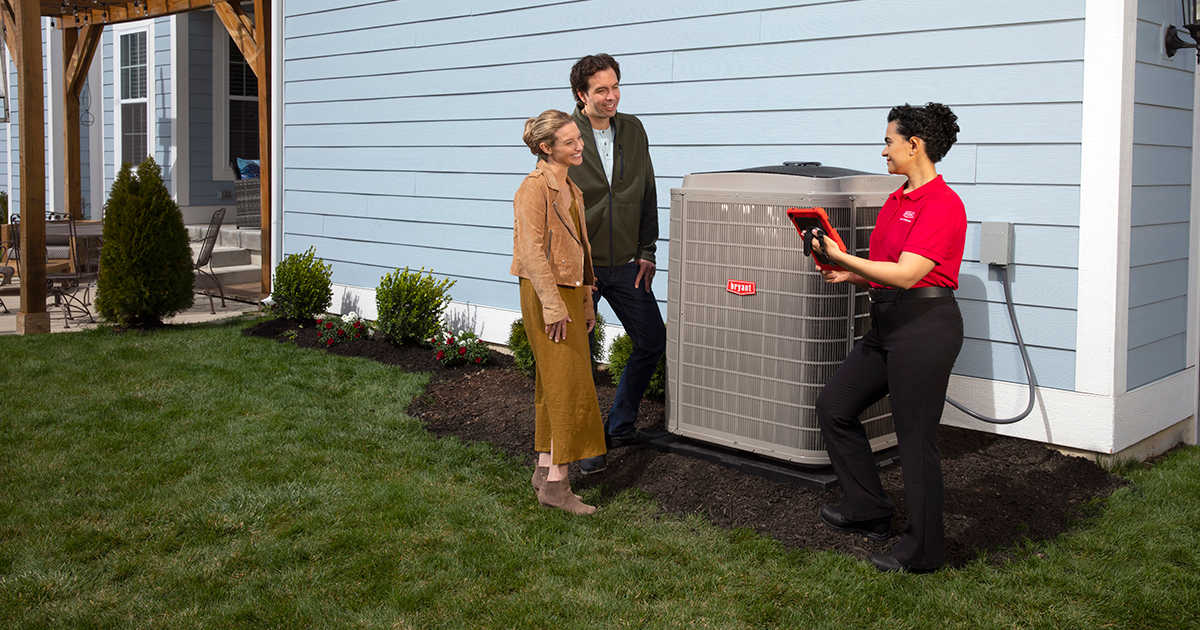
4 Steps to Help You Choose a Heat Pump
Selecting the right heat pump for your home involves balancing comfort, efficiency, climate performance, and long-term operating costs. By understanding a few core decision factors, homeowners can simplify the selection process and confidently choose a system that aligns with their home layout, local weather conditions, and comfort expectations.
Step 1: Determine The Right Heat Pump Type
The three primary types of heat pumps are central heat pumps for whole-home comfort, ductless mini-splits for targeted zoning, and packaged systems for homes with limited indoor installation space. The right choice depends largely on your home’s existing infrastructure, layout, and heating and cooling priorities.
Central Heat Pump
Central heat pumps are best suited for homes with existing ductwork or for homeowners who prefer a concealed, whole-home comfort solution with minimal visible indoor equipment.
These systems provide both heating and cooling using an outdoor unit paired with an indoor air handler connected through ductwork. Central heat pumps are the standard choice for maintaining consistent temperatures throughout the home and are commonly available in 2 ton, 3 ton, 4 ton, and 5 ton capacities depending on household size and climate demands.
Ductless Mini-Split
Ductless mini-split systems utilize individual indoor air handlers mounted on walls or ceilings that connect directly to an outdoor condenser through small refrigerant lines without requiring ductwork.
They are an ideal solution for historic homes, new additions, garages, finished basements, or isolated comfort zones where extending ductwork may be difficult or impractical. Their zoned design allows homeowners to independently control temperatures in different rooms while improving overall energy efficiency.
Packaged Units
Packaged heat pump systems combine all heating and cooling components into a single outdoor cabinet, creating a compact and self-contained comfort solution.
These systems are often best suited for homes with limited indoor HVAC space, rental properties, temporary installations, or supplemental heating and cooling applications where permanent system modifications may not be practical. Their simplified design can also streamline installation and maintenance requirements.
Step 2: Calculate the Correct Size Unit (Coverage Area & Capacity)
Choosing the correct heat pump size is critical for achieving efficient, reliable year-round comfort. A properly sized system is designed to maintain balanced temperatures while operating efficiently under both heating and cooling conditions.
An oversized heat pump may short cycle by turning on and off too frequently. This prevents the system from running long enough to effectively remove humidity during summer months while also placing additional wear on internal components through repeated startup cycles. Over time, this can accelerate mechanical failures and reduce the lifespan of the heat pump.
Conversely, an undersized heat pump will struggle to maintain target temperatures during periods of extreme heat or cold. Instead of cycling normally, the system may run continuously, increasing energy consumption and energy costs while still failing to deliver consistent comfort.
Proper system sizing should always be based on a professional load calculation that considers factors such as square footage, insulation levels, climate conditions, ceiling height, windows, and sun exposure.
Step 3: Decide on a Budget
Heat pump installation costs can vary significantly depending on equipment efficiency levels, installation complexity, and the condition of the home’s existing HVAC infrastructure. Understanding these cost drivers can help homeowners build a more realistic project budget.
Primary pricing factors include system efficiency ratings such as SEER2 and HSPF2, equipment capacity, electrical upgrades, ductwork modifications, and labor requirements. Homes requiring major duct reconstruction or additional installation work will generally fall toward the higher end of the pricing spectrum.
For most homeowners, a fully installed central split heat pump system typically ranges from approximately $2,000 to over $21,000, depending on the equipment selected and installation scope. While premium high-efficiency systems often carry a higher upfront investment, they can help offset long-term operating costs through reduced monthly energy consumption. Learn more about heat pump cost.
Step 4: Evaluate Extra Features You May Want
Modern heat pumps offer a variety of advanced features that can significantly improve comfort, efficiency, convenience, and indoor air quality. Evaluating these optional upgrades can help homeowners tailor a system more precisely to their lifestyle and performance expectations.
Energy Efficiency (SEER2, HSPF2)
Energy efficiency is one of the most important long-term considerations when selecting a heat pump because it directly impacts monthly energy costs and overall system operating performance.
SEER2 (Seasonal Energy Efficiency Ratio 2) measures cooling efficiency over an entire cooling season, while HSPF2 (Heating Seasonal Performance Factor 2) measures heating efficiency during colder months. Higher ratings indicate a more efficient system that consumes less energy to maintain indoor comfort.
When comparing systems, homeowners should look for higher SEER2 and HSPF2 ratings as well as official Energy Star® certifications, which indicate the equipment meets strict energy-efficiency performance standards. Learn more about energy efficient heat pumps.
Smart Home Connectivity
Modern heat pumps offer advanced smart home features designed to improve convenience, comfort, and energy management. When comparing systems, look for built-in Wi-Fi connectivity, smartphone app controls, programmable scheduling, and compatibility with popular voice assistants and smart home ecosystems.
Many Bryant heat pumps can be managed remotely through the Bryant SmartHome App, allowing homeowners to adjust temperature settings, fan speeds, and operating modes from virtually anywhere. Smart connectivity features also help optimize system performance and energy usage while giving homeowners greater control over indoor comfort.
Humidity Control
Humidity management plays an important role in overall indoor comfort and air quality. Advanced heat pump systems with enhanced humidity control capabilities help maintain more balanced indoor moisture levels, creating a cooler, more comfortable environment during humid conditions.
Maintaining proper indoor humidity can also help reduce that sticky indoor feeling common in warmer climates while supporting healthier indoor air conditions year-round.
Noise Reduction
Many modern heat pumps are engineered for exceptionally quiet performance, with some operating at sound levels as low as 53 decibels—similar to a quiet conversation. Features such as variable-speed compressors, insulated compressor compartments, and sound-dampening technology can significantly reduce operational noise.
For homeowners with units located near bedrooms, patios, or frequently used outdoor spaces, quieter operation can make a noticeable difference in overall comfort.
Warranty & Customer Service Protection
A quality heat pump should include strong warranty protection to help safeguard your long-term investment and provide additional peace of mind. Warranty coverage can vary by manufacturer and product tier, but many systems offer extended limited parts coverage when equipment is registered within the required timeframe after installation.
Some premium systems may also include enhanced replacement protection programs that provide additional coverage if a major component failure occurs during the applicable warranty period.
Environmentally Friendly Refrigerant
Many newer heat pumps now utilize refrigerants designed with lower environmental impact compared to older-generation refrigerants. Modern refrigerants like Puron Advance, also known as R-454B, help improve system efficiency while reducing ozone depletion potential and lowering overall global warming impact.
Choosing a system that uses updated refrigerant technology can help homeowners support long-term environmental sustainability while still benefiting from high-performance heating and cooling capabilities.

Why Choose Bryant
Bryant has earned a strong reputation for building durable, dependable HVAC systems engineered for long-term home comfort. Known for combining reliable performance with advanced comfort technology, Bryant systems are designed to withstand demanding real-world operating conditions while maintaining consistent efficiency and comfort over time.
Each Bryant system undergoes extensive testing and quality-control evaluations to help ensure reliability, durability, and performance consistency before reaching homeowners. Components are tested under a wide range of operating conditions to verify long-term functionality and system integrity.
Bryant is also backed by a large North American manufacturing, engineering, and distribution network, helping support broad parts availability and responsive dealer service throughout the country. This extensive support infrastructure allows homeowners to access replacement components and professional service more efficiently when heat pump maintenance or heat pump repairs are needed.
For homeowners seeking dependable performance, advanced comfort features, and long-term support, Bryant remains one of the most trusted names in home heating and cooling.
Work With A Bryant Dealer To Find The Right Heat Pump For Your Home
Choosing the right heat pump involves more than simply selecting a model—it requires matching the system to your home’s size, layout, climate conditions, and comfort priorities. Your local Bryant dealer can help guide you through the selection process by evaluating your home’s heating and cooling requirements and recommending equipment tailored to your needs and budget.


