About The Author: Travis Baugh is a Digital Brand Marketing Manager for Bryant, where he creates clear, helpful content to guide homeowners through heating, cooling, and indoor air quality decisions. His goal is to empower readers with the knowledge they need to choose the right comfort solutions for their home—confidently and comfortably.
How Often to Change Your Air Filter
Maintaining your home environment requires proactive care. A cornerstone of that care is knowing exactly how often to change the air filter for your HVAC system.
To keep your HVAC system performing efficiently and to breathe cleaner air year-round, routine air filter replacement is essential. Below, we break down the exact timelines and factors that determine your replacement schedule, ensuring your home remains a sanctuary of comfort and health.
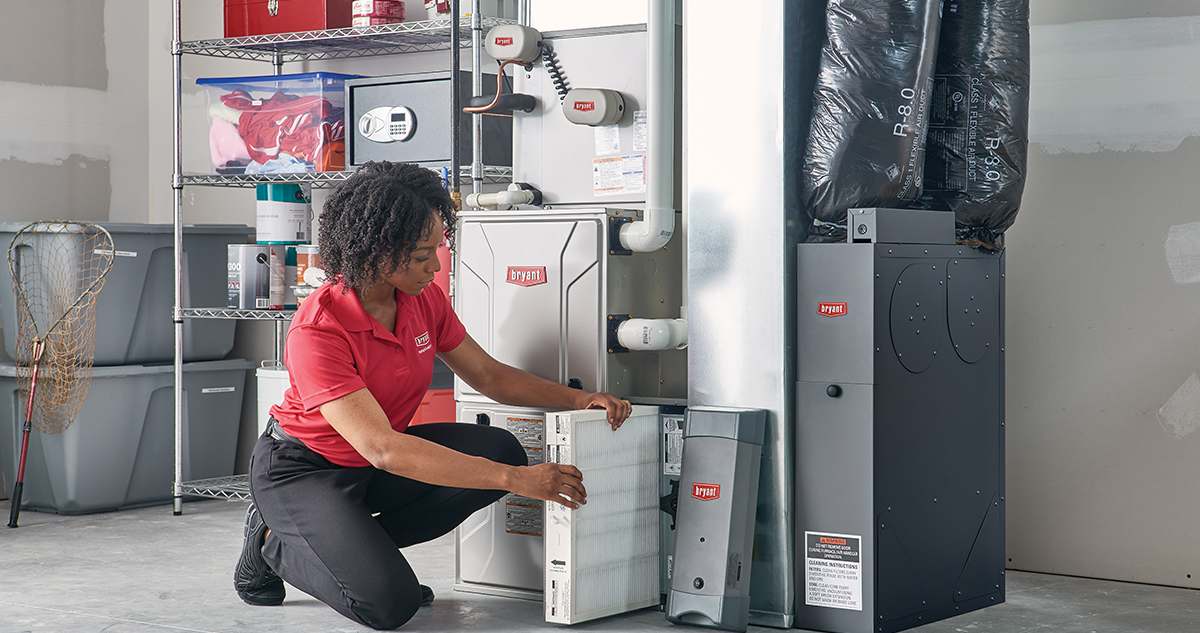
How Often Should You Change Your Bryant Air Filter?
For standard 1-inch to 2-inch residential air filters, you should change your air filter every 30 to 90 days. If you use a thicker 4-inch to 5-inch high-efficiency media filter, you typically only need to replace it every 6 to 12 months.
However, this timeline is a baseline. The exact frequency depends on your home’s specific dynamics, including the presence of pets, allergy sufferers, and your local climate. By staying on top of this schedule, you ensure your system delivers efficiency that pays for itself.
5 Factors That Impact Your Air Filter Lifespan
While the 30-to-90-day rule is an excellent starting point, your home is unique. Several distinct lifestyle and environmental factors will dictate precisely how often to change air filter replacements in your HVAC unit.
1. Pets in the Home
Homes with dogs, cats, or other furry friends generate significantly more dander and airborne hair. If you have one pet, aim to change your standard filter every 60 days. If you have multiple pets, you should replace the filter every 30 to 45 days.
2. Allergies and Asthma
If anyone in your household suffers from asthma, allergies, or respiratory sensitivities, do not wait 90 days. Changing your filter every 30 to 45 days helps capture microscopic irritants, which can you always cleaner air.
3. HVAC System Usage
During the peak of summer or the dead of winter, your Bryant system works continuously to maintain optimal comfort. High-usage months pull more air—and therefore more dust and debris—through the filter. During these extreme seasons, inspect your filter every 30 days.
4. Home Size
Larger homes have a greater volume of air circulating through the HVAC system. This means the filter has to process more air and trap more particles. Consequently, filters in sprawling, multi-story homes often require more frequent replacement than those in smaller properties.
5. Local Air Quality and Environment
If you live in a region prone to high pollen counts, frequent dust storms, or wildfire smoke, your filter will clog much faster. Additionally, homes undergoing major renovations will see a massive spike in airborne drywall dust and sawdust, necessitating immediate filter replacements during and after the project.
Joseph Braswell, owner of Guin Service Company in Birmingham, AL, lists another often forgotten considerations for how often a homeowner should change their air filter.
“The location of the filter makes a big difference,” Braswell said. “If you have an older home and the filter is in a floor grill, you're going to have to change it fairly often.”
Braswell also recommends HVAC maintenance plans to reduce the burden of routine upkeep.
“If you sign up for a maintenance contract with your local dealer, they'll change the filter for you when they're there every six months,” Braswell said. “That's a huge benefit for homeowners that have enough on their plate. It's one less thing on your home maintenance list.”
Why Changing Your Air Filter Matters
Investing in a high-quality Bryant system is an investment in long-term comfort. But skipping a simple filter change can compromise that investment. Here is why proactive replacement is a simply but vital AC maintenance task for your home.
Reduced Energy Bills
A clogged air filter acts like a wall, restricting airflow and forcing your HVAC system to work twice as hard to push air through the home. This strain draws significantly more electricity. By replacing a dirty filter with a clean one, you can lower your air conditioner's energy consumption by 5% to 15%, resulting in efficiency that pays for itself.
Improved Air Quality
Your filter is your home's first line of defense against airborne pollutants. A fresh filter actively captures dust mites, pollen, pet dander, and mold spores. When a filter is full, these particles bypass the system and recirculate into your living space, degrading your indoor air quality.
Prolonged System Reliability
When airflow is restricted due to a dirty filter, the internal components of your HVAC system undergo immense stress. In winter, this can cause the heat exchanger to overheat. In summer, it can cause the evaporator coil to freeze. Regular filter changes prevent these catastrophic failures, ensuring reliable, durable performance for years to help extend the lifespan of your HVAC system.
Quiet Operation
Bryant systems are engineered to operate quietly. However, a system struggling to pull air through a severely clogged filter may begin to whistle, hum, or rattle. Keeping the filter clean ensures you enjoy the peaceful, quiet comfort you expect.
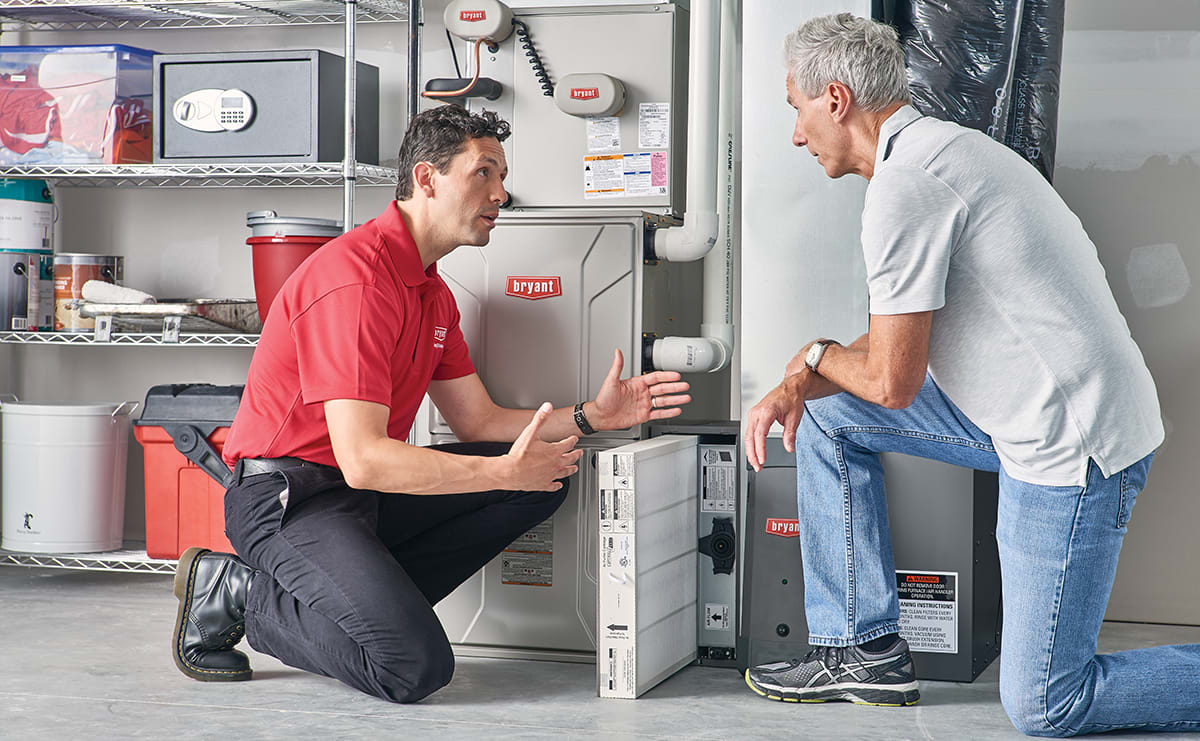
How to Identify When It’s Time for a Replacement
You do not have to guess when your filter has reached the end of its life. Look for these clear indicators that it is time for a change:
- Visual Inspection: Pull the filter out and hold it up to a light source. If you cannot see light shining through the filter material, it is clogged and needs to be replaced.
- Increased Dusting Needs: If you notice that dust is accumulating on your furniture much faster than usual, your filter is likely full and failing to trap airborne particles.
- Spikes in Energy Costs: A sudden, unexplained increase in your monthly energy bill is a strong indicator that your HVAC system is working too hard to overcome a dirty filter.
- Smart Thermostat Alerts: Many advanced Bryant systems integrate with smart thermostats. These smart controls will actively monitor system runtime and send an alert directly to your smartphone when it is time for a new filter.
Choosing the Right Filter for Your Bryant System
Not all filters are created equal. When deciding what to install in your system, you must consider the MERV (Minimum Efficiency Reporting Value) rating. The MERV rating measures how effectively the filter traps small particles.
Standard Pleated Filters (MERV 8)
These are ideal for standard residential use. They effectively capture pollen, dust mites, and mold spores while maintaining excellent airflow. They are cost-effective and keep your system running smoothly.
High-Efficiency Media Filters (MERV 11 to MERV 13)
For homeowners prioritizing superior air quality, high-efficiency media filters are the premium choice. These thicker filters trap smaller particles, including pet dander, smog, and even some bacteria. Because they have a larger surface area, Bryant media filters often only need replacing every 6 to 12 months, balancing advanced filtration with long-term convenience.
Note: Always consult your Bryant system manual before upgrading to a high MERV filter, as overly restrictive filters can impede airflow in older systems not designed for them.
Smart Home Integration for Filter Management
We live in an era where technology makes our lives seamless and intuitive. Your home comfort system should be no exception.
By integrating your Bryant HVAC system with modern smart thermostats, you eliminate the guesswork of filter replacement. Smart controls track the exact hours your system runs—rather than just tracking calendar days—providing highly accurate, usage-based reminders. This advanced technology ensures you never change a filter too early or too late, optimizing both your energy savings and your indoor air quality.
Talk To A Bryant Dealer About How Often To Change Your Filter
Speaking with your local Bryant dealer can help you determine the ideal air filter replacement schedule for your home. A trained dealer can provide personalized recommendations to keep your HVAC system running efficiently and your indoor air clean. Schedule an AC service appointment today.
How Often To Change Air Filter FAQs
Forgetting to change your filter leads to restricted airflow, which decreases energy efficiency, increases your energy bills, and puts immense strain on your HVAC motor. Over time, this can lead to premature system failure and expensive repairs.
: A higher MERV rating traps smaller particles, offering better air quality. However, it also restricts airflow more than a lower-rated filter. You must choose a MERV rating compatible with your specific Bryant system to ensure efficient, quiet operation.
Most standard pleated filters and media filters are designed for single-use only. Washing them can destroy the delicate fibers, encourage mold growth, and severely restrict airflow. Always replace them with a new filter.
During an active home renovation, you should check and potentially change your air filter every 2 to 4 weeks. Construction dust is incredibly fine and dense, and it will clog a standard filter exponentially faster than normal household dust.
Most HVAC air filters should be replaced every 1 to 3 months, but the exact timing depends on factors like filter type, home size, pets, allergies, and system usage. Homes with pets, high dust levels, or allergy concerns may need more frequent filter changes to maintain proper airflow and indoor air quality.


