- Explore what is a furnace
- Learn about furnace repair
- Explore furnace replacement
- Read our guide to furnace parts
- Learn how much is a new furnace
- Read our guide to high efficiency furnaces
What Is a Horizontal Furnace?
By Travis Baugh | Expert Review By Seth Faber - Product Manager, Furnaces
A horizontal furnace is a gas furnace installed on its side, with airflow moving horizontally through the cabinet. Bryant horizontal furnaces are designed for installation in spaces with limited vertical clearance, such as attics, crawl spaces, and low-ceiling basements. Unlike an upflow or downflow furnace, which moves air vertically, a horizontal furnace is positioned to move air from one end of the cabinet to the other.

How Does a Horizontal Furnace Work?
A horizontal furnace operates by drawing cool air in from one side, heating it through a heat exchanger, and pushing warm air out the other side using a blower motor. This side-to-side airflow distinguishes it from vertical models (upflow furnaces or downflow furnaces) which move air vertically.
Bryant horizontal gas furnaces are engineered for clean, controlled heating. The process begins when the thermostat signals a need for heat:
- Induction: A draft inducer fan clears the system to ensure safe operation.
- Ignition: Gas and air mix in the burner and are ignited electronically.
- Heat Transfer: The high-efficiency heat exchanger captures heat from the flames.
- Distribution: The blower motor pushes air over the hot exchanger and distributes warm air through your home's ductwork.
Key components and functions include:
- Heat exchanger: Captures burner heat to warm the supply air.
- Blower motor: Moves air across the heat exchanger and through your home's ductwork.
- Burner assembly and gas valve: Regulate fuel delivery for efficient ignition.
- Draft inducer: Maintains proper exhaust flow for safe operation.
- Furnace filter: Protects internal parts and supports indoor air quality
- Control board and thermostat: Manage heating cycles and monitor safety features.
Where Are Horizontal Furnaces Used?
A horizontal furnace can be useful when a home's mechanical space does not provide enough vertical clearance for an upright furnace. Common installation locations include:
- Attics: The horizontal orientation can fit beneath a roofline where vertical clearance is limited.
- Crawl spaces: A horizontal configuration can work in narrow mechanical spaces.
- Low-ceiling basements: The furnace can be installed where a taller upflow or downflow configuration may not fit.
- Other restricted mechanical spaces: Installation depends on the furnace's approved configurations, clearances, ductwork, venting, and local building requirements.
The installation location does not determine the furnace's required heating capacity. A professional should size the furnace based on the home's heating load rather than simply matching the unit to the home's square footage.
How Is a Horizontal Furnace Different From an Upflow or Downflow Furnace?
The primary difference is the furnace's orientation and airflow direction:
| Furnace configuration | Airflow direction | Common applications |
| Horizontal | Side-to-side | Attics, crawl spaces, low-clearance areas |
| Upflow | Bottom to top | Basements, closets, utility rooms |
| Downflow | Top to bottom | Attics and installations where supply ductwork is below the furnace |
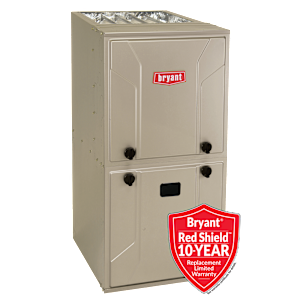
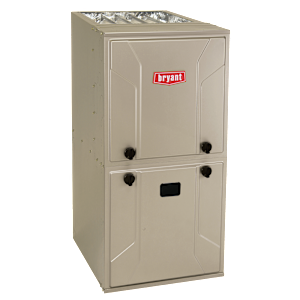
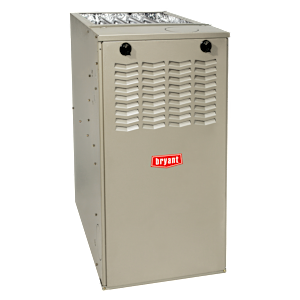
Some Bryant gas furnaces are multipoise, meaning they can be installed in more than one approved orientation. For example, Bryant's 987M, 927T, and 810S models are listed with 4-way multipoise profiles.
How Do I Choose the Right Horizontal Furnace Size?
Furnace size should be based on the home's heating load, not simply its square footage. A Bryant dealer can perform a Manual J load calculation that considers factors such as home size, insulation, windows, climate, and air leakage when determining the appropriate heating capacity.
When selecting a horizontal furnace, a dealer can also evaluate:
- Heating capacity: Measured in BTUH and matched to the home's heating load.
- AFUE rating: Measures the percentage of fuel energy converted into usable heat over a typical heating year.
- Heating stages: Single-stage, two-stage, or modulating operation depending on the model.
- Blower type: Options include multi-speed and variable-speed ECM blower motors.
- Installation configuration: The furnace must be approved for the intended horizontal orientation and installed with the required clearances, ductwork, venting, and drainage.
- Fuel type: Verify whether the selected furnace is designed for natural gas and whether an approved LP conversion kit for a propane furnace is available.
What Are the Advantages of a Horizontal Furnace?
The primary benefit of a horizontal furnace is its ability to provide high-performance heating in spaces where other units simply cannot go. This flexibility simplifies furnace installation in compact mechanical areas, freeing up valuable living space in your home.
Beyond saving space, these furnaces offer significant advantages:
- Energy Efficiency and Cost Savings: High AFUE ratings, variable-speed blowers, and smart control compatibility deliver significant energy savings. Efficient combustion and precise airflow minimize fuel consumption while maintaining steady, even temperatures. A Bryant horizontal gas furnace optimizes fuel use with advanced burner design and controls. Learn more about high-efficiency furnaces.
- Consistent Comfort: Technologies like variable-speed blowers reduce temperature swings and eliminate hot or cold spots, delivering steady warmth.
- Quiet Operation: Tightly sealed cabinets and insulated blower compartments minimize noise, keeping your home peaceful.
How Do I Maintain a Horizontal Furnace?
Furnace maintenance is crucial for keeping your horizontal furnace operating safely and efficiently.. Because these units are often located in out-of-the-way places like attics or crawl spaces, they can be easy to overlook, but consistent care prevents costly furnace repairs.
Routine Maintenance Steps:
- Check Filters Regularly: Inspect the furnace filter monthly and replace it as needed to maintain proper airflow. Learn how often to change air filters and how to change air filters.
- Clear Vents: Ensure intake and exhaust vents are free of obstructions like leaves or snow.
- Listen for Noises: Pay attention to unusual sounds, which could indicate loose panels or blower issues.
- Monitor Heating: If you notice uneven heating or short cycling, check your thermostat settings and filter status first.
Schedule annual furnace service with a certified professional. A technician will inspect the heat exchanger for cracks, clean the burner assembly, and test safety controls. This annual furnace tune-up is essential for long-term reliability and warranty compliance.

Find the Best Furnace for Your Home with a Bryant Dealer
A Bryant dealer can help you determine whether a horizontal or multipoise furnace is appropriate for your home's layout and installation space. They can evaluate your heating load, available clearance, ductwork, venting, fuel type, and furnace configuration before recommending an appropriate model.
Connect with a local Bryant dealer to get personalized guidance and a professional quote for furnace cost.
Compare Bryant Furnaces
Choose a Bryant furnace for reliable, efficient heating that keeps your home comfortable throughout the winter. Known for their durability and advanced technology, Bryant furnaces offer quiet operation, precise temperature control, and energy-saving features like variable-speed motors and two-stage heating. With a range of models to suit different home sizes and needs, Bryant furnaces are built to last and come with industry-leading warranties, providing peace of mind and long-term value for your home heating system.
Horizontal Furnace FAQs
A horizontal furnace is a heating unit designed to lie on its side, allowing air to enter at one end and exit at the other, making it ideal for tight or low-clearance spaces.
Yes. Many furnaces are built for horizontal installation and are commonly used in attics, crawl-spaces, basements with limited height, or areas where vertical space is restricted.
Yes. Horizontal furnaces are often installed in crawl-spaces because their low-profile design fits well in narrow, hard-to-access areas.
A horizontal furnace looks like a long, rectangular metal cabinet positioned on its side, with the return air entering one end and the warm air leaving through ductwork at the opposite end.
About The Author: Travis Baugh is a Digital Brand Marketing Manager for Bryant, where he creates clear, helpful content to guide homeowners through heating, cooling, and indoor air quality decisions. His goal is to empower readers with the knowledge they need to choose the right comfort solutions for their home—confidently and comfortably.
About The Author: Seth Faber serves as Product Manager for Residential Furnaces at Bryant, where he contributes to the development of heating solutions designed for dependable operation and lasting home comfort. His work takes into account homeowner needs, advances in energy efficiency, and evolving industry standards to help support reliable residential heating.


