About The Author: Travis Baugh is a Digital Brand Marketing Manager for Bryant, where he creates clear, helpful content to guide homeowners through heating, cooling, and indoor air quality decisions. His goal is to empower readers with the knowledge they need to choose the right comfort solutions for their home—confidently and comfortably.
Mold In Air Conditioner Troubleshooting Guide
Quick Answer: Mold in an air conditioner is fungal growth caused by moisture inside or around HVAC system. The top 3 signs are a persistent musty odor, visible mold growth, and moisture around the coils or drain pan. The fix is to stop the source of moisture, clean affected components, and call your local Bryant dealer for immediate AC repair to inspect significant or internal growth. Left untreated, AC mold degrades indoor air quality, harms your health, and reduces system efficiency.
Check your air filter, drain line, and evaporator coils for moisture, visible growth, or blockages. While small areas of mold on accessible hard surfaces may sometimes be cleaned, mold inside an HVAC system should be evaluated by a professional experienced with HVAC remediation. EPA generally considers mold contamination covering less than about 10 square feet a small area, while larger or complex contamination may require professional remediation. Discovering mold in your AC is unsettling—but it is a solvable problem. Address the moisture source as quickly as possible, then clean and dry affected areas to help prevent the mold from returning. This guide covers how to identify the signs, understand the causes, and work with HVAC professionals to address mold.
How Can You Tell If There Is Mold In Your Air Conditioner?
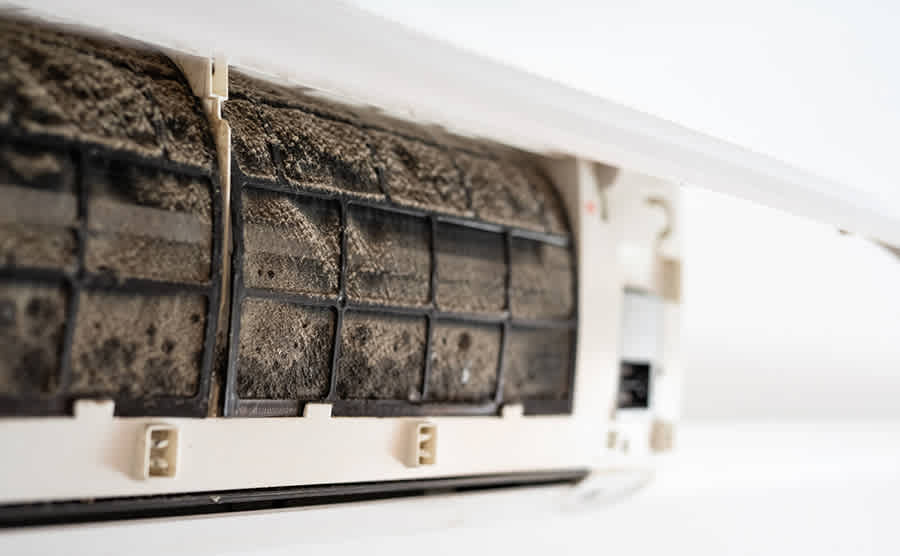
You can identify possible mold in your air conditioner by looking for visible black, brown, or green growth, smelling a persistent musty odor, or finding unexplained moisture around the unit. Symptoms such as sneezing, coughing, or respiratory irritation can occur with mold exposure, but symptoms alone cannot confirm that mold is present. Mold often hides inside the unit, but it can leave clear clues.
Look for these key indicators:
- Musty Odors: A persistent, earthy, or mildew-like smell when the air conditioner runs is the most common sign.
- Visible Growth: Black, brown, or green fuzzy spots on vent covers, near the drip pan, or on the evaporator coils.
- Physical Symptoms: Unexplained sneezing, coughing, or respiratory irritation that worsens when you are at home.
If you know or strongly suspect that mold is inside the HVAC system, turn off the system and contact an HVAC professional for an inspection.
What Causes Mold To Grow In An Air Conditioner?
Mold grows in air conditioners when moisture remains available for an extended period. Dust and other organic material can provide nutrients, but moisture is the critical factor in mold growth. EPA recommends keeping indoor relative humidity below 60%, ideally between 30% and 50%, to help control mold growth.
1. High Humidity Levels
High humidity levels cause mold in air conditioners because the system cannot evaporate moisture fast enough. Split AC units are designed to remove moisture, but if the system doesn’t drain properly, it creates a damp environment where mold can grow, particularly in the evaporator coils and drain pan.
For mold prevention, the EPA recommends keeping indoor relative humidity below 60%, ideally between 30% and 50%.1 A hygrometer can help homeowners monitor indoor humidity.
2. Clogged or Dirty Air Filters
Dirty air filters restrict airflow, causing coils to become excessively cold and leading to condensation buildup. Over time, this moisture combined with the dust and allergens trapped in the filter creates ideal mold conditions. Learn more about air filter replacement.
3. Clogged Condensate Drain Line
A clogged condensate drain line causes moisture to back up inside the AC unit, creating a dark, wet environment perfect for mold. The condensate drain line carries excess moisture away from the unit. If the AC drain line is clogged, moisture backs up, creating the perfect environment for mold. A blocked line can also lead to water pooling inside the unit.
4. Poor Airflow
Restricted airflow from closed vents or malfunctioning fans prevents the central air conditioner from running efficiently. Poor airflow can also contribute to coil icing and condensation problems that create conditions favorable to mold growth.
5. Dirty Evaporator Coils
Dirty evaporator coils accumulate grime that, combined with condensation, creates an ideal breeding ground for mold and mildew. Beyond mold risk, dirty coils also significantly reduce system efficiency and performance. Learn more about how to clean AC coils.
6. Infrequent Maintenance
Neglecting regular AC maintenance allows dust, dirt, and moisture to go undetected. Regular HVAC inspections can help identify clogged drain lines, dirty coils, standing water, and other conditions that contribute to mold growth. Annual AC tune-ups are essential to catch and eliminate mold conditions before they develop into a serious problem.
7. Leaky Ductwork
Leaky ducts draw warm, humid air into the cooler HVAC system, causing condensation. When this moisture settles on cooling coils or in other hidden areas, it fosters mold growth within the ductwork—often in places that are difficult to inspect without professional equipment.
8. Improperly Sized or Installed Units
An improperly sized AC unit may have difficulty controlling indoor humidity. EPA notes that an oversized air conditioner can cycle on and off frequently, resulting in poor moisture removal, particularly in humid climates. Professional AC installation and proper AC sizing can help the equipment manage both temperature and humidity.
9. Standing Water in the Drain Pan
Standing water in the condensate drain pan creates a persistent moisture source where mold can grow. The pan is designed to collect and direct condensate toward the drain. EPA specifically recommends keeping HVAC drip pans clean, unobstructed, and draining properly. If water remains in the pan after normal AC operation, the system should be inspected for a clogged drain, improper slope, or another drainage problem.
How Do Professionals Troubleshoot and Remove Mold In An AC?
Professionals address AC mold by shutting down a contaminated system, inspecting the equipment for moisture and mold, correcting the underlying moisture problem, and cleaning affected components using appropriate methods. Bryant recommends that HVAC mold remediation be performed by professionals experienced with HVAC systems because remediation can involve preventing contaminated air and materials from spreading through the building.
The Bryant 9-Step AC Mold Removal Process provides a framework for evaluating and addressing the conditions that can contribute to mold growth:
- System Shutdown: Turn off the system if mold contamination is known or suspected to prevent the HVAC system from distributing contaminants.
- Filter Inspection: Check the filter for excessive dirt, moisture, or other conditions that could restrict airflow and replace it if necessary.
- Drain Line Clearing: Inspect and clear the condensate drain line if it is clogged or draining improperly.
- Coil Inspection and Cleaning: Inspect AC parts such as evaporator coils for dirt, moisture, and visible mold growth, then clean them using an appropriate method.
- Pan Assessment: Inspect and clean the condensate pan and verify that it drains properly.
- Ductwork Review: Inspect accessible ductwork for moisture, leaks, or visible mold and address problems that may allow humid air or condensation to enter the system.
- Component Cleaning: Clean affected blower components, housings, and other accessible surfaces using appropriate cleaning procedures.
- Deep Clean and Dry: Thoroughly clean affected components and allow them to dry completely before returning the system to normal operation.
- Humidity Check: Measure indoor relative humidity and address excessive moisture.
Mike Lea, co-owner of Lea Heating & Air Conditioning in East Dundee, IL, explains what homeowners should do if they encounter mold-related issues in their HVAC system.
“If they see mold on the outdoor unit — which is unusual — that’s generally not a concern,” Lea said. “However, if mold appears on the inside of the evaporator coil, it’s important to have an HVAC professional perform a thorough coil cleaning. The best way to prevent mold growth is to install a UV lamp that consistently shines on the coil.”
A UV lamp may be one option an HVAC professional considers for microbial control, but it should not replace moisture control, cleaning, and proper HVAC maintenance.
How Quickly Can Mold Grow After Water Exposure?
There is no universal 24- or 48-hour point at which mold will begin growing on an AC component. Growth depends on the type of material, temperature, moisture level, and other environmental conditions. However, Bryant recommends drying wet or damp materials within 24–48 hours to help prevent mold growth. The same principle applies to HVAC moisture problems: correcting leaks, standing water, and condensation promptly can reduce the opportunity for mold to develop.Why Is Mold In Your Air Conditioning System Dangerous?
Mold in an HVAC system is a moisture and indoor air quality concern that should be addressed at its source. Mold exposure can cause health effects in some people, while contaminated HVAC equipment can potentially distribute mold and other biological contaminants through a building. EPA notes that contaminated central air-handling systems can become sources of mold and other biological contaminants.
Health Risks
Mold exposure does not affect everyone the same way. According to the CDC, exposure to damp and moldy environments may cause symptoms such as stuffy nose, sore throat, coughing, wheezing, burning eyes, or skin irritation.2 People with asthma or mold allergies may experience more significant reactions.
- Spread Of Mold Spores: As your air conditioning systems circulates air, it can spread spores to walls, carpets, and surfaces, leading to widespread contamination.
- Reduced System Efficiency: Mold itself is not necessarily the primary cause of reduced HVAC efficiency. Dirt, debris, restricted airflow, blocked drains, and other conditions that can accompany moisture problems may reduce system performance.
- Foul Odors: Mold creates a musty, unpleasant odor that circulates throughout your home, making your environment uncomfortable. Learn more about AC smells.
- Damage to HVAC Components: Persistent moisture can contribute to corrosion, deterioration, and other equipment problems. If the underlying moisture issue is not corrected, mold can return after cleaning. Depending on the condition and age of the system, extensive damage may eventually require AC replacement.

Which Climates Are Most Prone to AC Mold?
AC mold is more common in areas with high humidity, warm temperatures, and long cooling seasons because these conditions can increase the amount of moisture available to the HVAC system. Regions such as the Southeast, Gulf Coast, and parts of the Midwest may experience greater moisture-related HVAC challenges during the cooling season.
Homes in humid climates may experience more AC mold risk if systems have poor drainage, dirty coils, clogged filters, leaky ductwork, or excess indoor moisture. Regardless of climate, keeping indoor relative humidity below 60%—ideally 30% to 50%—and promptly addressing water or condensation problems can help reduce mold growth.
Get Professional Help For AC Mold Removal
When AC mold is confirmed or strongly suspected inside the HVAC system, turn off the system and contact an HVAC professional experienced with HVAC mold remediation. Bryant recommends not running a system that is known or suspected to be contaminated because it could spread mold throughout the home.
Your local Bryant dealer can perform a thorough HVAC cleaning and inspection, identifying underlying issues to prevent future growth. The most important step is to correct the moisture problem; cleaning mold without addressing the source of the moisture can allow it to return.
Schedule an HVAC service appointment today to invest in a healthy, comfortable indoor environment.
1 https://www.epa.gov/indoor-air-quality-iaq/care-your-air-guide-indoor-air-quality
2 https://www.epa.gov/mold/mold-cleanup-your-home
Mold in Air Conditioner FAQs
Yes, mold in your AC can be harmful, potentially causing allergic reactions, respiratory issues, and worsening conditions like asthma, especially with prolonged exposure.
Mold growth is usually caused by moisture buildup, poor drainage, dirty filters, and high humidity within or around the system.
Common signs include a musty odor, visible mold spots on vents or components, and an increase in allergy-like symptoms when the system runs.
The black stuff in your AC could be mold, especially if it appears fuzzy or slimy and is accompanied by a musty smell. However, it could also be soot, dirt, or mildew, so professional inspection is the best way to confirm.
A mixture of EPA-approved coil cleaner or diluted bleach can kill mold on coils. Always follow manufacturer and safety instructions or have a certified HVAC professional handle the cleaning.
Yes. Mold exposure from an HVAC system can cause allergy symptoms, coughing, or respiratory irritation, especially for sensitive individuals.
No—running a moldy AC can spread spores throughout your home. It’s best to have the system cleaned and sanitized before use.
Turn off the system and contact an HVAC professional to clean and disinfect the coils, drain pan, and ductwork. Avoid running the unit until the mold is safely removed.
Yes, installing a UV lamp is a visionary way to prevent future growth. UV lights installed near the evaporator coil kill bacteria and mold spores before they can multiply, keeping your system cleaner and your air healthier automatically.
Costs vary depending on the extent of the growth and whether ducts are involved. A basic coil cleaning is more affordable, while full ductwork remediation is a larger investment. However, compared to the cost of potential health issues or full system replacement, professional cleaning offers significant value.
It is generally not recommended to spray undiluted bleach directly on AC components, as it can corrode metal coils and damage the system. Professional cleaners use specialized, EPA-approved anti-microbial solutions that are safe for HVAC equipment.
Replace your air filter regularly, keep the condensate drain clean, reduce indoor humidity, and schedule annual AC maintenance. Proper airflow and moisture control are the best ways to prevent mold growth.
Mold most commonly develops on the evaporator coil, condensate drain pan, drain line, air filter, and nearby ductwork where moisture can accumulate.
Learn More About Air Conditioners
- Understand the value in AC tune ups
- Get help with an AC not working, AC leaking water, or AC not blowing cold air
- Find out how long do AC units last?
- Learn how to clean air conditioners


