About The Author: Travis Baugh is a Digital Brand Marketing Manager for Bryant, where he creates clear, helpful content to guide homeowners through heating, cooling, and indoor air quality decisions. His goal is to empower readers with the knowledge they need to choose the right comfort solutions for their home—confidently and comfortably.
Why Does My AC Smell? Understanding the Causes and Solutions
By Travis Baugh | Expert Review By Michelle Notaro - Product Manager, Air Conditioners
A strange air conditioner smell—whether musty, burning, or chemical—can signal an underlying issue that deserves attention. Common causes include excess moisture and mold or mildew growth, a dirty air filter, or electrical problems. Refrigerant leaks can also require professional attention, although refrigerants do not always have a distinctive odor. Addressing unusual odors quickly can help protect your home's air quality, comfort, and safety.
Unpleasant odors from your air conditioning system can have several causes, and understanding what they mean is the first step toward a solution. This guide identifies the most common AC smells, explains what causes them, and outlines when you can troubleshoot the problem yourself and when to call a professional.
What Do Different AC Smells Mean?
When your air conditioner emits an unusual odor, it's sending a signal. Recognizing the specific type of smell can help narrow down the potential cause, but an odor alone cannot reliably diagnose an HVAC problem.
1. Why does my AC smell musty or moldy?
The short answer: A musty smell typically means moisture has allowed mold or mildew to grow somewhere in or around the HVAC system.
This is the most common complaint homeowners face. Your AC naturally dehumidifies the air, but if that moisture cannot escape due to a clogged AC drain line or dirty air filters, it creates a breeding ground for mold in your air conditioner. This not only causes a "dirty sock" smell but can also circulate allergens, impacting your indoor air quality. Regular AC maintenance, including air filter replacement, is your best defense against moisture buildup.
2. Why does my AC smell like gas or rotten eggs?
The short answer: A rotten egg smell near your HVAC system can indicate a natural gas leak and should be treated as a safety emergency.
Natural gas is odorless, but utility companies add an odorant to help people detect leaks. If you smell gas, leave the home immediately and contact your gas utility or emergency services from a safe location outside. Do not operate electrical switches or appliances inside the home.
Do not assume the odor is coming from your air conditioner or attempt to diagnose a suspected gas leak yourself. Once safe, schedule AC service with your local Bryant dealer to inspect the system. Do not attempt to fix this yourself.
3. Why does my AC smell like it's burning or has a chemical odor?
The short answer: A burning odor can indicate an electrical or mechanical problem, while an unusual chemical odor may have several possible sources and should not be assumed to be a refrigerant leak based on smell alone.
An electrical burning smell can come from overheating components, wiring problems, or other electrical faults and may pose a fire hazard. If you notice a burning smell coming from the HVAC system, turn the system off if you can do so safely and contact a qualified HVAC technician. If you see smoke or suspect a fire, leave the home and contact emergency services.
A refrigerant leak can affect system performance and requires professional service. The odor of a refrigerant varies by refrigerant type, and some refrigerants have little or no noticeable odor, so a chemical smell by itself is not a reliable way to identify a refrigerant leak. EPA notes that refrigerants can present hazards including toxicity, flammability, and asphyxiation depending on the refrigerant and circumstances.

What Are the Main Causes of a Bad Air Conditioner Smell?
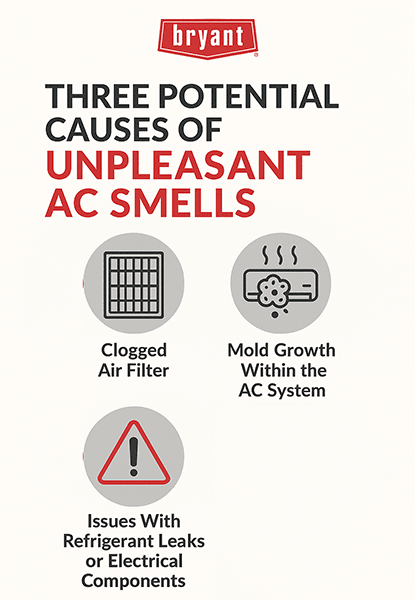
Unpleasant central air conditioner smells are usually caused by moisture-related growth, accumulated dust and debris, or mechanical and electrical issues. Identifying the source is key to resolving the odor and restoring a healthy, comfortable home.
- Clogged Air Filter. When air filter replacement doesn't happen regularly, air filters become clogged with dust, dirt, and allergens. This buildup restricts airflow and can contribute to reduced system performance. A dirty filter can also allow dust and debris to accumulate, which may contribute to unpleasant odors. Bryant recommends changing or cleaning HVAC filters regularly according to the manufacturer's instructions.
- Mold and Mildew Growth: Your AC system naturally creates moisture. If the condensate drain line becomes blocked or the cooling coils and drain pan are not draining properly, water can accumulate. Excess moisture can create conditions that support mold and other microbial growth, producing a musty odor. The EPA recommends keeping drain pans clean and drain lines unobstructed and maintaining indoor relative humidity between 30% and 50%, when possible.
- Electrical or Refrigerant Issues: A burning smell can indicate an electrical or mechanical problem, such as an overheated motor or wiring issue. A refrigerant leak may affect cooling performance, but odor alone cannot reliably identify a refrigerant leak. Both situations require professional evaluation.
Mark LeGare, owner of The Coolest in Austin, TX, discusses some of the most common causes he sees behind persistent air conditioner odors in HVAC systems.
“If a system is oversized, it can contribute to higher indoor humidity because it doesn’t run long enough to properly dehumidify the air,” LeGare said. “A lot of homeowners think bigger is better, but in HVAC that can actually create comfort and moisture issues that may lead to odors.”
“I also check the condensate drain line to make sure it’s properly sloped and draining as intended. If water sits in the line, it can lead to mildew buildup. And if a system is tied into a plumbing drain, having a proper P-trap helps prevent sewer gas from backing up into the home,” he said.
LeGare notes that odor-related complaints tend to be less common with variable-speed and two-stage air conditioning systems.
“I’ve found that using multi-stage equipment usually helps resolve a lot of these issues because of its improved ability to dehumidify,” LeGare said.
HVAC equipment and controls designed for enhanced dehumidification can improve indoor humidity control, particularly in hot-humid climates.
Can I Fix a Smelly AC Myself?
For musty or dusty odors, some DIY troubleshooting can help. Follow these steps to address common causes of a bad AC smell:
- Inspect and Replace the Air Filter: Start by checking your air filter. If it's dirty or clogged, replace it with a new one according to the manufacturer's recommendations. This is often the simplest fix for dust-related odors.
- Check the Condensate Drain Pan and Line: Look for standing water in the drain pan beneath your indoor unit. Standing water or a blocked drain can indicate a drainage problem. Carefully clear any easily accessible blockages without disassembling the equipment.
- Clean Around the Outdoor Unit: Ensure the area around your outdoor condenser unit is clear of leaves, dirt, and other debris that can obstruct airflow and contribute to system problems.
Note: DIY steps are appropriate only for minor musty or dusty odors. Burning smells, gas odors, smoke, or unusual chemical odors are not problems to diagnose by smell alone and may require professional attention.
How Can I Prevent My AC From Smelling in the Future?
Preventing AC odors is far easier than fixing them. Proactive, routine care keeps your split AC unit running cleanly and efficiently all season long.
- Schedule Routine Tune-Ups: An annual AC tune-up from a professional HVAC technician helps identify and correct potential issues—such as dirty coils or drainage problems—before they generate odors or escalate into costly AC repairs.
- Change Your Air Filter Regularly: Replace your air filter as recommended by the filter or HVAC manufacturer. A common replacement interval for many residential filters is every one to three months, but the correct interval varies based on filter type, system use, pets, and indoor conditions.Learn more about how often to change air filters.
- Keep the AC Unit Clean: Regularly vacuum the vents and registers inside your home. Outside, keep the area around the condenser unit clear of debris to ensure proper airflow and help prevent buildup around the equipment.
- Control Indoor Humidity: The EPA recommends maintaining indoor relative humidity between 30% and 50%, when possible. Excess humidity can encourage mold growth and contribute to musty odors.
When Should I Call a Professional for an AC Smell?
While some issues can be addressed with DIY steps, certain AC smells demand emergency HVAC repair. Call a technician right away if you notice:
-
A persistent musty odor that doesn't resolve after cleaning and filter replacement
-
A chemical odor accompanied by poor cooling, hissing, or other signs of a possible refrigerant problem
-
A burning or electrical smell coming from the HVAC system
-
Smoke, sparking, or other signs of an electrical or fire hazard
-
A rotten egg or sulfur odor that could signal a gas leak—leave the home and contact your gas utility or emergency services from outside.
Your local Bryant dealer has the tools and expertise to identify the root cause of any air conditioner smell and provide the right air conditioning service to restore comfortable indoor conditions.
FAQs on AC Smells
Clean or replace the air filter, clear the drain pan, and disinfect the coils and ducts to eliminate odor-causing bacteria, mold, or mildew buildup.
Yes, if your AC smells bad, turn it off to prevent circulating contaminated air and schedule an inspection with your local Bryant dealer to identify the source of the odor.
A foul smell at startup often comes from mold or mildew on the coils or in the ductwork that releases spores when air first flows through the system.
A body odor smell is usually caused by bacterial growth on the evaporator coil, often due to trapped moisture and poor system hygiene.
To improve the smell, regularly replace air filters and schedule annual AC tune-ups to disinfect components.
A musty or sour smell often means mold, mildew, or a clogged drain line inside your system. Cleaning coils, replacing filters, and clearing the drain line usually fix the issue.
Refrigerant leaks can smell faintly sweet, chloroform-like, or chemical, though not all leaks have an odor. If you suspect a leak, turn off the system and have an HVAC professional inspect it immediately.
Yes. A clogged air filter restricts airflow and traps moisture, bacteria, and allergens—all of which can generate musty or stale odors. Replacing the filter every one to three months is one of the most effective ways to prevent AC smells.
Refrigerant leaks typically produce a faint sweet, chloroform-like, or chemical odor—though not all leaks are detectable by smell alone. If you suspect a leak, turn off the system immediately and contact an HVAC professional.
About The Expert Reviewer: Michelle Notaro is a Product Manager for Residential Air Conditioners at Bryant, helping guide the direction of residential cooling products. She considers changing homeowner priorities, emerging market developments, and regulatory requirements to support air conditioning solutions that address today's comfort and efficiency expectations.
Learn More About Air Conditioners
- Explore AC replacement
- Get help with an AC not working or an AC not blowing cold air
- Find out how long do AC units last?
- Learn how to clean AC coils and how to clean air conditioners


