About The Author: Travis Baugh is a Digital Brand Marketing Manager for Bryant, where he creates clear, helpful content to guide homeowners through heating, cooling, and indoor air quality decisions. His goal is to empower readers with the knowledge they need to choose the right comfort solutions for their home—confidently and comfortably.
Why Is My Air Conditioner Leaking Water & What Should I Do?
Why is my AC leaking water? According to Bryant, the three most common causes of an air conditioner leaking water are a clogged condensate drain line, a frozen evaporator coil, or a damaged drain pan. A dirty air filter can restrict airflow and contribute to an evaporator coil freezing. These issues prevent your system from properly collecting or draining the moisture it removes from your home's air.
Turning off your AC immediately helps prevent water damage while you diagnose the problem. If you are dealing with a leak, this guide will help you identify the cause and determine the right course of action. For homeowners seeking long-term comfort and efficiency, addressing these issues promptly protects your investment and ensures reliable performance. For immediate help, contact your local Bryant dealer for AC repair.
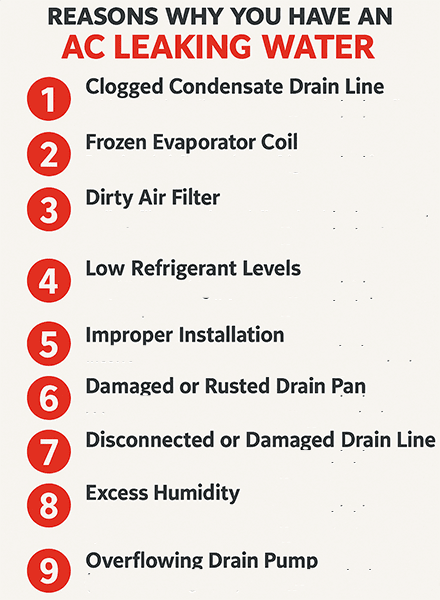
Bryant 3-Check Method: Filter → Drain Line → Coil
The Bryant 3-Check Method is a simple diagnostic starting point for an AC water leak: check the air filter for restricted airflow, check the condensate drain line for blockage, and check the evaporator coil for signs of freezing. These three checks address several of the most common conditions associated with AC water leaks. If the leak continues or you find refrigerant, electrical, or equipment problems, contact a qualified HVAC professional.What Are the Top Reasons for an AC Leaking Water?
An air conditioner leaking water can happen for several reasons, from simple maintenance oversights to more complex system malfunctions. Bryant identifies several common causes involving condensate drainage, airflow, the evaporator coil, and system installation or components. Below are the most common causes for excess moisture and leaks.
1. Clogged Condensate Drain Line
A clogged condensate drain line is one of the most common causes of an AC leaking water. Your air conditioner removes moisture from the air, which collects and flows out through this line. If the line becomes blocked with dirt, algae, or debris, water can back up and leak from the indoor unit. Routine maintenance should include inspecting the condensate drain to help prevent blockages.
“The best way to prevent this is through regular AC maintenance, including treating the drains with drain tablets or pads,” David Fowler, owner of Family Heating and Air in Pensacola, Florida, said.
Fowler warns against homeowners trying to perform this task themselves.
“Homeowners should call a licensed dealer for this maintenance or treatment,” Fowler warned. “Doing it incorrectly could damage the equipment.”
2. Frozen Evaporator Coil
A frozen evaporator coil causes leaks when the accumulated ice eventually melts and overwhelms the system's drain pan. This is often triggered by poor airflow from a dirty filter or low refrigerant levels.
3. Dirty Air Filter
A dirty air filter restricts airflow across the evaporator coil, causing it to get too cold and freeze over. When the ice melts, the excess water can overflow the drain pan and cause a leak. Bryant recommends checking air filters regularly and replacing them approximately every one to three months, depending on the filter, system, and home conditions. Regularly checking and replacing your air filter is a simple, effective way to help maintain proper airflow and indoor comfort Learn more about air filter replacement and how often to change air filters.
4. Low Refrigerant Levels
Low AC refrigerant levels can contribute to evaporator coil freezing, which may result in water leaking when the ice melts.. A refrigerant leak requires professional HVAC repair because refrigerant service must be performed by an EPA Section 608-certified technician when the work could release refrigerant.
5. Damaged or Rusted Drain Pan
A damaged or rusted drain pan will allow condensation to slip through cracks and leak from the unit. Over time, the condensate drain pan can corrode. This issue is more common in older air conditioners and can prevent the pan from properly collecting and directing condensation to the drain line.
6. Improper Installation
If an air conditioning system is not installed correctly, the unit may not be level. This can prevent the condensate drain pan from collecting water effectively, leading to overflows and leaks. Proper AC installation is critical for proper drainage and reliable operation.
7. Disconnected or Damaged Drain Line
The drain line that carries condensation away from the unit can become disconnected or damaged, causing water to leak inside or outside the unit. This can happen due to wear and tear, damage, or improper installation. A disconnected drain line can also prevent condensate from reaching its intended drainage point.
8. Blocked or Dirty Evaporator Coils
When evaporator coils are covered in dirt and grime, they can't transfer heat efficiently. This can contribute to restricted airflow, coil freezing, and excessive condensation, which can result in leaks. Learn how to clean AC coils and how to clean air conditioners.
9. High Humidity Levels
During periods of extreme humidity, your AC system may remove more moisture from the indoor air and produce more condensate. If the system is not sized correctly for your home, it may struggle to manage indoor humidity, potentially contributing to moisture problems. Learn more about the importance of a properly sized air conditioner.
10. Malfunctioning Condensate Pump
Some installations use a condensate pump to actively remove water. If this pump fails, clogs, or loses power, the water will back up and overflow.
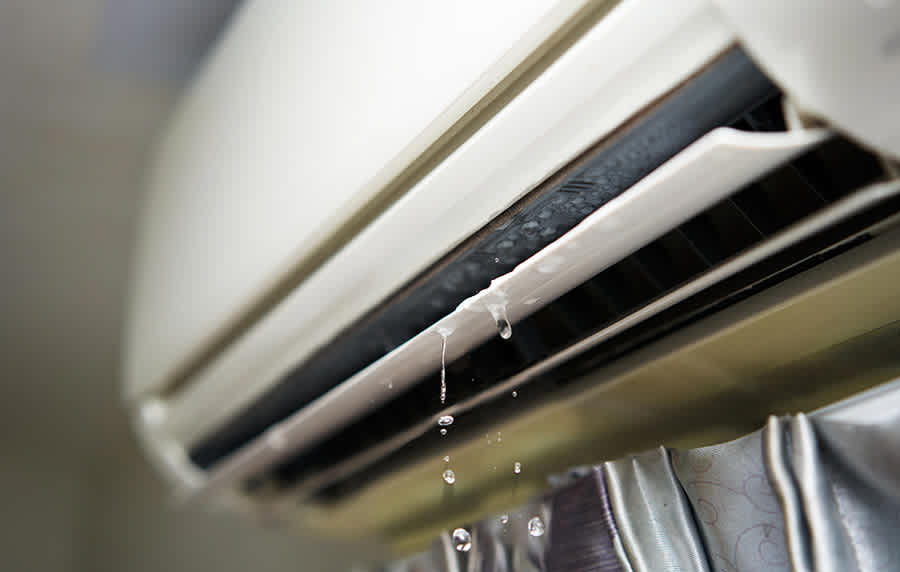
What Should I Do If My Air Conditioner Is Leaking Water?
If you notice your AC leaking water, taking immediate action can help prevent costly damage to your home and HVAC system. Bryant recommends shutting down a leaking system and addressing the source before continuing normal operation. Follow these steps to diagnose and address the issue safely:
- Turn Off the AC: Your first step should be to turn off the power to your central air conditioner at the thermostat and, when appropriate, the system's electrical disconnect or breaker. This stops the system from producing more condensate and helps prevent additional water damage. If you are unsure how to safely disconnect power, contact a qualified HVAC professional.
- Check the Air Filter: A clogged filter is a common cause of a frozen evaporator coil. Inspect your filter and replace it if it appears dirty. Bryant recommends checking filters regularly and replacing them approximately every one to three months, depending on conditions.
- Inspect the Condensate Drain Line: Check the drain line for any visible clogs or blockages at the point where it exits the unit. A wet/dry vacuum may be used to clear a minor clog if you can safely identify the condensate drain and understand how it is connected. If you are unsure, contact a qualified HVAC professional.
- Examine the Drain Pan: Look at the drain pan located under the indoor unit for cracks, rust, or standing water, which may indicate a clog or damage.
- Allow Frozen Coils to Thaw: If you see ice on the evaporator coils, let them thaw completely with the system turned off. This may take several hours. Do not attempt to chip or scrape ice from the coil, as doing so can damage the equipment.
- Call a Professional: If you cannot identify the source of the leak, suspect a refrigerant issue, or are uncomfortable performing these checks, it’s time to call a professional for AC service.
“There are some pretty dangerous elements to an HVAC system,” Samantha Houchin, owner of The Weather Changers in Denver, Colorado, said. “If you don’t know what you’re doing, you could damage the system or even put yourself in harm’s way. It’s best to rely on someone who is trained, understands the system inside and out, and knows how it works.”

Connect With A Bryant Dealer To Fix An AC Leaking Water
A Bryant Factory Authorized Dealer can diagnose whether an AC leak is related to drainage, airflow, the evaporator coil, refrigerant, or another system component and perform reliable air conditioning service. They can ensure the repair is done safely and correctly. Schedule an appointment with your local Bryant dealer to get the process started today.
AC Leaking Water FAQs
Water leaking from the bottom is usually due to a clogged drain line, frozen evaporator coil, or cracked drain pan, all of which prevent proper condensation drainage.
To stop your AC from leaking, your local Bryant dealer will check for a clogged condensate drain line, dirty air filter, or damaged drain pan, and clean or repair as needed to restore proper drainage.
It’s best to turn off the unit and call your local Bryant dealer, as running a leaking AC can cause water damage and potentially lead to mold growth or system failure.
Insurance may cover water damage caused by an AC leak, but not the cost to repair or replace the unit itself unless a covered event caused the leak.
If water or refrigerant is leaking, turn off your system and contact a professional. Water leaks can cause ceiling or floor damage, and refrigerant leaks should be addressed immediately for safety and performance.
Water leaks usually appear as pooling near the unit, while refrigerant leaks often cause hissing sounds, frost buildup, or reduced cooling performance. A certified HVAC technician can test to confirm the cause.
If the unit is cooling but leaking, it is likely a clogged drain line or a cracked drain pan. The cooling cycle is working, but the water
Repair costs vary depending on the cause. Clearing a clogged drain line is relatively inexpensive (often under $150), while replacing a rusted drain pan or fixing a refrigerant leak can cost significantly more.
While most smart thermostats cannot directly detect water leaks, integrating them with smart home water leak sensors near your indoor HVAC unit can immediately alert you to drain pan overflows on your mobile device.
Experts recommend scheduling professional AC maintenance at least once a year, ideally in the spring. Routine tune-ups ensure drain lines are clear and coils are clean, maximizing efficiency and preventing unexpected leaks.
Learn More About Air Conditioners
- Explore AC replacement
- Understand the value AC tune ups
- Get help with an AC not working
- What to do with mold in an air conditioner
- How to troubleshoot AC smells or an AC not blowing cold air


