- Explore what is a furnace
- Learn about furnace repair
- Explore furnace replacement
- Read our guide to furnace parts
- Learn how much is a new furnace
- Read our guide to high efficiency furnaces
What is a 40,000 BTU Furnace?
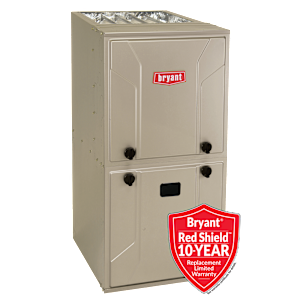
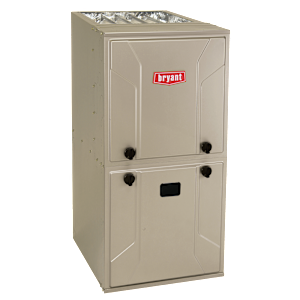
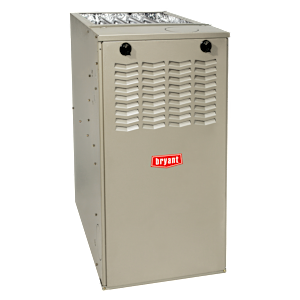
A 40,000 BTU furnace is a heating system with a rated heating capacity of 40,000 British Thermal Units (BTUs) per hour. Bryant offers 40,000 BTU furnace capacities in models such as the Evolution™ 97 987T, Preferred™ 96 926T, Legacy™ 92 912S and Legacy™ Line 80 830SA. Depending on the model, these furnaces offer up to 97% AFUE, 96.7% AFUE, 92.1% AFUE and 80% AFUE, respectively.
Choosing the right furnace size is crucial for achieving consistent comfort and managing energy costs. A 40,000 BTU furnace may be appropriate for some smaller homes, but square footage alone should not determine furnace size. A professional heat loss calculation considers factors such as climate, insulation, windows, ceiling height and the home's layout. This guide covers Bryant's 40,000 BTU furnace options, efficiency ratings, sizing considerations and maintenance requirements.

How Many Square Feet Will a 40,000 BTU Furnace Heat?
A 40,000 BTU furnace is often associated with homes between 1,200 and 1,800 square feet, but Bryant recommends determining furnace size based on the home's heating requirements rather than square footage alone. Insulation, ceiling height, windows, climate and other factors affect how much heating capacity a home needs.
To get the most efficiency out of your system, consider these influencing factors:
- Climate Zone: Homes in colder regions require more heating power.
- Insulation: Better insulation reduces heat loss, allowing a smaller furnace to be effective.
- Ceiling Height: Homes with high ceilings have more air volume to heat.
- Window Quality: Older, single-pane windows can lead to significant heat loss.
A professional heat loss calculation from your local Bryant dealer is the most accurate way to determine the correct furnace size for your home's unique needs. Learn more about what size furnace you need.
Why Choose a 40,000 BTU Furnace?
A 40,000 BTU furnace provides 40,000 BTUH of rated heating capacity, but the appropriate capacity depends on the home's calculated heating load. Bryant's 40,000-BTU models offer different efficiency ratings and operating configurations, allowing homeowners to compare options based on their home's requirements.
For example, Bryant's Evolution™ 97 987T provides up to 97% AFUE, while the Preferred™ 96 926T provides up to 96.7% AFUE. Both use two-stage heating and variable-speed blower technology.
An improperly oversized furnace may experience "short cycling," where the unit turns on and off more frequently than intended. This can contribute to:
- Wasted Energy: Frequent startups consume more fuel.
- Inconsistent Temperatures: The house heats up too fast and cools down quickly, creating hot and cold spots.
- Increased Wear: Constant cycling puts stress on components, potentially shortening the lifespan of the furnace.
The goal is not to select the smallest or largest furnace, but to match the furnace's heating capacity to the home's calculated heating load.
How Much Gas Does a 40,000 BTU Furnace Use?
A 40,000 BTU furnace has a rated input of 40,000 BTU per hour, equivalent to about 0.4 therms of natural gas per hour when operating continuously at that input rate. Actual natural gas consumption depends on the furnace's input rating, AFUE, operating time and cycling.
For example, a furnace rated at 40,000 BTUH input and operating continuously for one hour would consume approximately 0.4 therms of natural gas based on its input rating. This does not mean it will use 0.4 therms every hour of a heating season because a furnace cycles on and off according to the home's heating demand.
AFUE also affects how much of that fuel becomes usable heat. For example, Bryant's 987T is rated up to 97% AFUE, while its 912S is rated up to 92.1% AFUE.
40,000 BTU vs. 60,000 BTU Furnace
A 60,000 BTU furnace has 50% more rated heating capacity than a 40,000 BTU furnace.
| Furnace size | Rated heating capacity | Relative capacity |
| 40,000 BTU | 40,000 BTUH | 100% |
| 60,000 BTU | 60,000 BTUH | 150% |
That does not mean a 60,000 BTU furnace is appropriate for a home that needs 40,000 BTUH. Furnace capacity should be selected using a professional heat loss calculation rather than a simple BTU-per-square-foot rule.
Installation and Maintenance Tips for a 40k BTU Furnace
Proper furnace installation and consistent furnace maintenance are essential for ensuring the safety, performance, and longevity of your 40,000 BTU furnace.
Professional Furnace Installation
Professional HVAC installation by a Bryant expert is critical. A certified technician will:
- Calculate Heat Loss: Confirm that 40,000 BTU is the exact capacity needed for your space.
- Check Ductwork: Verify compatibility to prevent airflow restrictions.
- Secure Connections: Ensure correct venting and gas lines for safe, code-compliant operation.
Proper installation also helps the furnace operate as intended and achieve its rated efficiency.
Routine Furnace Maintenance
To keep your furnace running at peak performance, follow these key practices:
- Replace Filters: Clean or replace your furnace filters regularly as recommended by the manufacturer. Learn more about how often to change air filters.
- Clear Vents: Keep all supply and return vents clear of furniture, rugs, and other obstructions.
- Schedule Annual Service: A local Bryant dealer can perform furnace maintenance, or a comprehensive check of the combustion system, heat exchanger, safety controls, and airflow to maintain optimal performance.
Be alert for signs that your furnace may need furnace service, such as unusual noises, uneven heating, rising energy bills, or frequent cycling. Addressing these issues early helps preserve efficiency and extend the life of your furnace.
How to Find the Right 40,000 BTU Furnace for Your Home
Bryant offers 40,000 BTU furnace options with different efficiency ratings, heating stages and blower configuration A Bryant dealer can provide a personalized recommendation to determine if a 40,000 BTU furnace is the best furnace for your home. They will assess your layout and heating requirements, guide you through different models and efficiency ratings, and provide a free quote for how much a furnace costs.
Connect with a local Bryant dealer today to ensure your home has the optimal heating solution.

Compare Bryant Furnaces
Choose a Bryant furnace for reliable, efficient heating that keeps your home comfortable throughout the winter. Known for their durability and advanced technology, Bryant furnaces offer quiet operation, precise temperature control, and energy-saving features like variable-speed motors and two-stage heating. With a range of models to suit different home sizes and needs, Bryant furnaces are built to last and come with industry-leading warranties, providing peace of mind and long-term value for your home heating system.
40,000 BTU Furnace FAQs
Installing a 40,000 BTU furnace typically costs $2,000–$14,500, depending on efficiency, brand, installation complexity, and local labor rates.
A 40,000 BTU furnace typically heats 1,200–1,800 sq. ft., depending on insulation, ceiling height, and climate zone. Your local Bryant dealer can determine the proper furnace size for your home.
The main difference is heating capacity: a 60,000 BTU furnace produces 50% more heat than a 40,000 BTU unit, making it better for larger homes or colder climates.
A 40,000 BTU furnace is suitable for small to mid-sized homes with average insulation and layouts. The right size depends on climate, square footage, and heating needs.
A 40,000 BTU furnace consumes roughly 0.4 therms of natural gas for every hour it runs continuously. Actual usage varies based on the furnace's efficiency rating (AFUE) and how often it cycles on.


