About The Author: Travis Baugh is a Digital Brand Marketing Manager for Bryant, where he creates clear, helpful content to guide homeowners through heating, cooling, and indoor air quality decisions. His goal is to empower readers with the knowledge they need to choose the right comfort solutions for their home—confidently and comfortably.
Your Guide to Mini Split Heat Pumps
By Travis Baugh | Expert Review by Connor Howard - Product Manager, Ductless Mini Splits
A mini split heat pump is a ductless HVAC system that provides heating and cooling with independent temperature control for individual rooms or zones. By delivering conditioned air directly into your living space—without relying on ductwork—ductless systems can also avoid energy losses associated with duct distribution.
Ideal for heating or cooling a single room, an entire floor, or a multi-zone home, ductless mini split heat pump systems offer a flexible, high-performance solution for maintaining comfortable temperatures year-round. Bryant offers both single-zone and multi-zone ductless systems, with published cooling efficiencies of up to 35.1 SEER2 and heating efficiencies of up to 30 HSPF2 on the Evolution™ Heat Pump (37MPRA). Below, we cover how mini split heat pumps work, their key advantages, and where to install them.
How Do Mini Split Heat Pumps Work?

Mini split heat pumps work by transferring heat between indoor and outdoor air using refrigerant—rather than generating heat from a fuel source. This makes them capable of providing both heating and cooling from the same system.
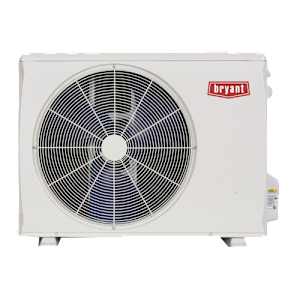
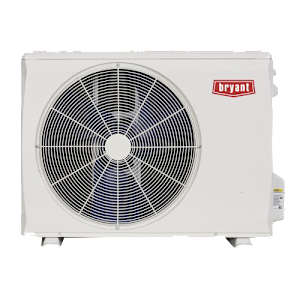
These systems consist of two main components: an outdoor unit and one or more indoor units. The outdoor unit houses the compressor, condenser, and fan, which move heat between the indoor and outdoor environments. In heating mode, the outdoor unit extracts heat from outdoor air, even when temperatures are below freezing. The compressor raises the refrigerant pressure and temperature as part of this heat-transfer process.
The indoor units—typically wall- or ceiling-mounted—connect to the outdoor unit via narrow refrigerant lines. Each unit features an evaporator coil, a fan, and a mini split air filter. In cooling mode, the indoor unit absorbs heat from your indoor air and transfers it outside. In heating mode, the process reverses: heat is extracted from the outdoor air and brought indoors to keep your home comfortable.
What Are the Advantages of Mini Split Heat Pumps?
Mini split heat pumps offer significant advantages over traditional ducted systems—particularly for homes without existing ductwork or homeowners seeking customized, room-by-room climate control.
Mini split heat pumps are often well suited for homes without existing ductwork, room additions, older homes, and spaces like garages or attics. Ducted systems may be preferred when a home already has intact central ductwork and whole-home, uniform conditioning is the priority.
Brian Redmond, owner of Redmond’s Complete Comfort in Lock Haven, Pennsylvania, highlights several practical benefits:
“Bryant mini split heat pumps can operate down to -22°F at 68% capacity,” Redmond said. “Even in northern areas, these units can condition the home for most of the year. Mini split heat pumps are relatively affordable for homeowners relying on coal, oil, or electric heat. They can help reduce costs, improve comfort, and provide years of reliable performance.”
Why Are Mini Split Heat Pumps So Energy Efficient?
Mini split heat pumps are energy efficient in part because they can deliver conditioned air directly to the space without distributing it through ductwork. The U.S. Department of Energy notes that about 20%–30% of the air moving through a typical residential duct system can be lost through leaks, holes, and poorly connected ducts.1
Eliminating duct losses does not guarantee a specific amount of energy savings, however. Actual energy use depends on the mini split's efficiency, system size, climate, insulation, thermostat settings, installation quality, and how the system is operated.
Bryant ductless systems offer published efficiency ratings that vary by model and indoor-unit combination. For example, the Bryant Evolution™ Heat Pump (37MPRA) can reach up to 35.1 SEER2 and 30 HSPF2 when paired with compatible indoor units. Learn more about mini split efficiency.
How Does Zoned Control Improve Home Comfort?
Zoned control allows you to set different temperatures in individual rooms or areas, ensuring personalized comfort and allowing homeowners to condition occupied spaces independently.
Unlike traditional ducted systems that may use a central thermostat to control the temperature for much of the home, mini splits let you target specific zones. A mini split in the master bedroom, for example, can maintain a consistent temperature without adjusting the thermostat for the whole house Learn more about 3 zone mini splits and 4 zone mini splits.
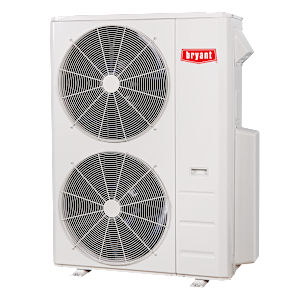
Bryant multi-zone systems can connect multiple indoor units to a single outdoor unit, with the number of zones depending on the specific system and configuration.
Are Mini Split Heat Pumps Easy to Install?
Yes. Mini split systems require a small opening through the exterior wall for the refrigerant, electrical, and drain lines, rather than the extensive ductwork required by a new central forced-air system.
This minimal installation footprint makes mini splits an ideal choice for retrofitting older homes, outfitting room additions, or adding climate control to spaces that lack existing ductwork. Learn more about mini split installation. Always work with your local Bryant dealer for professional mini split installation.
What Are the Design and Aesthetic Options?
Mini splits offer diverse, sleek indoor unit styles—including wall-mounted, ceiling-mounted, and floor-mounted configurations—that integrate cleanly into your home's décor while providing flexibility for different room layouts. This flexibility makes it easier to choose the best mini split fit for any space.
How Do Bryant Mini Split Heat Pumps Compare?
Bryant offers ductless heat pumps for single-zone and multi-zone applications. Specifications vary by model and indoor-unit pairing, so published efficiency, capacity, operating range, and sound levels should be evaluated for the specific system being considered.
| Bryant model | Configuration | Published cooling efficiency | Published heating efficiency | Indoor-unit / zone capability | Published heating operating range |
| Evolution™ 37MPRA | Single-zone heat pump | Up to 35.1 SEER2 | Up to 30 HSPF2 | 1 indoor unit | Down to -22°F |
| Preferred™ 37MGRA | Multi-zone heat pump | Up to 25.2 SEER2 | Up to 10.4 HSPF2 | 2–6 indoor units, depending on configuration | Down to -13°F |
| Preferred™ 37MARA | Heat pump | Up to 26 SEER2 | Up to 13.9 HSPF2 | Compatible with multiple indoor-unit configurations | Down to -13°F |
Where Should You Install a Mini Split Heat Pump?
A mini split heat pump is a highly adaptable HVAC solution that performs well in a wide variety of settings, from single-room applications to large, multi-zone homes.

Can Mini Splits Heat and Cool a Single Room?
Yes. Mini splits provide precise, independent temperature control for a single room—such as a bedroom, living room, or home office—without affecting other areas of the house.
This room-level control is especially valuable when different occupants have varying temperature preferences, or when one room consistently runs warmer or cooler than the rest of the home.
Are Mini Splits Good for Room Additions or Conversions?
Mini split heat pumps are often a practical solution for room additions, attics, and sunrooms because they provide independent climate control without the need to extend existing central ductwork.
Bryant mini splits can be configured for newly finished spaces where extending ductwork would be difficult or impractical
How Do Multi-Zone Mini Split Systems Work in Larger Homes?
In larger homes, a single outdoor unit can connect to multiple indoor units, creating a multi-zone system with independent temperature control across different floors or rooms.
This setup allows homeowners to condition individual spaces rather than relying solely on a single central temperature setting. Learn more about multi zone mini splits.
Are Mini Splits a Good HVAC Option for Older Homes?
Yes. Ductless mini splits are often a practical retrofit option for older homes that lack existing ductwork. They deliver modern heating and cooling without requiring extensive duct installation. Learn more about HVAC options for old houses.
Can Mini Splits Be Used in Garages, Workshops, or Home Studios?
Yes. Mini splits offer targeted heating and cooling for garages, workshops, and home studios that are typically disconnected from the home's main HVAC system. Because these spaces can have different insulation levels and heating and cooling loads than the rest of the home, proper sizing is especially important. Learn more about garage AC units.

How Much Can I Save With A Mini Split?
The amount you can save with a mini split depends on several factors, including your local climate, electricity rates, the efficiency of your current heating and cooling system, how often you use the unit, and whether you're conditioning a single room or an entire home. Because these variables vary significantly from one household to another, it's not possible to provide a universal savings estimate.
In general, homeowners may reduce energy use by replacing older, less efficient equipment or by using a ductless mini split to heat and cool only occupied spaces. However, actual savings will depend on your home's insulation, system sizing, thermostat settings, and installation quality. ENERGY STAR recommends properly sizing heat pumps using a Manual J load calculation and notes that ENERGY STAR certified mini splits can use up to 60% less energy than standard electric resistance radiators. 2
For a household-specific estimate, compare the efficiency of your existing equipment with the efficiency of the proposed mini split and account for local utility rates, heating and cooling loads, and expected operating hours.
Mini Split Heat Pump vs. Window AC Unit
While window AC units can provide an affordable way to cool a single room, a mini split heat pump can provide both heating and cooling while avoiding the need to occupy a window with the equipment. Mini splits also offer independently controlled zones on applicable systems and published efficiency ratings that can be substantially higher than those of basic room air conditioners.
Sound levels vary by model and operating condition, so homeowners should compare the published dB(A) rating for the specific indoor and outdoor units rather than assuming all mini splits operate at the same sound level.
Connect With A Bryant Dealer On Mini Split Heat Pumps
Bryant’s range of ductless mini split heat pumps is designed to deliver year-round heating and cooling with single-zone and multi-zone configurations.. Schedule an appointment with your local Bryant dealer to explore the benefits of mini split heat pumps for your home and get a quote for mini split cost.
A Bryant dealer can evaluate your home's heating and cooling requirements, determine the appropriate system size and configuration, and help you compare available ductless options. Learn more about choosing the best mini split.
1 https://www.energy.gov/save/home-upgrades
2 https://www.energystar.gov/products/ductless_heating_cooling?utm_source=chatgpt.com

Compare Bryant Ductless Mini Splits
Choose a Bryant ductless mini split for efficient, customizable comfort without the need for ductwork. Ideal for specific rooms or multi-zone cooling and heating, these systems offer precise temperature control and quiet operation. With energy-efficient technology, they help reduce utility costs while providing year-round comfort. The sleek design makes Bryant mini splits a perfect choice for homes, additions, or spaces where traditional ductwork is impractical, delivering reliable performance and convenience.
Mini Split Heat Pump FAQs
A mini split is a type of heat pump that operates without ductwork, offering zoned heating and cooling, while traditional heat pumps typically use central ducts to condition the entire home.
A mini split heat pump can typically heat 400 to 600 square feet per indoor unit, though capacity depends on the unit size, insulation, and climate.
Yes, mini splits are highly effective for heating, especially in well-insulated homes.
Mini splits are sometimes less popular due to a lack of familiarity among homeowners in certain regions.
Ductless mini-split systems are designed to avoid energy losses from ducts, making them ideal for retrofits, additions, or homes without existing ductwork.
Many modern mini split systems integrate seamlessly with smart home platforms and Wi-Fi thermostats. This allows you to control your home's climate remotely from your smartphone, optimizing energy usage when you are away.
Yes, mini split heat pumps operate quietly. Because the noisy compressor components are housed outside, the indoor units deliver conditioned air with minimal sound, making them perfect for bedrooms and home offices.
About The Expert Reviewer: Connor Howard serves as Product Manager for Residential Ductless Mini Splits at Bryant. He helps shape ductless heating and cooling solutions for a variety of home layouts and comfort needs. His work considers evolving homeowner expectations, energy efficiency objectives, and industry requirements to support practical, forward-looking residential comfort solutions.
Learn More About Ductless Mini Splits
- Learn all about what is a mini split
- Read our guide to mini split cost
- Understand what size mini split do I need?
- Find out are mini splits worth it?
- Learn all about mini split vs central air
- Learn the ins and outs of mini split maintenance


