- Learn all about what is a mini split
- Read our guide to mini split cost
- Understand what size mini split do I need?
- Find out are mini splits worth it?
- Learn all about mini split vs central air
- Learn the ins and outs of mini split maintenance
Mini Split Air Filters: Essential Care for Healthy Indoor Air
A mini split air filter is the first line of defense in a ductless heating and cooling system. It captures dust, allergens, and debris before air circulates through your home. Keeping this filter clean is essential for maintaining indoor air quality, ensuring peak energy efficiency, and extending the lifespan of your unit.
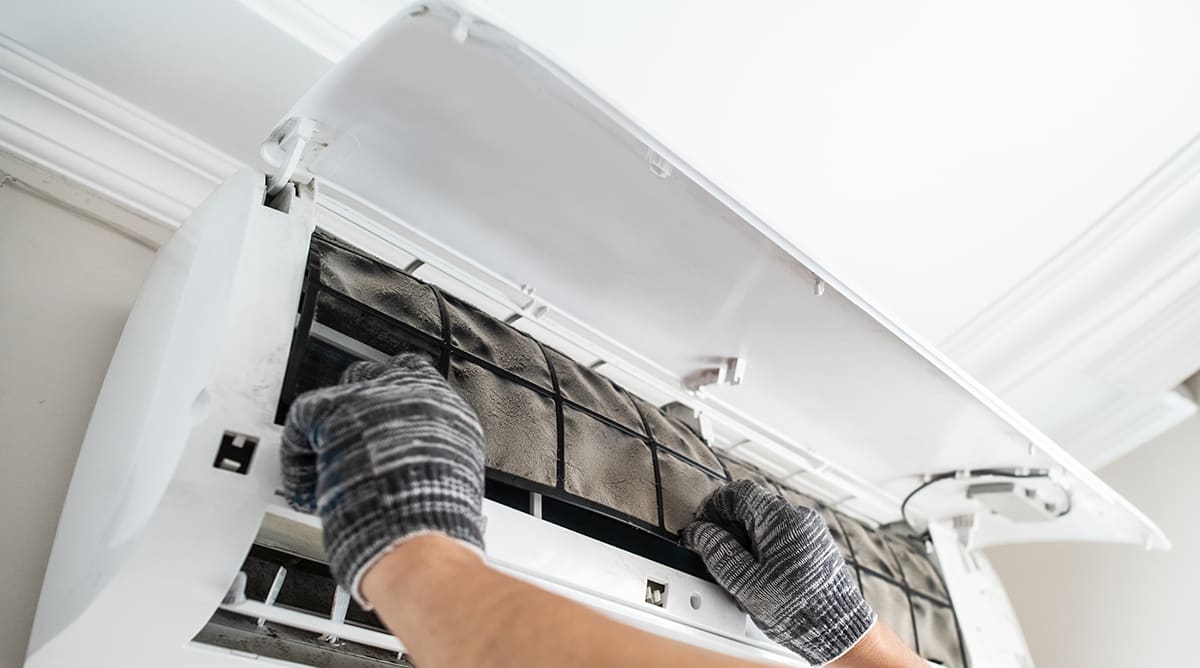
How Do I Clean a Mini Split Air Filter?
Cleaning a reusable mini split air filter is a simple process that you should perform every 2 to 4 weeks, depending on your system's usage and home environment.- Power Down the Unit: For your safety, always turn off the power to your mini split system at the circuit breaker before performing any maintenance.
- Access the Filters: Gently lift the front panel of the indoor air handler unit to expose the filters.
- Remove the Filters: Carefully slide the mesh filters out of their designated tracks.
- Wash the Filters: Rinse the filters under lukewarm running water. If there's significant dust buildup, you can use a vacuum with a soft brush attachment first. For stubborn grime, a mild detergent can be used.
- Dry Completely: Allow the filters to air dry completely in a shaded area. Never reinstall a damp filter, as this can lead to mold and mildew growth.
- Reinstall and Reset: Once dry, slide the filters back into their tracks, close the front panel, and restore power. If your model has a "clean filter" indicator light, reset it according to your owner's manual.
Why Does My Mini Split Air Filter Matter?
The air filter protects both the air you breathe and the sensitive internal mechanics of your HVAC unit. By trapping airborne particles, it prevents debris from coating the evaporator coils, allowing your system to deliver the precise comfort and efficiency it was engineered for.
Impact on Performance and Health
- Decreased Energy Efficiency: Unobstructed airflow is key to low energy usage. A clean filter helps keep utility bills in check.
- Poor Indoor Air Quality: Regular cleaning removes common irritants like pollen, pet dander, and dust mites.
- Reduced System Longevity: Dust buildup on internal components is a leading cause of premature wear and costly repairs.
David Fowler, owner of Family Heating and Air in Pensacola, Florida, says regularly checking and cleaning a mini split air filter is important for maintaining proper airflow, energy efficiency, and system performance.
“A dirty filter makes the system work a lot harder,” Fowler said. “We need to make sure the filters are cleaned regularly, just like with a traditional central air system, to help maintain proper airflow and keep the system running efficiently.”
Signs Your Filter Needs Attention
Your system often communicates when it needs maintenance. Watch for these indicators that your mini split air filter requires immediate cleaning:
- Visible Dust: You can see dust and debris accumulating on the unit's exterior vents.
- Reduced Airflow: The system isn't blowing air as forcefully as it normally does.
- Unpleasant Odors: You notice a musty or dusty smell when the unit is operating.
- Higher Energy Bills: An unexplained increase in your electricity usage often points to a clogged filter forcing the system to work harder.
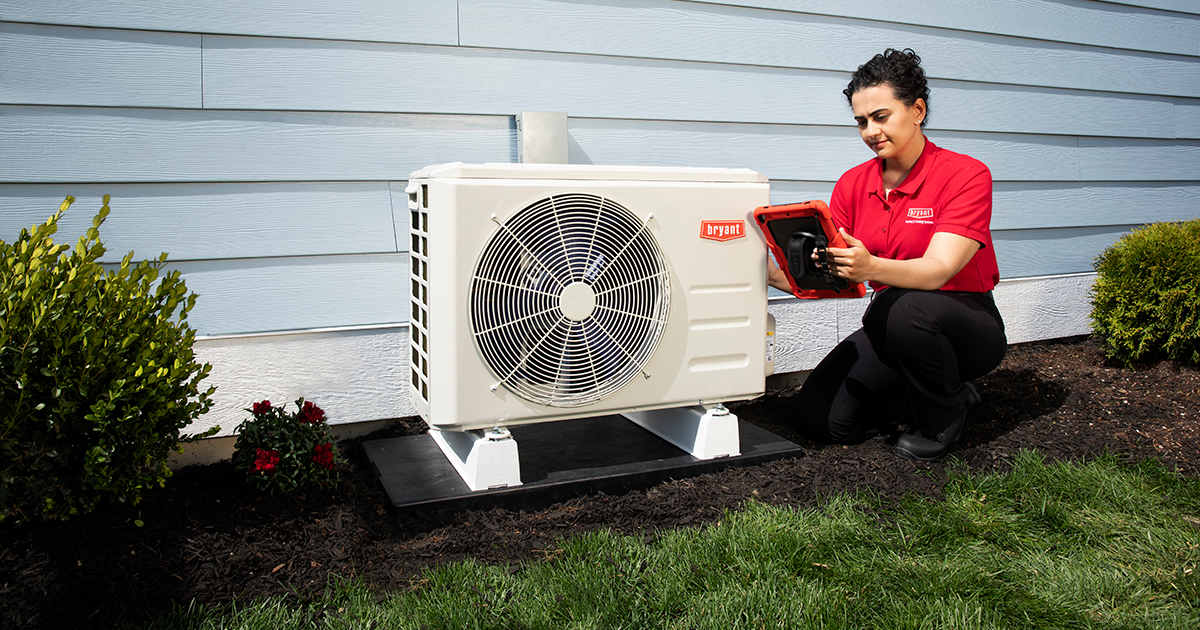
Connect With Your Bryant Dealer On Mini Splits
Do you have more questions about your mini split air filter, cleaning frequency, or where to find factory-authorized replacement parts? Connect with your local Bryant dealer for expert advice and to schedule an annual professional mini split maintenance that keeps your system running at peak efficiency.
Mini Split Air Filter FAQs
Yes, a clogged filter can restrict airflow enough to cause the evaporator coil to freeze. When that ice melts, it may overwhelm the drain pan and cause water to leak down the wall.
While standard mesh filters are washable and designed to last the life of the unit, specialized deodorizing or anti-allergen inserts typically need replacement every 3 to 6 months. Always check your owner's manual for model-specific guidelines.
Yes, all mini-split indoor units include built-in air filters, which are crucial for trapping dust, pollen, and other contaminants to maintain good indoor air quality and keep the system running efficiently.
Standard mesh filters capture larger particulates like dust and hair but are not designed to kill mold. However, specialized advanced filters or additional air purifying accessories can be added to some systems to help reduce microscopic contaminants.
You can and should perform routine cleaning of the washable mesh air filters yourself, typically every 4 to 6 weeks, but a professional HVAC technician is recommended annually for a deep cleaning of the coils and blower fan.
While the main mesh filters are designed to last the life of the unit (unless torn), specialized inserts like deodorizing or anti-allergen filters typically need replacement every 3 to 6 months. Check your owner's manual for specifics.


