About The Author: Travis Baugh is a Digital Brand Marketing Manager for Bryant, where he creates clear, helpful content to guide homeowners through heating, cooling, and indoor air quality decisions. His goal is to empower readers with the knowledge they need to choose the right comfort solutions for their home—confidently and comfortably.
Step-by-Step Mini Split Installation: Your Guide to Ductless Comfort
By Travis Baugh | Expert Review by Connor Howard - Product Manager, Ductless Mini Splits
Ductless mini split installation is the process of mounting an indoor air handler, positioning an outdoor condenser, and connecting them through a small wall opening with refrigerant lines and electrical wiring. While the concept is straightforward, professional installation by a Bryant-certified dealer is essential for proper sizing, refrigerant handling, electrical connections, and system setup.
Professional mini split installation typically costs $2,000–$10,500. A standard single-zone installation typically takes 4–8 hours, while multi-zone installations may take 1–2 days depending on the number of indoor units and installation complexity. Because installation involves refrigerant and electrical work, homeowners should hire a qualified HVAC professional.
Whether you are updating an older home or adding climate control to a new room extension, this guide covers the full mini split installation process, key benefits, costs, and why partnering with a local Bryant dealer is your best path to reliable, long-term comfort.
How Do Professionals Install a Mini Split?
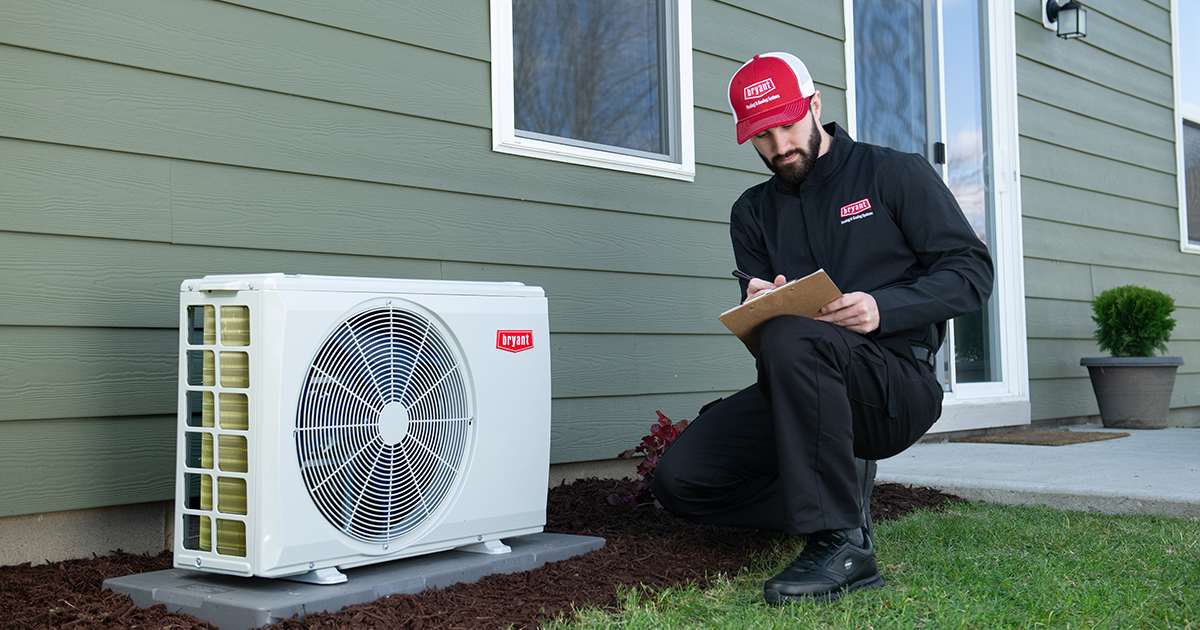
To install a mini split, a Bryant-certified HVAC technician selects an optimal site, mounts the indoor unit, drills a pass-through hole, runs refrigerant lines, and connects the outdoor condenser. Understanding each step helps you know exactly what to expect when your technician arrives.
A professional Bryant dealer will generally follow these nine steps to ensure a seamless setup:

A mini split may be a practical option for homes without existing ductwork, room additions, or homeowners who want independent temperature control in different areas of the home. Central AC may be a practical option for homes that already have ductwork and need whole-home cooling. A qualified HVAC contractor can help determine which installation approach fits your home's layout, existing infrastructure, and heating and cooling needs. Learn more in our dedicated guide on mini splits vs. central air.
- Site Selection: The technician identify the optimal indoor and outdoor unit locations based on air distribution, room size, and insulation.
- Sizing the Unit: Your dealer determine the appropriate system size for the space. An undersized unit won't cool effectively, while an oversized one wastes energy. (Not sure what you need? Read: what size mini split do I need?)
- Mounting the Indoor Unit: The installer secure the mounting bracket to the interior wall and level the unit to support proper drainage and airflow.
- Drilling and Routing: Dealers create the wall penetration needed to route refrigerant lines, drain piping, and electrical connections between the indoor and outdoor units.
- Running Refrigerant Lines: Dealers connect the refrigerant lines to the indoor unit and outdoor equipment. Proper refrigerant-circuit work requires specialized tools and training.
- Installing the Outdoor Unit: Dealers position the outdoor unit on an appropriate base or wall bracket in a location with adequate clearance and airflow.
- Vacuuming and Pressure Testing: Dealers evacuate the refrigerant lines to remove air and moisture and test the system for leaks before startup.
- System Startup and Calibration: dealers start the system and verify operating conditions, airflow, temperature performance, and controls.
- Final Inspection and Walkthrough: Dealers inspect the completed installation, clean the workspace, and explain system controls and maintenance recommendations. They will also recommend a mini split maintenance schedule.
How Much Does Mini Split Installation Cost?
The average cost of professional mini split installation ranges from $2,000 to $10,500, depending on the number of indoor units, system capacity, efficiency ratings, and installation complexity.
Single-zone systems designed to heat or cool one room are typically more affordable than multi-zone systems that connect several indoor units to one outdoor condenser. Additional factors that can influence total pricing include:
- Wall access and line-set length
- Electrical upgrade requirements
- Mounting complexity
- Regional labor rates and permit requirements
- Local climate needs
While upfront pricing matters, proper sizing, refrigerant-circuit evacuation and testing, electrical connections, and secure mounting are critical to proper system operation and long-term performance.. For a detailed breakdown, visit our guide to mini split cost.
Should You Hire a Professional for Mini Split Installation?
Yes. Professional ductless mini split mini split installation is strongly recommended. Correct installation requires safely handling high-pressure refrigerant and high-voltage electricity, both of which demand specialized training and tools.
The U.S. Environmental Protection Agency requires Section 608 certification for technicians performing work that could release refrigerant, including certain mini-split installation activities such as connecting or disconnecting refrigerant lines.1
The Risks of DIY Installation
DIY mini split installation is strongly discouraged because incorrect setup can lead to energy loss, system failure, and serious personal injury from electrical or refrigerant hazards.
Brian Redmond, owner of Redmond’s Complete Comfort in Lock Haven, Pennsylvania, explains why professional expertise is non-negotiable:
“You need a professional who understands pressures and temperatures, psychrometric charts, how to recover refrigerant, how to evacuate a system properly, how to charge a system properly, and has all of those specialty tools,” Redmond said. “Can you imagine buying a vehicle kit, putting a vehicle together, and then driving down the road?”
Redmond also warns homeowners about the electrical safety risks of DIY installation.
“If equipment isn’t properly grounded or wires aren’t landed in the right locations, there are serious safety issues,” he said. “The unit could become live with power, and someone could touch it and get electrocuted. HVAC dealers go through training to wire units properly.”
Additionally, he emphasized the dangers of working with high-pressure refrigerant.
“When refrigerant is released from even a quarter-inch port, the force can break skin or get into your eyes,” Redmond said.
What Are the Benefits of Mini Split Installation?
The main benefits of mini split installation include eliminating the need for ductwork, efficient operation, customizable zoning control, and flexible design options. Homeowners choose ductless systems for their versatility and ability to integrate into spaces where traditional ductwork may be difficult to install.
- No Ductwork Required: Ideal for older homes, room additions, or garages where installing ducts is invasive or impractical.
- Superior Energy Efficiency: Bryant ductless systems use inverter-driven technology on select models to adjust compressor operation based on demand. Eliminating ductwork can also avoid energy losses associated ductwork. Learn more about mini split efficiency.
- Zoning Capability: Multiple indoor units can be strategically placed to create independent temperature zones, heating or cooling only the rooms that need it Learn more about multi zone mini splits.
- Flexible Design: With wall-mounted, floor-mounted, and ceiling-cassette options, you can integrate the unit seamlessly into your interior design.
What To Expect During Bryant’s AC Installation
During a Bryant mini split installation, homeowners can expect comfort technology, energy-efficiency options, published sound ratings on select models, and system features that vary by model and indoor/outdoor-unit combination.
- Advanced Comfort Technology: Bryant inverter technology adjusts compressor operation to help maintain consistent temperatures. Select Bryant ductless systems are designed to operate across outdoor temperatures ranging from -22°F to 122°F.
- High Efficiency: With SEER2 ratings up to 28.5 and HSPF2 ratings up to 18.0, our Evolution™ systems are ENERGY STAR® certified.
- Healthy Air: Built-in washable mini split air filters capture airborne pollutants, while relative humidity sensors allow for precise humidity control.
- Quiet Operation: Bryant publishes sound ratings for individual models. For example, the Evolution™ 37MPRA outdoor unit is rated as low as 57 dB(A), while compatible Bryant high-wall indoor units can have published sound levels as low as 16 dB(A) with the Evolution™ 615PHA, depending on model and operating condition.

Mini Split Installation vs. Central AC Installation
Both mini splits and central air conditioners can provide efficient whole-home cooling, but the installation process, cost, and ideal applications differ significantly.
| Feature | Mini Split Installation | Central AC Installation | |
| Best For | Homes without ductwork, room additions, garages, or zoned comfort | Homes with existing ductwork needing whole-home cooling | |
| Installation Complexity |
|
Moderate to high; requires an outdoor condenser, indoor coil, and existing or new ductwork | |
| Ductwork Required | No | Yes | |
| Temperature Control | Individual room or zone control | One thermostat for the home (unless paired with a zoning system) |
Why Choose Bryant for your Air Conditioner Installation?
Choosing a local Bryant dealer for your mini split installation connects you with professionals trained to evaluate equipment sizing, installation requirements, electrical connections, refrigerant work, and system setup. Bryant dealers can also provide ongoing maintenance and service after installation.
Schedule an appointment today and discover the best mini split for your home.
Compare Bryant Ductless Mini Splits
Choose a Bryant ductless mini split for efficient, customizable comfort without the need for ductwork. Ideal for specific rooms or multi-zone cooling and heating, these systems offer precise temperature control and quiet operation. With energy-efficient technology, they help reduce energy costs while providing year-round comfort. The sleek design makes Bryant mini splits a perfect choice for homes, additions, or spaces where traditional ductwork is impractical, delivering reliable performance and convenience.
Mini Split Installation FAQs
The average cost to install a mini split system ranges from $2,000 to $10,500, depending on the number of zones, system size, and complexity of installation.
It's strongly recommended to hire a licensed HVAC professional, as proper installation requires refrigerant handling, electrical work, and vacuum sealing for system efficiency and warranty protection.
You don’t need to put a mini-split in every room—one unit can serve a large open area, and multiple indoor units can be strategically placed to cover zones or frequently used spaces. The number depends on your home’s layout, insulation, and comfort preferences.
You’ll typically need 2 to 4 indoor units for a 1,500 square foot house, depending on layout, insulation, and zoning preferences. Work with your local Bryant dealer to determine the precise amount.
No, mini splits typically do not devalue a house—in fact, they can increase appeal by offering energy-efficient heating and cooling, especially in homes without ductwork or in-room additions. A professional, well-integrated installation helps preserve or enhance home value.
With proper installation and regular maintenance, a Bryant mini split system can typically last 10 to 15 years.
A ductless system can enhance comfort and energy efficiency, which may make a home more appealing to potential buyers.
A standard single-zone mini split installation typically takes an HVAC professional four to eight hours to complete. Multi-zone systems may take one to two days depending on the complexity and the number of indoor units.
No, mini splits are highly energy-efficient and use less electricity than traditional HVAC systems. Their advanced inverter-driven compressors adjust speeds dynamically to maintain consistent temperatures without wasting energy.
Mini split installation permits vary by location, but many areas require permits for electrical work, refrigerant systems, or changes to the structure of the home. A licensed HVAC contractor can help determine the required permits and ensure the installation meets local building and safety codes.
The best time to install a mini split is typically during the spring or fall when HVAC contractors are less busy and temperatures are more moderate. Installing before peak summer or winter demand can help ensure faster scheduling and have your system ready when you need heating or cooling most.
About The Expert Reviewer: Connor Howard serves as Product Manager for Residential Ductless Mini Splits at Bryant. He helps shape ductless heating and cooling solutions for a variety of home layouts and comfort needs. His work considers evolving homeowner expectations, energy efficiency objectives, and industry requirements to support practical, forward-looking residential comfort solutions.
Learn More About Ductless Mini Splits
- Learn all about what is a mini split
- Discover the value in mini split heat pumps
- Understand what is a ducted mini split
- Read our guide to mini split cost
- Find out are mini splits worth it?
- Learn all about mini split vs central air


