About The Author: Travis Baugh is a Digital Brand Marketing Manager for Bryant, where he creates clear, helpful content to guide homeowners through heating, cooling, and indoor air quality decisions. His goal is to empower readers with the knowledge they need to choose the right comfort solutions for their home—confidently and comfortably.
What is a Small Mini Split? Your Complete Guide
A small mini split is a ductless heating and cooling system designed to efficiently condition a single room or zone—no ductwork required. These systems combine inverter technology, flexible installation, and quiet operation to deliver targeted, year-round comfort. Ideal for home additions, converted spaces, and rooms without existing ducts, a small mini split is a smart, long-term investment in personalized home comfort.
What Are The Benefits of Small Mini Split Systems?
Small ductless mini split systems provide targeted climate control by combining installation flexibility, advanced energy efficiency, and exceptionally quiet operation—making them an excellent choice for personalized home comfort.
1. Installation Flexibility
Small mini splits do not require ductwork, so they can be installed in a wide range of configurations to suit virtually any home layout. This makes them especially popular for home additions, converted garages, basements, sunrooms, and homes without existing ducts.
Whether conditioning a single room or preparing for a multi-zone setup, these systems offer design adaptability that traditional HVAC units cannot match. With sleek, modern aesthetics, small mini splits integrate seamlessly into your home's interior without sacrificing style during mini split installation.
2. Energy Efficiency
Small mini splits are highly energy-efficient because they deliver targeted heating and cooling, eliminating the waste that comes from conditioning unused spaces.
With zoned temperature control, each indoor unit operates independently—so you heat or cool only the rooms that need it. This precision, combined with high-efficiency inverter technology, significantly lowers energy consumption and reduces monthly heating and cooling bills. Learn more about mini split energy efficiency.
3. Quiet Operation
Ductless mini splits operate at whisper-quiet levels, making them ideal for bedrooms, home offices, and any space where noise is a concern. Unlike older heating and cooling systems, small mini splits deliver reliable comfort without distracting rattles or hums.
Three Factors In Choosing the Right Small Mini Split
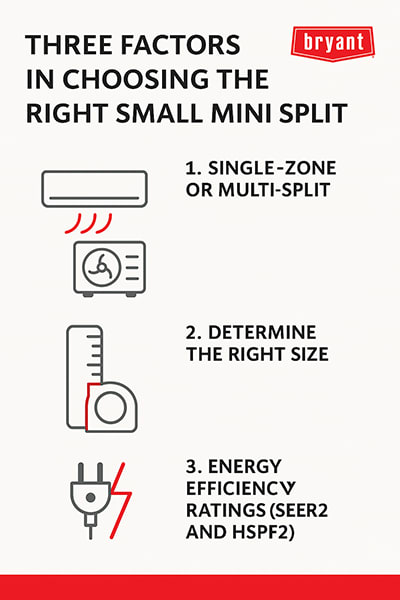
Selecting an appropriately sized mini split comes down to three decisions: choosing between a single-zone or multi-zone setup, calculating the correct BTU capacity, and evaluating energy efficiency ratings. Getting each factor right ensures long-term comfort and efficiency.
Undersized units may struggle to maintain desired temperatures, while oversized systems cycle on an
1. Should I Choose A Single-Zone Or Multi-Zone Mini Split?
Single-zone mini splits are best suited for conditioning one room or area, while multi zone mini splits allow multiple rooms to be controlled from a single outdoor unit.
Brian Redmond, owner of Redmond’s Complete Comfort in Lock Haven, Pennsylvania, draws a clear distinction between single-zone and multi-zone mini split systems.
“We call single-zone units a one-to-one: one outdoor unit and one indoor unit, a basic setup,” Redmond said. “If you only want to condition one area—like a garage or a living room—that’s a one-to-one system.”
For homes requiring comfort in multiple areas—such as a living room and a master bedroom—a multi-zone system is the better fit.
“With multi-zone systems, one outdoor unit can power several indoor units, each set to different temperatures,” Redmond explained. “Many systems can support up to six indoor units connected to a single outdoor unit.”
2. How Do I Determine The Right Size Mini Split?
To determine the correct size, connect with your local Bryant dealer. A qualified professional will evaluate your square footage, insulation quality, ceiling height, and window placement to calculate the necessar BTUs for your specific space.
“A professional understands U-factors, R-values, and wall types, and uses approved sizing software to ensure the system is matched correctly to the home,” he explained.
3. What Energy Efficiency Ratings Should I Look For?
When evaluating a small mini split, prioritize systems with strong SEER2 (Seasonal Energy Efficiency Ratio) and HSPF2 (Heating Seasonal Performance Factor) ratings. Higher SEER2 and HSPF2 scores indicate a system that uses less energy to maintain consistent comfort—lowering both your energy bills and your environmental footprint. Investing in a high-efficiency model means better long-term performance and greater overall value.
Small Mini Split Installation and Maintenance Tips
Small mini splits require professional installation to ensure safety, warranty coverage, and peak performance. Routine mini split maintenance —including regular mini split air filter cleaning—extends the lifespan of the mini split and keeps efficiency high.
Bryant Certified Ductless Pros are trained to handle every complexity of mini split installation, ensuring compliance with local codes and a seamless setup from start to finish.
To keep your system running at its best, follow these mini split maintenance best practices:
- Regularly clean or replace the air filters.
- Have a professional check the refrigerant levels.
- Ensure the outdoor unit is free of leaves, snow, and debris.
If your system is not cooling effectively, start by checking the remote control batteries and confirming the filters are clean. If issues persist, contact your local Bryant dealer for a prompt diagnosis.

How Much Does A Small Mini Split Cost To Install?
The cost to install a small mini split system depends on factors such as system size, efficiency rating, installation complexity, and the number of indoor units needed. A single-zone mini split installation typically costs between $2,000 and $6,000, while a multi-zone system may cost approximately $2,000 to $7,000 per zone.
Additional factors that can affect the total price include electrical upgrades, line set length, mounting requirements, and whether the installation requires new wiring or structural modifications. A qualified HVAC professional can provide an accurate estimate based on your home's specific needs. Learn more about mini split cost.
Who Is a Small Mini Split Best For?
A small mini split is ideal for homeowners who need efficient heating and cooling in a specific area without installing or extending ductwork. It is a popular solution for single rooms, home offices, additions, garages, converted spaces, older homes without existing ducts, and areas that are difficult to keep comfortable with a central HVAC system. Small mini splits are also a good choice for homeowners who want targeted temperature control and the ability to condition only the spaces they are using.
Connect With A Bryant Dealer On Small Mini Splits
Connect with a Bryant dealer to find the best mini split for your home’s heating and cooling needs. Their expertise ensures you get an energy-efficient, properly sized unit for maximum comfort and savings. From selection to installation, a Bryant dealer will guide you every step of the way. Schedule an appointment today.
FAQs
For single rooms or additions, a mini split is often more cost-effective than extending ductwork. While the upfront cost for a whole-home system can be comparable, the long-term energy savings of a mini split often make it a better value.
Yes. To ensure warranty coverage, safety, and optimal efficiency, mini splits should always be installed by a certified HVAC professional who can handle refrigerant lines and electrical connections safely.
Yes, most modern single zone mini splits are heat pumps, meaning they can provide both efficient cooling in the summer and heating in the winter.
When properly installed and maintained by a professional, a high-quality ductless mini split system can reliably operate for 15 to 20 years, making it a durable, long-term investment.
The main difference is the system's capacity and the size of the space it is designed to heat and cool. Small mini splits typically have lower BTU ratings for compact areas like bedrooms, offices, or studios, while standard mini splits are available in larger capacities to condition bigger rooms or multiple spaces.
Yes, a small mini split can be an excellent option for a garage or basement if it is properly sized for the space. It provides efficient heating and cooling without requiring ductwork, making it a popular solution for converted garages, workshops, finished basements, and other areas that are difficult to keep comfortable.
Learn More About Ductless Mini Splits
- Learn all about what is a mini split
- Discover the value in mini split heat pumps
- Read our guide to mini split cost
- Discover the factors in choosing the best mini split
- Find out are mini splits worth it?
- Learn all about mini split vs central air


