About The Author: Travis Baugh is a Digital Brand Marketing Manager for Bryant, where he creates clear, helpful content to guide homeowners through heating, cooling, and indoor air quality decisions. His goal is to empower readers with the knowledge they need to choose the right comfort solutions for their home—confidently and comfortably.
What Is A Ductless Air Conditioner?
By Travis Baugh | Expert Review by Connor Howard - Product Manager, Ductless Mini Splits
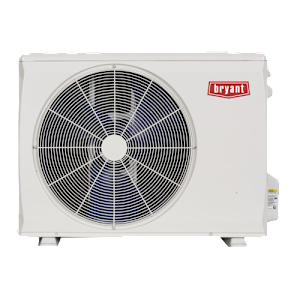
A ductless air conditioner, also known as a mini split, is an HVAC systemthat cools and heats specific rooms without relying on traditional ductwork. It connects an outdoor compressor directly to one or more indoor air-handling units via a small conduit, providing precise temperature control and energy savings.
For homeowners seeking long-term comfort and efficiency, ductless technology represents a flexible option for residential climate control. Whether you are outfitting a new addition, renovating an older home, or simply want to avoid energy losses associated with ductwork, a ductless mini split system offers room-by-room comfort and zoning flexibility. , , and HSPF2
How Does A Ductless Air Conditioner Work?
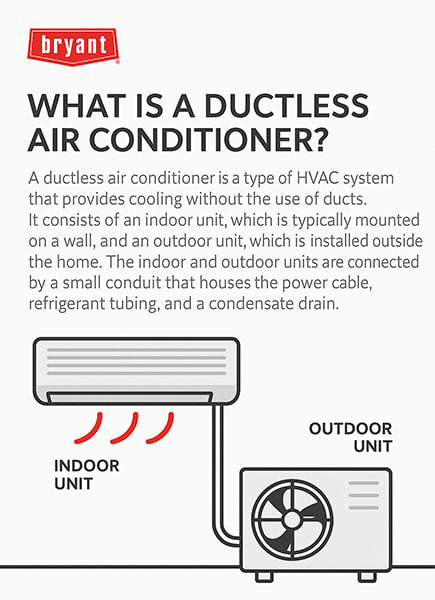
A ductless air conditioner works by cycling refrigerant between an indoor unit and an outdoor unit, transferring heat from your home's interior to the outdoors during cooling.. This targeted approach allows for efficient cooling without the energy loss common in ducted systems.
The process is efficient, seamless, and designed around the needs of homeowners:
- Heat Absorption: The indoor unit, mounted on a wall or ceiling, uses an evaporator coil to absorb heat from the room's air.
- Transfer: The refrigerant carries that heat through insulated refrigerant lines to the outdoor unit.
- Release: The outdoor unit releases the absorbed heat into the outside air as the refrigerant cycle continues.
- Cooling: The refrigerant returns to the indoor unit to repeat the cycle, lowering the room temperature.
Brian Redmond, owner of Redmond’s Complete Comfort in Lock Haven, Pennsylvania, often describes ductless air conditioners as “spot conditioning” systems.
“The best way to explain a ductless mini-split system is that it’s a spot conditioning system, giving homeowners the ability to condition individual rooms with individual control,” Redmond said. “They’re also much more energy efficient than central units because you can run them room by room instead of conditioning the entire home.”
What Are the Key Benefits of a Ductless Air Conditioner?
key benefits of ductless air conditioning systems include energy efficiency, quiet operation, flexible installation, and customized climate zones. By eliminating the need for traditional distribution ductwork, these systems can also avoid energy losses associated with leaky ducts.
- Energy Efficiency: Traditional systems can lose energy through duct leaks. ENERGY STAR estimates that about 20% to 30% of the air moving through a typical home's duct system can be lost through leaks, holes and poorly connected ducts.1 Bryant ductless systems deliver conditioned air directly from indoor units rather than through a traditional duct network. Depending on the model and configuration, Bryant ductless systems offer cooling efficiency of up to 35.1 SEER2 WITH the 37MPRA. Learn more about energy efficient mini splits.
- Zoning Capabilities: Create custom comfort zones. You can keep the living room cool while saving energy in unoccupied bedrooms. Multi zone mini split options include 3-zone mini splits and 4-zone mini splits.
- Quiet Operation: Designed for peace and quiet, the noisy compressor sits outside, keeping your indoor environment whisper-quiet. Select Bryant high-wall ductless indoor units like the 615PHA can operate at sound levels as low as 16 decibels.
- Flexible Installation: With no ducts to install, setup is minimally invasive—often requiring just a small hole in the wall. Learn more about mini split installation.
- Smart Home Integration: Many models feature Wi-Fi connectivity, allowing you to control your climate via smartphone or voice assistant.
- Year-Round Comfort: Many Bryant ductless systems function as heat pumps, reversing the refrigeration cycle to provide heating during colder months. Bryant's Evolution 37MPRA, for example, provides up to 30 HSPF2 heating efficiency in addition to up to 35.1 SEER2 cooling efficiency.
How to Choose the Right Ductless Air Conditioner
To choose the right ductless air conditioner, homeowners should determine how many zones they need, prioritize high SEER2 efficiency ratings, and consult a certified HVAC professional for proper sizing and placement.
Selecting the best mini split means balancing technology with your specific home environment. Here's how to approach the decision:
1. Determine Your Zones
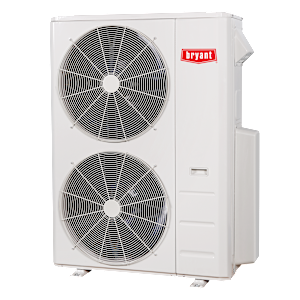
If you need to cool a single room or a home addition, a single-zone unit is ideal. For whole-home comfort, a multi zone mini split allows you to connect multiple indoor units to one outdoor compressor, giving you independent control over every room. Single-zone systems are better suited for targeted spaces like garages or additions, while multi-zone setups work best when consistent comfort across several rooms is the goal. Learn more about 3 zone mini splits and 4 zone mini splits.
2. Prioritize Efficiency Ratings
Look for high SEER2 (Seasonal Energy Efficiency Ratio) and EER2 (Energy Efficiency Ratio) ratings. Bryant ductless systems use inverter technology on many models to adjust compressor operation based on the home's heating and cooling needs, helping maintain more consistent temperatures.
3. Get the Sizing Right
Size matters significantly. A unit that is too small won't cool effectively, while one that is too large will cycle too frequently, reducing efficiency and increasing wear. Ask, "what size mini split do I need?" and consult a professional to perform a load calculation.
Bryant recommends that contractors properly size mini split systems using a Manual J load calculation to determine the heating and cooling needs of the home.
4. Look for Smart Features and Controls
Modern comfort puts you in control. Look for systems compatible with the Bryant SmartHome App, enabling remote adjustments and scheduling to maximize efficiency.
5. Understand Cost and Available Incentives
Ductless systems are an investment in long-term value. Mini split installation costs typically range between $2,000 and $7,000 depending on complexity, but local rebates may help reduce the upfront cost. Ask your local Bryant dealer about financing options to break your purchase into monthly payments. For a precise estimate, check our guide to mini split cost.
With proper installation and maintenance, Bryant says a ductless mini split can last 15 to 20 years.
Ultimately, Redmond advises leaning on a professional HVAC contractor to recommend the right system.
“A professional can assess which areas of the home need to be conditioned, talk with the homeowner about their comfort needs, and then provide the best options,” Redmond said.

Connect With A Bryant Dealer For A Ductless Air Conditioner
The best way to help ensure a Bryant ductless system is properly sized, installed and configured is to work with a qualified HVAC professional. A Bryant dealer can assess your home's layout, recommend the right ductless air conditioner and ensure your system is optimized for years of reliable comfort.
Schedule an appointment with a local Bryant dealer today for a seamless, worry-free ductless air conditioner experience.
Explore Bryant Ductless Mini Splits
Choose a Bryant ductless mini split for efficient, customizable comfort without the need for ductwork. Ideal for specific rooms or multi-zone cooling and heating, these systems offer precise temperature control and quiet operation. With energy-efficient technology, they help reduce utility costs while providing year-round comfort. The sleek design makes Bryant mini splits a perfect choice for homes, additions, or spaces where traditional ductwork is impractical, delivering reliable performance and convenience.
Ductless Air Conditioner FAQs
No, ductless air conditioners do not require venting because they use a small outdoor unit to transfer heat rather than relying on ductwork.
Ductless AC units are generally energy-efficient, so operating costs are often lower than traditional central AC, especially when cooling individual zones.
A ductless AC circulates refrigerant between an outdoor compressor and one or more indoor air handlers to cool or heat specific rooms without ducts.
For homes without ductwork or rooms that need targeted comfort, ductless systems offer efficient, quiet, and flexible temperature control.
“Mini split” and “ductless system” are often used interchangeably, since both refer to HVAC systems that heat and cool without traditional ductwork. A mini split specifically describes the setup—an outdoor compressor connected to one or more indoor air-handling units—while “ductless” highlights the absence of ducts that distribute air. In practice, both terms describe the same technology.
Sometimes. Many ductless systems are actually heat pumps, meaning they can reverse the cooling process to provide efficient heating during colder months.
With proper maintenance and professional installation, a high-quality ductless air conditioner can reliably heat and cool your home for 15 to 20 years.
No. Installing a ductless air conditioner requires handling pressurized refrigerants and complex electrical wiring. It is highly recommended to use a certified HVAC professional to ensure safety, efficiency, and warranty compliance. Learn more about mini split installation.
Installing a ductless air conditioner typically costs between $2,000 and $7,000 per zone, depending on the number of indoor units, system size, efficiency, and installation complexity. A local HVAC professional can recommend the right system and provide an estimate based on your home's needs. Learn more in our mini split cost guide.
It depends on your home and comfort goals. Ductless air conditioners are ideal for homes without ductwork, room additions, or spaces that benefit from independent temperature control, while central air is often the better choice for cooling an entire home with existing ducts.
A ductless air conditioner can cost less than central AC when cooling a single room or small space because it doesn't require ductwork. However, a whole-home multi-zone ductless system may cost as much as or more than a central air conditioning system.
Clean the air filters every two to four weeks, keep the indoor and outdoor units free of dirt and debris, and schedule professional maintenance annually. Regular maintenance helps improve efficiency, maintain airflow, and extend the life of your system. Learn more about mini split maintenance.
A ductless air conditioner is ideal for homes without ductwork, room additions, garages, finished basements, and older homes where adding ducts isn't practical. It's also a great option for homeowners who want zoned cooling with independent temperature control in different rooms.
About The Expert Reviewer: Connor Howard serves as Product Manager for Residential Ductless Mini Splits at Bryant. He helps shape ductless heating and cooling solutions for a variety of home layouts and comfort needs. His work considers evolving homeowner expectations, energy efficiency objectives, and industry requirements to support practical, forward-looking residential comfort solutions.
Learn More About Ductless Mini Splits
- Learn all about what is a mini split
- Discover the value in mini split heat pumps
- Understand what is a ducted mini split
- Find out are mini splits worth it?
- Learn all about mini split vs central air
- Learn the ins and outs of mini split maintenance


