About The Author: Travis Baugh is a Digital Brand Marketing Manager for Bryant, where he creates clear, helpful content to guide homeowners through heating, cooling, and indoor air quality decisions. His goal is to empower readers with the knowledge they need to choose the right comfort solutions for their home—confidently and comfortably.
How to Clean AC Coils
To clean AC coils, turn off the power to your HVAC unit, remove the access panels, and gently brush away visible debris from the coils. Apply a specialized foaming coil cleaner, allow it to break down the dirt, and rinse gently with water if the cleaner is not self-rinsing, ensuring everything is dry before turning the power back on.
Routine maintenance of your advanced HVAC system is a direct investment in long-term comfort, ensuring your home remains an oasis of quiet, efficient relaxation.
Why is Cleaning AC Coils Important for Energy Efficiency?
Dirty air conditioner coils force your system to work harder to transfer heat, which significantly increases your monthly energy bills and reduces the lifespan of the unit. Keeping your evaporator and condenser coils clean ensures your system operates at peak efficiency, paying for itself through lower energy costs while helping you breathe cleaner air.
Regular cleaning also preserves the whisper-quiet operation of premium systems, preventing the fan from overworking and generating unnecessary noise.

“Turn the air conditioning unit off and pull out the disconnect switch from the furnace,” Lea said. “Hose the unit down only with a garden hose — no power washers, because that can bend the fins on the coils. Spray from the top down at a 45-degree angle, working your way all the way to the bottom on all four sides. Many people forget the back of the unit; often we see three sides clean while the back, hidden against the house, is covered in dirt.” 
Step-by-Step Guide to Cleaning Your AC Coils
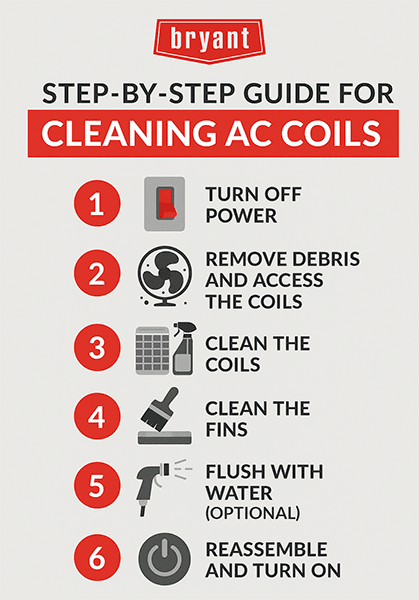
Maintaining your system's reliable performance is straightforward when you follow these core steps:
- Disconnect the Power: Always turn off the power at the breaker box before performing any HVAC maintenance to ensure your safety.
- Access the Coils: Carefully remove the outer casing or access panel of your indoor (evaporator) or outdoor (condenser) unit.
- Remove Surface Debris: Use a soft-bristle brush or a vacuum with a brush attachment to gently clear away loose dirt, leaves, and dust.
- Apply Coil Cleaner: Spray a high-quality, non-acidic foaming coil cleaner evenly across the coils. Let it sit for the manufacturer-recommended time to break down stubborn grime.
- Rinse and Dry: If you are using a rinse-required cleaner, gently wash it away with a low-pressure water spray. Allow the coils to dry completely before reattaching the panels and restoring power.
Mike Lea, co-owner of Lea Heating & Air Conditioning in East Dundee, IL, summarizes the process he uses with homeowners to clean AC coils.

When To Call A Professional for Air Conditioner Coil Cleaning
While many homeowners can perform AC coil cleaning themselves, hiring your local Bryant dealer ensures the job is done safely and thoroughly. A professional has the right tools and expertise to handle the delicate components and can spot other potential issues during an AC maintenance visit.
If you want to ensure your system operates at peak efficiency, connecting with a local Bryant dealer for air conditioning service is a smart choice. They can perform comprehensive air conditioning service to keep your home comfortable all year.
Frequently Asked Questions On AC Coil Cleaning
Yes, you can clean your AC coils yourself, but it requires some care and attention to detail. Following the process outlined above can help you tackle the job safely and effectively.
It is recommended to clean your AC coils at least once a year. However, if you live in a particularly dusty or polluted area, more frequent cleaning may be necessary.
If you notice reduced cooling efficiency, higher cooling bills, or unusual noises from your AC unit, it may be time to clean the coils. Other signs include visible dirt and debris on the coils and a decrease in overall air quality. Learning how to clean air conditioner coils can help you address these issues promptly.
Avoid cleaning AC coils with harsh chemicals, such as bleach or ammonia, as they can damage the coils and surrounding components. Do not use high-pressure water or pressure washers, as they can bend or break the delicate fins. Also, steer clear of abrasive tools like wire brushes, steel wool, or solvents, as these can cause corrosion or physical damage. Lastly, excessive water or improperly used compressed air can worsen problems, so proceed with caution.
It's okay to lightly spray water on your air conditioner, especially the outdoor condenser coils, to remove dirt or debris. However, avoid using high-pressure water, as it can damage the coils or fins. Also, be careful not to get water inside the unit or on electrical components. Always ensure the unit is powered off before cleaning. For a thorough clean, it’s best to follow manufacturer guidelines or consult a professional.
Cleaning the coils can help your AC run more efficiently, which can result in cooler air. Dirty coils prevent proper heat exchange, making the system work harder and less effectively. By cleaning the coils, airflow improves, and the system can cool more efficiently, potentially making your home feel cooler while using less energy.
Yes. Clean coils improve cooling efficiency, reduce strain on the compressor, and help lower cooling bills. Annual coil cleaning is recommended for peak performance.
Wait at least 30–60 minutes after cleaning to ensure the coils are fully dry before restoring power to the system.
Yes, it has the potential to lower your energy bill. Cleaning coils removes the layer of dirt that acts as an insulator. This allows the system to transfer heat more easily, reducing run times and lowering energy consumption.
No, you should never use a pressure washer on AC coils. The high pressure can easily bend or crush the delicate aluminum fins, restricting airflow and permanently damaging the unit's efficiency.
No, you should avoid standard household cleaners as they can cause corrosion. Always use a dedicated, non-acidic foaming AC coil cleaner to protect the delicate aluminum fins.
Learn More About Air Conditioners
- Explore AC replacement
- Understand AC tune ups
- Read our guides to AC parts
- Get help with an AC not working or AC not blowing cold air
- Learn how to perform air filter replacement


