About The Author: Travis Baugh is a Digital Brand Marketing Manager for Bryant, where he creates clear, helpful content to guide homeowners through heating, cooling, and indoor air quality decisions. His goal is to empower readers with the knowledge they need to choose the right comfort solutions for their home—confidently and comfortably.
What Is Heat Pump Maintenance? A Complete Checklist & Service Guide
Heat pump maintenance is a routine process of inspecting, cleaning, and tuning up your HVAC system to ensure it operates at peak efficiency. This essential care involves changing air filters, cleaning outdoor coils, checking refrigerant levels, and testing electrical components — all designed to extend system lifespan and prevent costly breakdowns.
Because a heat pump works year-round to both heat and cool your home, it faces twice the demand of a standard furnace or air conditioner. That makes regular, proactive maintenance not just advisable — it's critical to protecting your investment and keeping your energy bills under control.
Why is Heat Pump Maintenance Important?
Regular heat pump maintenance is the smartest investment a homeowner can make for long-term comfort and efficiency. Just as a vehicle requires oil changes to run smoothly, a heat pump needs proactive care to deliver reliable performance and meaningful energy savings.
Neglecting routine service can lead to reduced airflow, higher energy consumption, and premature system failure. Here is why prioritizing maintenance matters:
- Improved Efficiency: Clean components — like air filters and coils — allow the system to operate with less strain. Dirty filters restrict airflow, forcing the heat pump to work harder and consume more energy.
- Lower Energy Bills: An efficient heat pump uses less electricity, which can significantly reduce your heating and cooling costs and shrink your environmental footprint.
- Extended Lifespan: Proactive care delays the need for a costly heat pump replacement by reducing wear and tear on the system.
- Enhanced Reliability: Investing in regular maintenance ensures your system performs reliably, providing consistent comfort and peace of mind.
What is Included in a Heat Pump Maintenance Checklist?
A comprehensive heat pump maintenance plan combines simple DIY tasks with professional expertise. Following this checklist helps ensure your system stays quiet, efficient, and effective throughout the year.
DIY Homeowner Maintenance Tasks
- Change or Clean Air Filters: Check filters monthly and replace or clean them as needed — especially during peak heating and cooling seasons. A clogged filter is one of the most common causes of reduced efficiency.
- Clear the Outdoor Unit: Routinely inspect the outdoor unit and remove leaves, dirt, snow, or other debris to ensure proper airflow around the coils.
- Inspect the Thermostat: Ensure your smart thermostat is functioning correctly and programmed for your current schedule.
Professional Maintenance Checklist
For a thorough assessment of your system's health, schedule service with a certified Bryant technician. A professional visit typically includes:
- Deep Cleaning: Hosing down and cleaning condensing coils to maximize heat transfer.
- Refrigerant Checks: Verifying charge levels for both heating and cooling modes (which often have different requirements).
- Electrical Inspection: Testing capacitors, contactors, and wiring for safety and performance.
- Drainage Check: Inspecting the condensate drain to prevent water damage and humidity issues.
“Some of the key things we would check during a maintenance visit would be hosing down the condensing coils on the unit outside, checking the refrigerant charge levels, and checking the electric components like capacitors and contactors,” Mike Lea, co-owner of Lea Heating & Air Conditioning in East Dundee, IL, said. “More unique to a heat pump, we would cycle the unit both in heat mode and cooling mode, and check the refrigerant charge in both heating and cooling mode because they do have different charge levels in each mode.”
When Should I Schedule Professional Heat Pump Maintenance?
Schedule professional heat pump maintenance twice a year: once in the spring before cooling season, and once in the fall before heating season.
“It’s important to have your heat pump checked in the spring to make sure it’s ready for cooling season and in the fall to make sure it’s ready for heating season,” Lea said. “A lot can change between seasons with issues such as condensing coils getting dirty on the unit from things like cottonwood.”
Unlike a furnace or air conditioner that only operates part of the year, a heat pump runs year-round. Because it handles double the duty, biannual service is essential to ensure readiness for both extreme summer and winter demands.
Recommended service schedule:
- Spring (March–May): Pre-cooling season tune-up
- Fall (September–November): Pre-heating season tune-up
How Can I Tell if My Heat Pump Needs Service?
If your heat pump is behaving unusually, don't wait for a total breakdown. Watch for these warning signs that indicate it's time to contact your local Bryant dealer:
- Unusual Noises: Grinding, rattling, or squealing sounds often point to mechanical problems that worsen without attention.
- Inconsistent Temperatures: If the system struggles to heat or cool your home evenly, it may need a diagnostic check.
- Higher Energy Bills: A sudden, unexplained increase in utility costs can signal reduced system efficiency.
- Frequent Cycling: The system turning on and off more often than usual may indicate a thermostat or component issue.
- Ice on the Outdoor Unit: Visible ice buildup on the coils during winter requires immediate professional service to prevent serious damage.
Early intervention is almost always less expensive than waiting for a complete system failure. If you notice any of these signs, schedule an appointment with a certified Bryant dealer promptly.
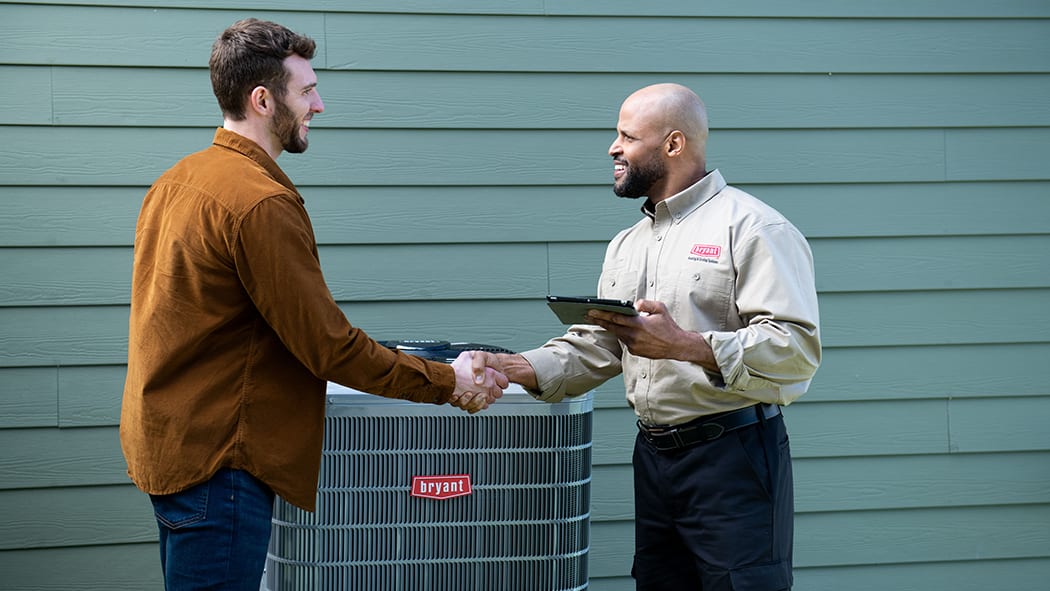
Connect With A Bryant Dealer For Heat Pump Maintenance
Choosing a Bryant dealer for heat pump maintenance means trusting professionals who understand your heat pump system inside and out. Bryant dealers follow service protocols to ensure optimal performance, energy efficiency, and long-term reliability. With access to genuine parts and advanced diagnostics, they can help extend the life of your heat pump and maintain comfort year-round. Schedule an appointment with your local Bryant dealer today to keep your system running at its best.
Heat Pump Maintenance FAQs
Heat pump maintenance includes cleaning or replacing air filters, clearing debris from the outdoor unit, inspecting coils and refrigerant levels, and checking electrical components.
Preventive maintenance involves regularly scheduled inspections and tune-ups to catch issues early, ensure optimal performance, and extend the lifespan of the system.
Heat pumps don’t require a lot of maintenance but do benefit from twice-yearly service visits—once before heating season and once before cooling season—to stay efficient.
Routine heat pump maintenance typically costs between $150 and $300 per visit, depending on location and the depth of the service performed.
You can clean filters and clear debris around the unit, but annual professional maintenance is recommended for safety and efficiency.
Yes. Regular service helps maintain performance, reliability, and warranty coverage.
Most manufacturers and HVAC contractors recommend a professional tune-up once per year.
Yes. Because heat pumps operate in both heating and cooling modes, technicians must check refrigerant charge levels in both modes — which can differ. Heat pump maintenance also includes cycling the system in each mode to verify performance, a step not required for standard air conditioners.
Skipping annual maintenance can lead to dirty coils, restricted airflow, refrigerant imbalances, and worn electrical components. Over time, this reduces efficiency, increases energy costs, and shortens the system's operational life.
Learn More About Heat Pumps
- Discover what is a heat pump
- Find out more about heat pump installation
- Explore cold climate heat pumps
- Read up on dual fuel heat pumps
- Learn about heat pump benefits
- Explore the value of high efficiency heat pumps


