About The Author: Travis Baugh is a Digital Brand Marketing Manager for Bryant, where he creates clear, helpful content to guide homeowners through heating, cooling, and indoor air quality decisions. His goal is to empower readers with the knowledge they need to choose the right comfort solutions for their home—confidently and comfortably.
How to Repair and Troubleshoot Your Furnace
Most furnace repairs cost between $150 and $600, though major component failures can run $1,000–$3,000. Knowing whether to repair or replace, and when to call a professional, can save homeowners significant time and money.
When your furnace stops working, your priority is restoring warmth and safety quickly. While some issues—like a dirty filter or a tripped breaker—can be resolved with a quick DIY fix, many problems require the expertise of a licensed professional to ensure your system runs efficiently and safely.
For expert service that protects your home’s comfort, trust your local Bryant dealer. Bryant's factory-trained technicians diagnose issues efficiently, ensuring your system delivers the reliable performance you expect all winter long.
Common Furnace Problems
Furnaces are complex systems, and a stoppage can stem from various components. Andrew Mackey, owner of Superior Service in Lake St Louis, Missouri, notes that issues range from simple fixes to complex mechanical failures.
“The furnace in a home could stop working for several reasons,” Mackey said. “The simplest reason would be a dirty flame sensor or an open pressure switch. The reason could also be more involved with a problem involving the main control board or a blower motor.”
While some causes are simple, others require professional diagnosis and repair. The table below maps common furnace symptoms to their potential root causes and the type of repair that may be needed.
|
|
|
|||||
| Furnace won't turn on |
|
Reset breaker, replace thermostat batteries, or repair electrical/ignition components | |||||
| Blowing cold air | Dirty air filter, thermostat issue, ignition problem, or overheating safety shutdown | Replace air filter, adjust thermostat, or repair ignition or limit switch | |||||
| Frequently turns on and off (short cycling) | Dirty filter, restricted airflow, faulty flame sensor, or overheating | Replace filter, improve airflow, clean flame sensor, or diagnose system operation | |||||
| Weak airflow from vents |
|
Replace filter, clear obstructions, or repair the blower system | |||||
| Strange noises (banging, squealing, or grinding) | Loose or worn components, failing blower motor, dirty burners, or damaged blower wheel | Tighten or replace components, clean burners, or perform professional mechanical repair |
4 Basic Furnace Troubleshooting Steps To Try First
Before scheduling a repair, try these simple checks. Many minor furnace issues can be resolved without a service call.
Check the Thermostat
Ensure batteries are fresh and the system is set to "Heat" with the temperature above the current room reading. A malfunctioning thermostat can prevent the furnace from turning on or cause it to cycle incorrectly.
Inspect Air Filters
A clogged furnace filter restricts airflow, forcing the system to work harder and potentially overheat. Replacing a dirty filter can instantly improve efficiency and help you breathe cleaner air.
Verify the Pilot Light
On older models, check whether the pilot light is out and relight it following manufacturer instructions. If it won't stay lit, a safety sensor or gas valve may be faulty—contact a professional.
Clear Vents and Registers
Furniture or rugs blocking supply and return vents can restrict airflow and trigger safety shutdowns. Ensure all registers are open and unobstructed.
If these furnace troubleshooting steps don't resolve the issue, it's time to contact a qualified HVAC contractor immediately for a more detailed diagnosis on why you have a furnace not working.
Advanced Component Hazards
Some furnace components operate with high-voltage electricity and moving mechanical parts, making them unsafe for homeowners to inspect or repair. While you may be able to recognize the warning signs of a failing component, diagnosing or replacing these parts should be left to a qualified HVAC technician.
Common high-risk components include:
- Capacitors: Capacitors store electrical energy to help the blower motor start and run. A failing capacitor may cause a loud humming sound, hard starting, or prevent the blower from turning on altogether.
- Blower Fan Motor: The blower motor circulates heated air throughout your home. Squealing, grinding, intermittent operation, or weak airflow can indicate worn bearings or a failing motor.
- Draft Inducer Motor: This motor helps safely vent combustion gases before the burners ignite. Clicking noises, unusual vibrations, or difficulty starting a heating cycle may signal an impending failure.
- Control Board and Electrical Components: Faulty relays, wiring, or control boards can cause intermittent operation, repeated shutdowns, or failure to respond to thermostat commands.
Safety Warning: Never remove access panels or attempt to test internal furnace components yourself. Furnaces contain high-voltage electrical circuits, moving mechanical parts, and—on gas models—combustion components that can pose serious shock, fire, and carbon monoxide hazards. If you suspect an internal component has failed, turn the system off and contact a certified HVAC technician.
What Are the Signs I Need Furnace Repair?
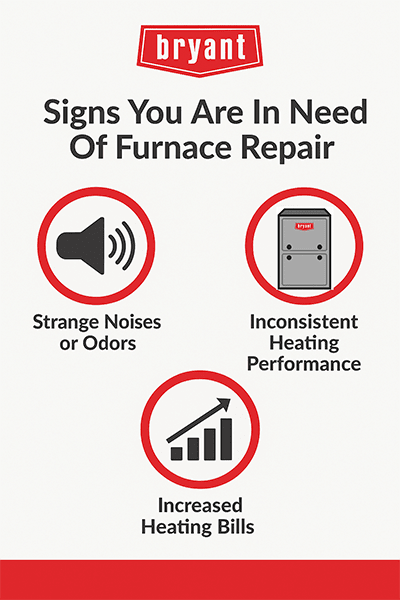
Recognizing warning signs early can prevent a complete breakdown and keep your home warm when temperatures drop. Watch for these indicators that your furnace needs professional attention:
- Strange Noises: A reliable furnace should operate quietly. Banging, squealing, or rattling sounds indicate mechanical distress—such as a loose belt, a failing motor, or debris in the system.
- Unusual Odors: A brief dusty smell when you first turn the heat on each season is normal. However, persistent burning smells or strong gas odors (similar to rotten eggs) are emergencies. Turn off the unit immediately and call a professional.
- Inconsistent Heating Performance: If some rooms are warm while others are cold, or if the furnace struggles to maintain a consistent temperature, you may have a faulty thermostat, clogged filters, or a failing internal component.
- Increased Heating Bills: An unexplained spike in your heating bills often signals a loss in system efficiency. A malfunctioning furnace consumes more energy to produce the same amount of heat, steadily driving up costs.
How Much Does Furnace Repair Cost?
Most homeowners spend between $150 and $600 on standard furnace repairs. However, more significant component failures can push total costs higher. Here's a breakdown of what to expect:
| Repair Type | Estimated Cost | Examples |
| Minor Repairs | $150-$600 | Thermostat replacement, flame sensor cleaning, furnace ignitor replacement |
| Major Repairs | $1,000-$3,000 | Heat exchanger replacement, blower motor repair |
Several factors influence the final cost, including the age and brand of your system, labor rates in your region, the availability of replacement parts, and whether emergency HVAC repair is required.
Should I Repair or Replace My Furnace?
Whether you should repair or replace your furnace depends on its age, repair history, energy efficiency, and the cost of fixing the problem. While many furnace issues can be resolved with a professional repair, older systems that require frequent service may be better candidates for replacement. Consider the following factors before making your decision.
Age and Efficiency
The age of your furnace is one of the strongest indicators of whether replacement makes financial sense. Most gas furnaces have a lifespan of 15 to 20 years with proper maintenance. If your system is approaching the end of its expected life, investing in a new high-efficiency furnace may reduce energy costs while improving comfort and reliability. Newer models with high AFUE ratings also waste less fuel, helping lower monthly heating bills.
Frequency of Breakdowns
An occasional repair is normal, but repeated service calls can quickly become expensive. If your furnace has required multiple repairs over the past few heating seasons—or you're facing a major repair such as a failed heat exchanger, blower motor, or control board—it may be more cost-effective to replace the system. A new furnace can help eliminate recurring repair costs while providing dependable heating for years to come.
Advanced Features
Today's furnaces offer comfort and convenience features that weren't available on older systems. Variable-speed blowers, two-stage or modulating gas valves, smart thermostat compatibility, and quieter operation help maintain more consistent indoor temperatures while improving energy efficiency. Newer models offer benefits like smart home integration with apps like the Bryant SmartHome App. If your current furnace struggles to keep your home comfortable or lacks modern technology, upgrading to a newer model may provide noticeable improvements in comfort, performance, and long-term operating costs.
Regular maintenance, including a professional furnace tune-up and furnace cleaning, is the best way to prevent expensive breakdowns and extend how long your furnace lasts.

Why Choose A Bryant Factory Authorized Dealer for Furnace Repair?
Choosing the right furnace service provider is essential for your home's comfort and your peace of mind. Bryant Factory Authorized Dealers are held to the highest standards of training, parts quality, and customer service.
- Expert Training: Our dealers are highly trained and experienced in repairing all type of furnaces. They understand the urgency of a broken furnace —especially during cold winter months—and are committed to fast, reliable service.
- Factory Authorized Parts: When repairing a Bryant furnace, our dealers use genuine Factory Authorized Parts designed specifically for your equipment. These furnace parts ensure a perfect fit, restore original performance and efficiency, and preserve your manufacturer's warranty.
- A History of Reliability: Since 1904, Bryant has built a legacy of quality and reliability. Our dealers are part of this history, dedicated to providing customized home comfort solutions you can trust.
How Do I Schedule a Furnace Repair?
Don't let a broken furnace disrupt your home's comfort. Use Bryant's simple online booking system to connect with a local expert who can diagnose and repair your furnace quickly. Schedule an appointment today.
Furnace Repair FAQs
If your furnace isn't working, call your local Bryant dealer who specializes in furnace diagnostics and repair.
You can handle basic furnace maintenance like changing filters or checking the thermostat, but most repairs—especially involving gas, electricity, or internal components—should be done by a licensed HVAC professional for safety and warranty protection. Attempting complex repairs yourself may cause further damage or pose a fire or carbon monoxide risk.
The most common furnace failure is a malfunctioning ignition system or pilot light, which prevents the furnace from producing heat.
Usually, homeowners insurance only covers furnace repairs if damage results from a covered event, such as fire, water damage, or a storm. Normal wear and tear or age-related breakdowns are not typically covered.
Major components like the heat exchanger or blower motor tend to be the most expensive to repair or replace due to their complexity and labor costs.
If the repair is minor and the system is under 10–12 years old, repair may make sense. For older furnaces with repeated issues or costly parts, replacement is often the better long-term value.
Most homeowners spend between $150 and $600 on typical furnace repairs, depending on the part and labor required.
Usually not. A 20-year-old furnace is nearing or past its expected lifespan, and replacement can provide better efficiency, reliability, and warranty coverage.
Short cycling every 10 minutes can signal normal operation in extreme weather, but frequent cycling often points to airflow issues, a dirty filter, or thermostat problems.
This often happens if the thermostat fan setting is on "On" instead of "Auto," causing the fan to run continuously even when the burner is off. It can also indicate a pilot light failure or an overheated furnace that has shut down its burners for safety.
Yes, a furnace leaking water can indicate a condensation drain clog (in high-efficiency models) or a cracked heat exchanger. Both require immediate professional attention to prevent water damage or safety hazards.
Check your filter every 30 days and replace it at least every 90 days. If you have pets or allergies, replacing it monthly ensures optimal air quality and system efficiency.
Learn More About Furnaces
- Explore what is a furnace
- Understand natural gas furnaces
- Discover the value of a high efficiency furnace
- Get help with a furnace leaking water
- Find out how to fix a furnace blowing cold air
- Read about furnace inspections