About The Author: Travis Baugh is a Digital Brand Marketing Manager for Bryant, where he creates clear, helpful content to guide homeowners through heating, cooling, and indoor air quality decisions. His goal is to empower readers with the knowledge they need to choose the right comfort solutions for their home—confidently and comfortably.
How Long Do HVAC Systems Last?
On average, HVAC systems last between 10 and 25 years. The specific lifespan depends heavily on the type of equipment you own: traditional central air conditioning units typically last 12–15 years, heat pumps last 10–15 years, and furnaces generally last 15–25 years.
Routine HVAC maintenance with your local Bryant dealer is the single biggest factor in extending this longevity.
Average Lifespans by System Type
Knowing the expected lifespan of your heating and cooling equipment allows you to plan ahead for necessary HVAC repairs or HVAC replacements. While luck and local climate play a role, the type of system you have provides a baseline for what to expect.
Expected Years of Service
- Central Air Conditioners: 12 to 15 years
- Heat Pumps: 10 to 15 years
- Furnaces (Gas, Electric, or Oil): 15 to 25 years
- Boilers: 15 to 30 years
Key Factors Influencing Longevity
Whether your unit reaches the high end of these ranges often depends on HVAC installation quality. A precision installation sets the stage for years of reliable performance, while poor installation accelerates wear.
Climate and usage also matter. Systems battling extreme weather in harsh climates naturally face more stress than those in mild environments. However, proactive care can mitigate these factors.
Samantha Houchin, owner of The Weather Changers in Denver, Colorado, notes that while maintenance helps, some elements are out of your control.
“I’ve met people whose systems are 30 years old and still running,” Houchin said. “I’ve also seen equipment die in less than 10 years. There are a lot of things you can’t control. HVAC systems are mechanical, with many moving parts — and even electronics now, as the systems get more advanced.”
Signs That Indicate Your HVAC May Need Replacement
Even with the best care, mechanical components eventually reach the end of their service life. Recognizing these warning signs early can save you from an emergency breakdown and ensure continuous home comfort.
- Rising Energy Bills: If your heating or cooling costs spike without a change in usage, your system is likely losing efficiency and working harder to do the same job.
- Inconsistent Temperatures: When some rooms feel like a sauna while others are freezing, your system may be struggling to distribute air effectively.
- Strange Noises: Grinding, rattling, or squeaking sounds often indicate serious mechanical issues.
- System Age: If your unit is approaching the 15–20 year mark and requires frequent HVAC service, replacement is often more cost-effective than cumulative repairs.
How to Extend the Life of Your HVAC System
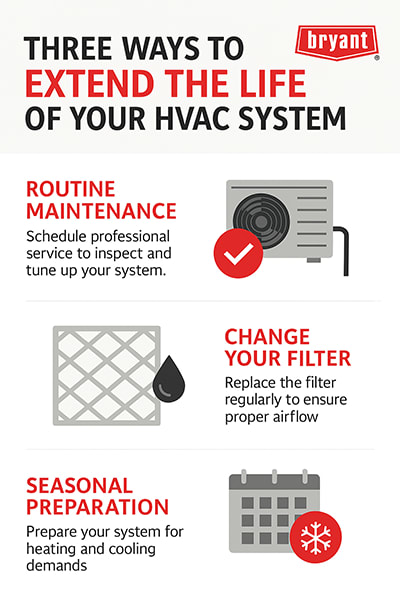
You can actively improve your HVAC longevity by sticking to a few proactive habits. These steps not only add years to your system but also improve efficiency and indoor air quality.
1. Commit to Routine Maintenance
Routine HVAC maintenance is the best defense against premature failure. Professional check-ups catch minor issues—like loose electrical connections or worn belts—before they cause major damage.
“If you stay on top of maintenance, you can really help your system’s longevity,” Houchin said.
2. Change Your Filter
A clogged air filter forces your system to work harder to pull air through, leading to overheating and burnout. Check your filter monthly and perform air filter replacement every 1 to 3 months to keep airflow smooth and efficient.
3. Perform Seasonal Preparation
Don't wait for the hottest day of the year to test your AC. Before peak summer or winter seasons, clear debris from outdoor units and ensure furnaces are free of dust. These simple steps ensure your system is ready for the heavy lifting ahead.

Repair vs. Replace: When Is It Time to Upgrade?
Deciding between repair and replacement is about securing your long-term comfort. While a quick patch might seem cheaper today, an aging system will continue to drain your wallet through inefficiency and breakdowns.
Investing in a modern HVAC unit offers benefits beyond reliability. New systems often feature variable-speed motors and smart thermostat that provide better comfort control and lower monthly bills. Plus, reputable brands like Bryant offer robust warranties that protect your investment for years to come.
Connect With Your Bryant Dealer For Your HVAC Needs
Your local Bryant dealer offers a comprehensive range of residential HVAC services designed to meet your specific needs. From routine maintenance checks to emergency repairs, our Factory Authorized Dealers are dedicated to providing top-notch service. With a Bryant dealer, you can trust that your HVAC system will receive the attention it deserves, helping you ensure its longevity and efficiency. Investing in professional HVAC services is a smart choice for any homeowner looking to maximize their system's lifespan and maintain a comfortable living environment. Schedule an appointment today.
“Make sure you’re picking the right brand of equipment, like Bryant,” Houchin said. “A brand that stands behind their product with good warranties. Bryant offers a Red Shield warranty on several products and Factory Authorized Dealers offer a 100% satisfaction guarantee.”

FAQs
It is often recommended to replace both units simultaneously to ensure matched efficiency ratings, maximize performance, and reset the warranty clock on your entire system.
While a 20-year-old furnace may still run, it is near the end of its typical lifespan (15–25 years). It is crucial to have a professional inspect the heat exchanger for cracks to ensure safety and efficiency.
Yes. Routine maintenance reduces mechanical stress and keeps components clean, which can add several years to the system's life and prevent expensive emergency breakdowns.
Learn More About HVAC
- Get help with HVAC repair
- Check out our HVAC pricing guide
- Learn how long HVAC systems work
- Understand HVAC zoning systems
- Learn about types of HVAC systems
- Explore HVAC options for old houses


