About The Author: Travis Baugh is a Digital Brand Marketing Manager for Bryant, where he creates clear, helpful content to guide homeowners through heating, cooling, and indoor air quality decisions. His goal is to empower readers with the knowledge they need to choose the right comfort solutions for their home—confidently and comfortably.
Heat Pump Not Heating? Causes, Fixes & Troubleshooting
If your heat pump is not heating, the issue is often related to a simple thermostat error, a clogged air filter, a frozen outdoor unit, or a refrigerant leak. By checking these common areas first, you can restore your home’s climate control and energy efficiency.
Even the most innovative eco-friendly heat pumps occasionally need attention to maintain optimal performance. When the winter chill sets in and your heat pump starts blowing cold air, it is vital to know how to respond.
This guide will walk you through the precise steps to identify the problem and get your system back to peak performance. We will explore easy, actionable troubleshooting methods you can perform yourself. We will also highlight when it is time to call a Bryant professional to protect your investment in comfort.
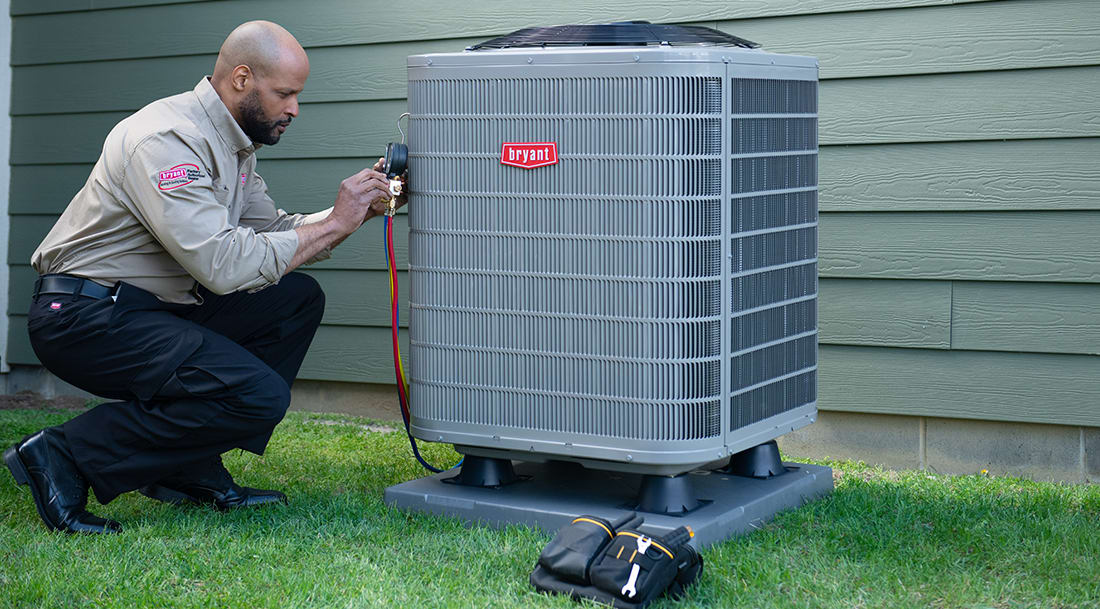
Why Is My Heat Pump Not Heating?
A Bryant heat pump may stop heating due to incorrect thermostat settings, restricted airflow from dirty filters, ice buildup on the outdoor unit, or a mechanical failure. Understanding the root cause is the first step toward reclaiming your seamless indoor comfort.
Advanced HVAC systems require proper airflow and precise calibration to function correctly. When one of these elements falls out of sync, the system's efficiency drops.
Are my thermostat settings correct?
Incorrect thermostat settings are the most common reason a heat pump fails to produce heat. If the system is set to "cool" or "emergency heat" inadvertently, it will not warm your home efficiently.
Smart home integration makes managing your climate easier than ever. However, a simple user error or a disconnected Wi-Fi signal can interrupt your heating schedule.
How do dirty air filters affect heating?
Dirty air filters restrict airflow, causing the heat pump to overwork and eventually blow cold air or shut down entirely. Your HVAC system is engineered to help you breathe cleaner air. When the filter is full of dust and debris, the system cannot pull enough air across the indoor coil to heat it. This not only compromises your comfort but also drastically increases your energy bills.
What happens if the outdoor unit is frozen?
If the outdoor unit is covered in ice or snow, the heat pump cannot extract heat from the outside air. The system must run a defrost cycle to melt the ice before it can resume heating your home.
During extreme cold weather, it is normal for a light layer of frost to form on the outdoor coils. Bryant heat pumps are equipped with advanced defrost technology to handle this automatically. However, if the unit is encased in a solid block of ice, the defrost cycle may be failing.
Can low refrigerant levels stop the heat?
Low refrigerant levels prevent your heat pump from absorbing and transferring heat effectively, resulting in lukewarm or cold air blowing from your vents. This usually indicates a leak in the system that must be repaired by a professional.
Refrigerant is the lifeblood of your HVAC system. It is responsible for absorbing ambient heat from the outdoors and moving it inside. If your system is low on refrigerant, no amount of troubleshooting will fix it until the leak is sealed and the AC is recharged with refrigerant. Operating a heat pump with low refrigerant will lead to increased energy consumption and potential system failure.
How can I troubleshoot a heat pump not heating?
You can troubleshoot a heat pump not heating by checking your thermostat, replacing the air filter, inspecting the outdoor unit for ice, and checking your electrical breaker. These four steps resolve the majority of common heating issues.
Joseph Braswell, owner of Guin Service Company in Birmingham, AL reminds homeowners to look at the current weather conditions if they notice their heat pump is not heating
“The first thing you need to figure out is what operating mode the heat pump is in, depending on the temperature outside,” Braswell said. “If it’s a fairly mild day and the system isn’t heating, it may not actually be in heating mode. If it’s extremely cold outside, the heat pump may have switched into emergency heat mode and could be using electric heat strips or, in a dual-fuel system, the furnace instead. Don’t hesitate to reach out to your local dealer, as they can diagnose the issue quickly.”
Taking swift action protects your long-term investment. Before you pick up the phone to call a technician for heat pump repair, run through this simple diagnostic checklist. It takes only a few minutes and can save you the cost of a heat pump service call.
Step 1: Check your smart thermostat
To fix your heating issue, navigate to your smart thermostat screen and confirm that it is set to "heat" mode and the fan is set to "auto." Setting the fan to "on" will cause it to blow cold air when the system is not actively heating.
Smart controls are designed to optimize your energy use. Check for any error codes or low battery warnings on the display. If you are using a Bryant smart thermostat, you can also check the Bryant Smart Home App for specific diagnostic alerts. Rebooting the thermostat or updating its firmware can also resolve temporary communication glitches.
Step 2: Replace the air filter
Locate your indoor air handler and replace the air filter if it appears gray, clogged, or covered in dust. Replacing your air filter ensures maximum airflow and allows the system to heat your home efficiently. We recommend using high-quality filters to ensure you breathe cleaner air.. Check your filter every 30 days, especially during peak winter months when the system is running constantly. Learn more about how often to change air filters. Changing the air filter regularly is a non-negotiable HVAC maintenance step.
Step 3: Inspect the outdoor unit
Walk outside and inspect the heat pump cabinet to ensure it is clear of snow, ice, leaves, and debris. Gently sweep away any snow and clear a two-foot perimeter around the unit to allow proper airflow.
If you see a thick layer of solid ice, do not attempt to chip it away with a hard tool, as this can puncture the delicate coils. A frozen HVAC unit requires immediate attention to prevent damage to the compressor.
Step 4: Verify the breaker box
Check your home’s electrical panel to ensure the circuit breakers dedicated to the heat pump and the indoor air handler have not tripped. Firmly flip any tripped breakers to the "off" position and then back to the "on" position.
Your heat pump relies on a steady, robust electrical supply to function. A power surge or a momentary overload can trip the breaker, completely shutting down the heating process. If the breaker trips immediately after you reset it, leave it off. This indicates a serious electrical short that requires a trained expert to investigate.
When should I call a Bryant HVAC professional?
You should call your local Bryant dealer if your heat pump is leaking refrigerant, making unusual grinding noises, continually tripping the breaker, or failing to heat after basic troubleshooting. A certified technician can safely diagnose and repair complex mechanical failures.
While smart home integration and advanced diagnostics make modern systems user-friendly, the internal mechanics remain complex. Your system operates with high-voltage electricity and pressurized chemicals. Tampering with internal components without the proper training can void your warranty and create safety hazards. Trusting a Bryant expert ensures your system is repaired to factory standards, preserving your peace of mind and your warranty.
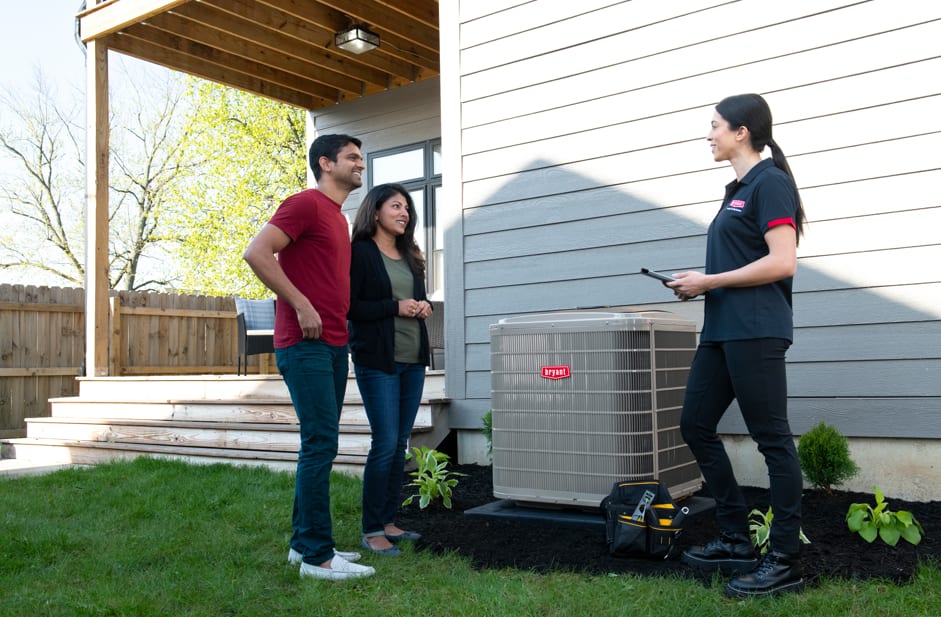
How To Prevent Your Heat Pump From Blowing Cold Air
Prevent your heat pump from blowing cold air by scheduling annual professional heat pump maintenance, changing air filters monthly, and keeping the outdoor unit clear of debris. Proactive care ensures efficient, durable performance all winter long.
Investing in comfort means protecting the equipment that provides it. An annual HVAC tune-up allows technicians to clean the coils, check the refrigerant charge, and calibrate the smart controls. This proactive approach identifies small wear-and-tear issues before they evolve into complete system breakdowns requiring emergency HVAC repair.
Heat Pump Not Heating FAQs
During defrost mode, the outdoor fan will temporarily stop spinning, and you may see steam rising from the outdoor unit. The system may also temporarily blow cooler air inside until the defrost cycle completes, which usually takes 5 to 15 minutes.
If the heat pump is running but blowing cold air, it is likely due to a dirty air filter, a thermostat set to fan on instead of auto, or a low refrigerant charge. Checking the filter and thermostat settings should be your first step.
You should schedule professional maintenance for your heat pump at least once a year, ideally in the fall before the heating season begins. Regular maintenance ensures efficient operation, validates your warranty, and prevents unexpected breakdowns.
Yes, modern advanced cold climate heat pumps are designed to extract heat from the air even in sub-freezing temperatures. However, during extreme cold snaps, the system may automatically switch to its supplemental electric heat strip to maintain indoor comfort.
Common signs include reduced heating or cooling performance, unusual noises, frequent cycling, ice buildup on the outdoor unit, or rising energy bills. If the system struggles to maintain set temperatures, it may need service.
You can reset a heat pump by turning off the thermostat and shutting off power at the breaker for a few minutes, then restoring power and setting the thermostat back to your desired mode. If it doesn’t restart properly, a deeper electrical or mechanical issue may be present.
Start by checking thermostat settings, air filters, and breaker status, as these are common causes. If those are fine, the issue may involve low refrigerant, dirty coils, or a malfunctioning compressor that requires a professional technician.
A heat pump may run longer in winter than a furnace, often cycling or running for extended periods to maintain steady indoor temperatures. It’s normal for it to run several hours a day, especially in colder weather, as long as it’s maintaining comfort efficiently.


