About The Author: Travis Baugh is a Digital Brand Marketing Manager for Bryant, where he creates clear, helpful content to guide homeowners through heating, cooling, and indoor air quality decisions. His goal is to empower readers with the knowledge they need to choose the right comfort solutions for their home—confidently and comfortably.
Why Does My AC Keep Freezing?

If you find yourself asking, "why does my ac keep freezing?", the most common causes are restricted airflow or low refrigerant levels. An AC evaporator coil can begin to freeze when its surface temperature drops below 32°F. Bryant recommends checking the air filter and airflow first, then having a Bryant dealer diagnose refrigerant, coil, blower, or other equipment issues if the problem persists.
We understand that an air conditioner freezing up in the middle of summer is more than just an inconvenience; it is a disruption to the sanctuary of your home. A frozen AC not only compromises your daily comfort but can also reduce system performance and cause the equipment to operate outside its intended conditions.
Addressing this issue promptly is essential for maintaining long-term comfort and helping protect your HVAC equipment. By understanding the root causes of a freezing air conditioner, homeowners can take proactive steps to identify simple airflow problems and know when professional service is needed.
What Causes an Air Conditioner to Freeze?
An air conditioner freezes when the evaporator coil becomes too cold, a situation typically triggered by either insufficient airflow or a low refrigerant charge. When the warm air from your home cannot effectively reach the coil, or when refrigerant conditions cause the coil temperature to fall too low, the condensation that naturally forms on the coil freezes into a solid block of ice.
The key temperature to understand is 32°F, the freezing point of water. When an evaporator coil operates below this temperature, moisture on the coil can freeze. As ice accumulates, it can further restrict airflow and make the problem worse.
Understanding this balance is the key to HVAC longevity. The cooling cycle relies on the constant absorption of heat. When that absorption is reduced, the evaporator coil can become cold enough for moisture to freeze..
Bryant's Freeze Troubleshooting Framework
Bryant recommends this four-step approach when troubleshooting a freezing AC:
- Check airflow. Inspect the air filter and make sure supply and return registers are open and unobstructed.
- Check the evaporator coil. Look for visible ice or heavy dirt buildup. Do not attempt to chip ice from the coil.
- Check for equipment issues. If airflow is adequate but the system continues to freeze, a professional should evaluate the refrigerant charge, evaporator coil, blower motor and other components.
- Know when to call a dealer. If the AC repeatedly freezes after basic airflow issues have been addressed, have a Bryant dealer diagnose the system rather than repeatedly restarting it.
Below, we explore the specific reasons why your system might be turning into an icebox and how you can resolve them to restore reliable comfort.
Reason 1: Clogged or Dirty Air Filters
Clogged or dirty air filters are a common cause of AC freezing because they restrict the amount of warm air flowing over the evaporator coil. Without enough warm air, the coil's temperature can drop below 32°F, allowing condensation on the coil to freeze.
To maintain optimal indoor air quality and system efficiency, your HVAC system needs to breathe. When a filter is clogged with dust, pet dander, and debris, the blower motor has to work harder to move air through the system. This not only can contribute to a frozen coil but may also reduce system airflow and increase operating costs.
For homeowners seeking long-term comfort and efficiency, replacing the air filter regularly is a non-negotiable HVAC maintenance task. A common replacement interval is every 30–90 days, although the appropriate interval depends on the filter type, home conditions, system and manufacturer's recommendations. Homes with pets, smokers or high dust levels may require more frequent replacement. Learn how often to change air filters.
Reason 2: Low Refrigerant Levels or Leaks
Low refrigerant levels can lower the pressure and temperature in the evaporator, potentially causing the coil to fall below 32°F and freeze. This is often associated with a refrigerant leak and requires professional AC repair.
Refrigerant is the lifeblood of your cooling system. It is responsible for absorbing the heat from your indoor air and transferring it outside. When a refrigerant leak occurs—whether due to age, vibration, or corrosion—the delicate balance of the cooling cycle is broken.
There is no single refrigerant-pressure reading that applies to every AC system. Pressures vary by refrigerant, outdoor temperature, indoor conditions, equipment design and operating state. A Bryant dealer can use manufacturer specifications, temperature measurements and other diagnostic readings to determine whether the system has the correct refrigerant charge.
If your system is low on refrigerant, simply adding more (a "recharge") without fixing the underlying leak is a temporary and costly band-aid. Your local Bryant dealer can locate the leak, repair the line, and restore the precise refrigerant charge required.
Reason 3: Blocked or Dirty Evaporator Coils
A dirty evaporator coil can restrict heat transfer and airflow, contributing to coil temperatures that are low enough for condensation to freeze. Dust, dirt, and grime can accumulate on the coil and reduce system performance.
Even if you regularly change your air filters, some particles can bypass the filter and eventually settle on the evaporator coil. Over time, this buildup can reduce airflow and heat transfer. The system continues to run, trying to reach the temperature set on your thermostat, but its ability to cool efficiently can be reduced.
Routine professional AC maintenance can help identify and address a dirty coil. During an annual AC tune-up, your local Bryant dealer can inspect the coil and other components and determine whether cleaning is needed.
Reason 4: Closed or Blocked Supply Registers
Closed or blocked supply registers can reduce airflow through the HVAC system and contribute to coil freezing. Closing vents in unused rooms might seem like a smart way to save energy, but it can disrupt the system's airflow balance.
Modern HVAC systems are precisely sized and calibrated to push a specific volume of air through a specific number of vents. When you close registers, place heavy furniture over them, or block them with rugs, system airflow can be reduced and static pressure can increase.
Static pressure does not have one universal acceptable limit for every residential HVAC system. The appropriate range depends on the equipment and duct design, and a qualified technician can measure total external static pressure against the manufacturer's specifications. For homeowners, the simplest first step is to keep supply and return registers open and unobstructed.
For optimal smart home integration and consistent comfort, keep all supply and return registers open and unobstructed. If you want specialized control over different areas of your home, Bryant’s smart zoning systems are designed to provide separate temperature control for different areas of the home while maintaining an appropriately designed and balanced HVAC system.
Reason 5: Blower Motor Failure
If the blower motor fails or is operating at a reduced speed, it cannot circulate enough warm air over the evaporator coil to keep it from freezing. A malfunctioning fan means airflow across the coil can fall significantly, quickly forming ice on the coil.
The blower motor is a key component of your home's air circulation. Whether the issue is a failed motor, blower problem, electrical issue or another mechanical fault, inadequate airflow can contribute to coil freezing. You may notice the system humming but feel little or no air coming from the vents.
How Do I Unfreeze My Air Conditioner?
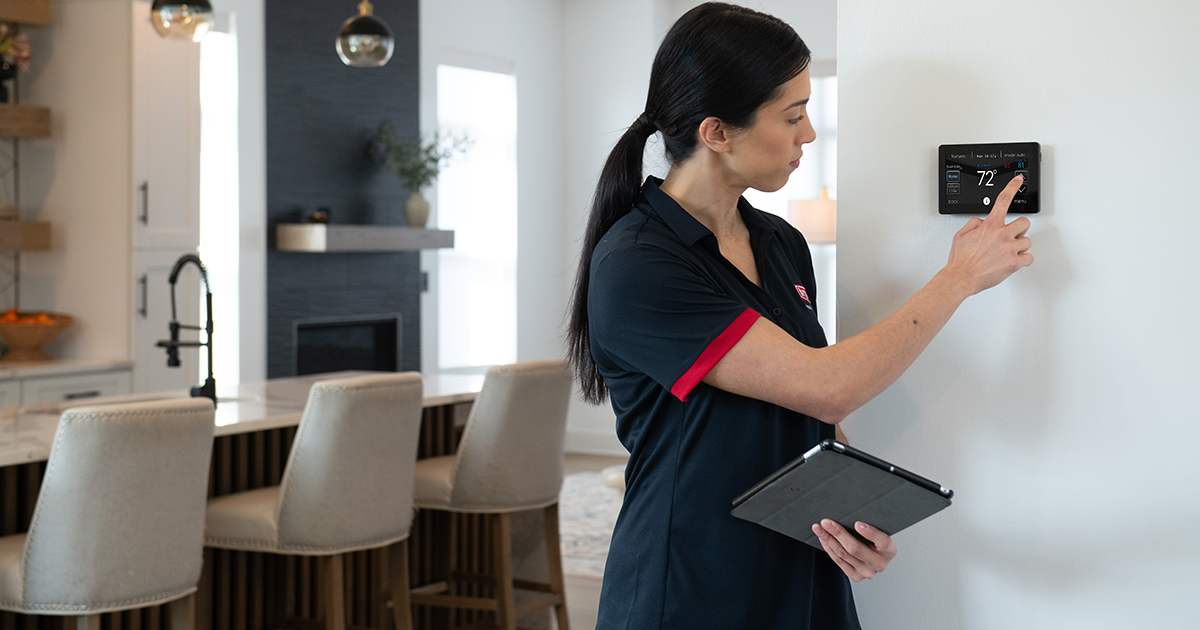
To unfreeze your air conditioner, immediately turn the thermostat from "Cool" to "Off." If your system allows it and your equipment manufacturer's instructions permit it, you can set the indoor fan to "On" to circulate air across the coil while it thaws. Do not attempt to scrape or chip the ice off manually, as you can damage the coil or refrigerant tubing.
Once you have switched the settings, you must wait for the ice to melt completely. Thawing can take several hours and may take longer when there is heavy ice buildup. Do not restart the AC while significant ice remains on the coil. Place towels around the indoor unit, as the melting ice can create a significant amount of water that may overwhelm the condensate drain pan.
While the system is thawing, take the opportunity to check and replace your air filter, and open any closed vents. After the ice has completely melted, you can restore the cooling function. If the system freezes again, turn it off and contact a professional for AC service rather than repeatedly restarting it.
Joseph Braswell, owner of Guin Service Company in Birmingham, AL said homeowners should check their air filter and assess how low they are setting their thermostat temperature.
“If your system is operating within its normal temperature range and the air filter is clean, it’s time to call your Bryant Factory Authorized Dealer to diagnose the issue,” Braswell said. “If the system freezes up repeatedly, it can put additional strain on the equipment and potentially shorten the lifespan of the unit.”
When to Call a Professional for a Freezing AC
You should call your local Bryant dealer if your AC freezes repeatedly, if the system may have a refrigerant problem, or if there is a mechanical failure like a blower motor problem. Attempting complex HVAC repairs without proper training can result in further damage to the unit or create a safety hazard.
When long-term comfort is on the line, a Bryant dealer can help diagnose the cause rather than simply treating the symptoms. Your local Bryant dealer can utilize diagnostic tools to check refrigerant conditions, test electrical components, measure airflow and static pressure, and inspect the evaporator coil and blower.
Investing in a professional AC repair can help identify the underlying cause of repeated freezing and restore the system to its intended operating conditions.nsures that your system achieves the reliable performance and energy efficiency it was designed for.
Frozen AC FAQs
No, a freezing AC will not fix itself. While the ice may melt when the system is off, the unit will freeze again once turned back on unless the underlying issue—such as a dirty filter or refrigerant leak—is resolved.
It is highly dangerous to your system to run a frozen AC. Continuing to operate the unit while the coil is encased in ice places extreme strain on the compressor, which can lead to complete and costly system failure.
According to HVAC specialists, you should have your air conditioning system professionally serviced at least once a year, ideally in the spring, to clean the coils, check refrigerant levels, and ensure optimal airflow.
A frozen AC unit isn’t always an emergency, but it can become one if it leads to a complete system shutdown or occurs during extreme heat. It’s a sign of an underlying issue like airflow problems or low refrigerant and should be addressed quickly to prevent further damage.
You can take simple steps like turning off the system, switching the fan to “on,” and replacing a dirty filter to help it thaw. However, if the issue keeps happening, a professional inspection is needed to diagnose and fix the root cause.


