About The Author: Travis Baugh is a Digital Brand Marketing Manager for Bryant, where he creates clear, helpful content to guide homeowners through heating, cooling, and indoor air quality decisions. His goal is to empower readers with the knowledge they need to choose the right comfort solutions for their home—confidently and comfortably.
Do UV Lights Kill Mold in Your Home?
Yes, UV lights do kill mold. Specifically, ultraviolet-C (UV-C) light is a proven technology that neutralizes mold spores, bacteria, and viruses by disrupting their DNA, preventing them from reproducing and spreading through your home's air.
For homeowners seeking long-term comfort and efficiency, achieving a healthy indoor environment is a top priority. When moisture builds up inside your HVAC system, it creates the perfect breeding ground for mold and microbial growth. Left unchecked, this can lead to decreased air quality and higher energy bills. Fortunately, advanced technology offers a seamless solution. By integrating UV-C germicidal lights directly into your home's heating and cooling system, you can eliminate these hidden threats.
How Do UV Lights Kill Mold?
UV lights kill mold by emitting short-wavelength ultraviolet (UV-C) energy that penetrates the cellular walls of mold spores and destroys their nucleic acids. This germicidal irradiation process inactivates the mold, rendering it unable to replicate or cause harm.
The science behind this process is well-documented and highly effective. According to the Centers for Disease Control and Prevention (CDC) 1 and the American Society of Heating, Refrigerating and Air-Conditioning Engineers (ASHRAE),2 Ultraviolet Germicidal Irradiation (UVGI) is a recognized and proven method for deactivating fungal spores and bacteria in indoor environments.
When mold spores pass through the intense UV-C light zone inside your ductwork, or when the light shines directly on the indoor cooling coil, the genetic material of the mold is instantly damaged. This prevents the mold from forming colonies on your system's critical components.
Ultimately, this advanced technology ensures that the air circulating back into your living spaces is cleaner, fresher, and healthier for your family.
Do UV Lights Kill Mold in HVAC Systems Specifically?
Yes, UV lights can be highly effective at killing mold inside HVAC systems. By targeting dark, damp areas like the indoor cooling coil and drain pan, UV lights eradicate existing mold and prevent future growth from restricting airflow.
Your home's air conditioner naturally generates condensation as it cools the air. This moisture often collects on the indoor evaporator coil, creating a dark, damp environment where mold thrives. When mold grows on these coils, it acts as an insulator, forcing your system to work harder to reach your desired temperature. This not only increases your energy bills but also significantly shortens the lifespan of your HVAC equipment. Installing a UV light directly over these coils provides continuous, whisper-quiet operation that keeps the coils clean. A clean coil ensures efficient heat transfer, meaning the efficiency of your system pays for itself over time while you breathe cleaner air.
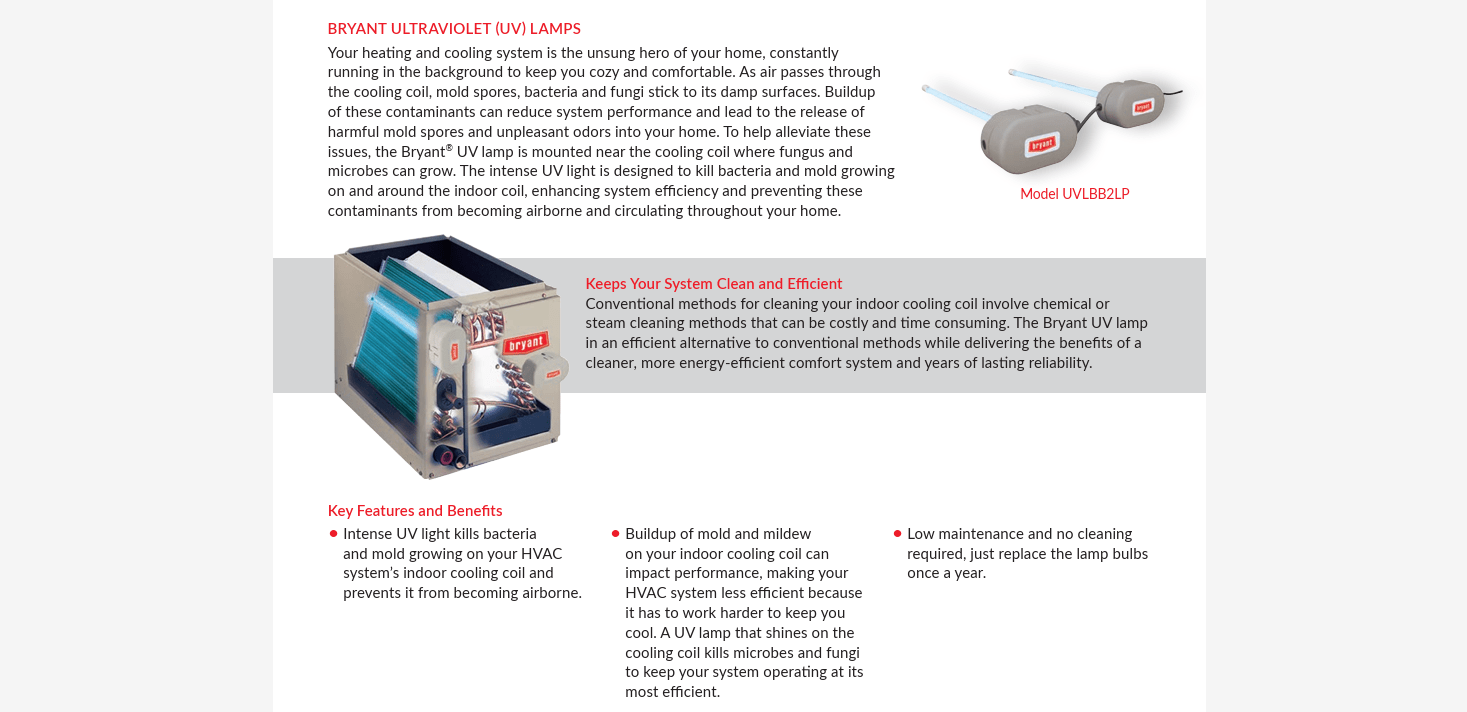
What Are Bryant's UV Lamp Solutions?
Bryant® Preferred Series UV lights are a simple addition to your home comfort system that is designed to help eliminate select mold (penicilium citrinum and aspergillus niger)3 from growing on the surface of the indoor coil, preventing them from becoming airborne. By targeting microbial buildup on the coil, UV light systems can help promote cleaner indoor air and support efficient HVAC performance. Discover our single-lamp and dual-lamp UV solutions to choose the option that best fits your home’s needs.
Why Should Homeowners Invest in UV Lights?
Homeowners should invest in UV lights to improve indoor air quality, help lower monthly energy bills, and extend the lifespan of their HVAC systems. By eliminating mold and bacteria, UV lights ensure your system runs efficiently and your family breathes easier.
While some homeowners may initially worry that the upfront cost is too high, the potential for long-term savings make it a highly worthwhile investment. Mold buildup forces your HVAC unit to consume more power to push air through clogged coils. By keeping these components pristine, UV lights restore your system's original efficiency rating, leading to a noticeable reduction in energy bills.
Furthermore, these systems require very little maintenance, typically only needing a bulb replacement once a year. When you factor in the robust warranty coverage and the reliable performance of brands like Bryant, investing in UV technology is a smart decision for the future of your home. You are not just buying a light; you are investing in comfort, sustainability, and superior air quality.
Are UV Lights Safe for Residential Use?
Yes, UV lights designed for residential HVAC systems are completely safe. They are installed safely inside enclosed ductwork or air handlers, ensuring that no harmful UV radiation escapes into your living areas.
Modern residential UV lamps are engineered with safety and smart home integration in mind. Because the light is contained entirely within the heavy metal casing of your HVAC system, there is zero risk of human or pet exposure to the UV rays.
Connect With A Bryant Dealer On UV Light Solutions
Connect with a local Bryant dealer to learn whether UV light solutions are a good fit for your home’s HVAC system and indoor air quality needs. A qualified dealer can evaluate your system and recommend properly sized UV-C technology to help reduce microbial growth on coils and improve overall system cleanliness. They can also ensure professional installation and integration with your existing equipment for safe, effective performance.
1 https://www.cdc.gov/niosh/ventilation/germicidal-ultraviolet/index.html
2 https://www.ashrae.org/professional-development/all-instructor-led-training/catalog-of-instructor-led-training/ultraviolet-germicidal-irradiation-uvgi-disinfection
FAQs on UV Lights Killing Mold
Yes, installing a UV light has the potential to lower your energy bills. By keeping the evaporator coil free of insulating mold and microbial growth, the HVAC system maintains optimal airflow and heat transfer, reducing the energy required to cool or heat your home.
For optimal performance and maximum germ-killing power, it is recommended to replace the UV-C bulbs in your Bryant UV lamp system once every 12 months. Over time, the intensity of the UV light diminishes, even if the bulb still appears to be glowing.
UV lights are effective at killing mold spores both on surfaces (like the HVAC cooling coil) and in the air as they pass through the illuminated zone in the ductwork. Constant exposure ensures both the equipment and the circulating air remain clean.


