- Learn all about heat pump installation
- Understand what is an electric heat pump
- Learn about heat pump maintenance
- Find out more about heat pump replacement
- Read our guide to heat pump cost
- Read up on dual fuel heat pumps
Complete Guide To Heat Pump Service
Heat pump service is a professional maintenance check that inspects, cleans, and tunes up your system to help it operate efficiently year-round. Bryant recommends scheduling heat pump service twice a year—once in spring and once in fall—to help prevent costly breakdowns, maintain system performance, and support the life of your equipment.
Your heat pump works harder than most home comfort systems. Unlike a furnace or air conditioner, it handles both heating and cooling with no off-season to recover. That continuous workload makes professional care not just beneficial, but essential. Think of it the same way you think about car maintenance: skipping a tune-up might seem harmless at first, but the long-term costs—in repairs, efficiency loss, and premature replacement—add up fast.
Why is Regular Heat Pump Service Important?
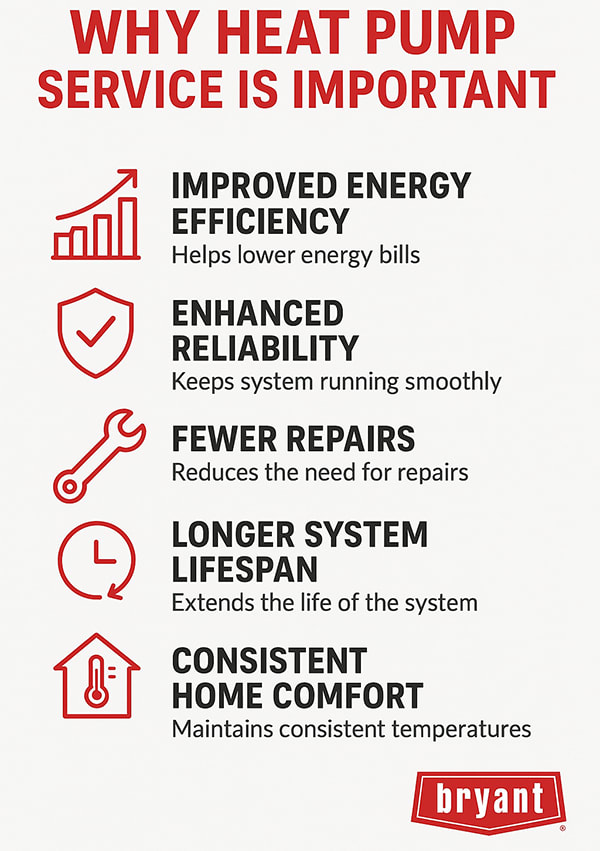
Bryant recommends regular heat pump service to help maintain system efficiency, reliability, and year-round comfort. Regular heat pump service protects your home comfort investment by catching small problems before they become expensive repairs. A well-maintained system can help maintain efficient operation, reduce unnecessary wear, and support reliable heating and cooling.
Consistent heat pump maintenance delivers tangible, long-term benefits for homeowners:
- Improved Energy Efficiency: A clean, well-tuned system can help maintain efficient operation by keeping filters, coils, airflow, and other components in proper condition.
- Enhanced Reliability and Fewer Repairs: Technicians can identify and fix minor issues before they become major, expensive problems, reducing the risk of an unexpected system failure and heat pump repair.
- Longer System Lifespan: Proper care helps reduce unnecessary wear and can support the operating life of your equipment, maximizing your investment and delaying the cost of a full heat pump replacement.
- Consistent Home Comfort: A system performing at its best delivers stable temperatures and reliable airflow through every season.
- Warranty Validation: Check your specific Bryant warranty terms for maintenance and registration requirements; warranty coverage can vary by product and situation.
David Fowler, owner of Family Heating and Air in Pensacola, Florida emphasizes the importance of routine maintenance for heat pumps, especially since they operate year-round for both heating and cooling.
“Service is important for all HVAC systems, but especially for a heat pump because it’s running year-round,” Fowler said.
What Does a Professional Heat Pump Service Include?
Bryant’s heat pump maintenance guidance identifies cleaning coils, checking refrigerant charge, inspecting electrical components, checking drainage, and testing system operation as key parts of professional service.
Bryant’s 6-Point Heat Pump Service Checklist includes:
- Inspecting and Cleaning Coils: The technician cleans both the indoor and outdoor coils, as dirt and debris can severely reduce efficiency and airflow.
- Checking Refrigerant Levels: The technician ensures the refrigerant charge matches the manufacturer's specifications. Incorrect levels can damage the compressor and reduce performance.
- Inspecting Electrical Components: All electrical connections are tightened and checked for wear or damage to ensure safe, reliable operation.
- Cleaning and Clearing Drains: The condensate drain is inspected and cleared to prevent clogs that could cause water damage or trigger system shutdowns.
- Testing Thermostat and Controls: The technician verifies that your thermostat is properly calibrated and communicating correctly with the heat pump.
- Testing Heating and Cooling Operation: Because a heat pump provides both heating and cooling, the technician should verify operation in both modes and check refrigerant charge as applicable to each operating mode.
How Often Should I Get My Heat Pump Serviced?
Bryant recommends professional heat pump service twice a year—once in spring before cooling season and once in fall before heating season.
“We recommend heat pump service twice a year—once in the spring and again in the fall," Fowler said. "Homeowners should also make sure they’re keeping the air filter clean between those maintenance appointments to help the system run efficiently.”
Because heat pumps provide both heating and cooling, they operate year-round with no off-season to recover. A spring tune-up prepares the system for summer cooling demands, while a fall inspection ensures it's ready to maintain warmth through winter. This bi-annual rhythm helps your system transition smoothly between seasons, maintaining efficiency and minimizing the risk of mid-season failures.
Quick Tip: Set a recurring calendar reminder each March and September so heat pump service scheduling never slips through the cracks.
Signs Your Heat Pump Needs Service
Bryant recommends contacting a dealer when your heat pump shows changes in performance, unusual noises, frequent cycling, rising energy bills, or ice buildup on the outdoor unit.
Heat pumps often show warning signs before they stop working completely. Scheduling service early can help prevent more expensive repairs, improve efficiency, and extend the life of your system.
Common signs your heat pump may need professional service include:
- Unusual noises, such as grinding, rattling, squealing, or buzzing during operation.
- Inconsistent temperatures or uneven heating and cooling throughout your home.
- Rising energy bills without a corresponding increase in energy use or outdoor temperatures.
- Frequent cycling, where the system turns on and off more often than normal.
- Weak airflow from your vents or rooms that never seem to reach the thermostat setting.
- Ice buildup on the outdoor unit that persists outside of a normal defrost cycle.
- Strange odors, including musty smells that may indicate mold or burning odors that could signal an electrical issue.
If you notice one or more of these symptoms, schedule a professional heat pump inspection. Addressing minor issues early can improve system performance, reduce energy costs, and help avoid unexpected breakdowns.
What Happens If I Skip Heat Pump Service?
Skipping regular heat pump service can contribute to decreased efficiency, higher energy use, inconsistent heating and cooling, and a greater risk of system problems. Over time, neglected maintenance can also increase wear on equipment and potentially shorten its operating life.
Even if your heat pump appears to be running normally, internal issues—like low refrigerant, dirty coils, or worn electrical components—may be quietly reducing performance and raising your energy costs. Preventative heat pump service addresses these issues before they become visible—and expensive.
Find a Bryant Expert for Your Heat Pump Service
Ready to keep your system performing at its best? Your local Bryant dealer can provide professional heat pump service using Bryant's recommended maintenance practices and help identify potential issues before they become larger problems. Bryant dealers are trained and equipped to service all makes and models, delivering reliable results and peace of mind with every visit.
Heat Pump Service FAQs
The cost of a heat pump service can vary depending on your location, the provider, and the scope of the maintenance. However, investing in regular service often pays for itself through improved energy efficiency and by preventing more expensive future repairs.
While homeowners can perform basic tasks like changing air filters and keeping the outdoor unit clear of debris, a professional service is necessary for technical checks. Technicians have the specialized tools and training to safely handle refrigerants and electrical components.
Skipping regular service can lead to decreased efficiency, higher energy bills, poor heating and cooling performance, and an increased likelihood of major system breakdowns. It can also shorten the overall lifespan of your equipment.
Many HVAC experts recommend twice annually—once before cooling season and once before heating season. Regular maintenance keeps it running efficiently, helps prevent breakdowns, and can extend the system’s lifespan.
Yes, preventative maintenance is crucial even if no issues are visible. Regular service maintains efficiency ratings and validates your warranty, ensuring the system continues to perform quietly and reliably for years to come.
A typical heat pump service appointment takes about 60 to 90 minutes. During the visit, the technician will inspect electrical components, clean coils, check refrigerant levels, test the thermostat, and ensure the system is heating and cooling properly. If any issues are discovered that require repairs or additional parts, the appointment may take longer.
Not exactly. Maintenance is preventive and includes inspections, cleaning, and performance checks, while service typically refers to diagnosing and repairing a problem when the system isn't operating properly.
It can. Correcting issues such as dirty coils, low refrigerant, airflow restrictions, or worn components can improve efficiency and reduce energy consumption.