About The Author: Travis Baugh is a Digital Brand Marketing Manager for Bryant, where he creates clear, helpful content to guide homeowners through heating, cooling, and indoor air quality decisions. His goal is to empower readers with the knowledge they need to choose the right comfort solutions for their home—confidently and comfortably.
Ductless Mini Split Maintenance: The Complete Guide
Ductless mini split maintenance involves cleaning the indoor air filters every two to four weeks and scheduling professional HVAC inspections twice a year. Regular care prevents costly breakdowns, ensures peak energy efficiency, and extends the overall lifespan of your system.
To keep your home comfortable and your energy bills low, your ductless system requires a combination of routine homeowner care and expert professional service. By staying ahead of maintenance, you aren't just fixing problems—you are optimizing your home environment for the future.
Why is Regular Maintenance Important?
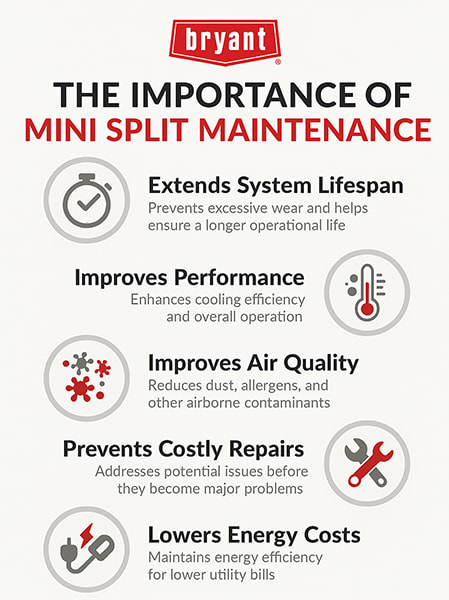
Regular ductless mini split maintenance is important because it prevents dirt accumulation, which forces the system to work harder, increasing energy consumption and causing premature wear. Consistent upkeep ensures whisper-quiet operation, optimal air quality, and long-term reliability.
Investing in routine care is investing in consistent, quiet comfort for years to come. When maintenance is neglected, dirt and debris accumulate on filters and coils. This forces the system to work harder to reach your desired temperature, leading to:
- Increased energy consumption and higher utility bills.
- Premature wear and tear on vital components.
- Reduced air quality due to circulating dust and allergens.
- Unexpected failures during extreme weather.
DIY Ductless Mini Split Maintenance Tips
Homeowners can perform basic DIY mini split maintenance by cleaning air filters every two to four weeks, clearing debris from the outdoor condenser unit monthly, and checking the PVC drain line for clogs.
You can handle several routine maintenance tasks without professional tools. Perform these three simple steps to keep your unit running smoothly and efficiently between technician visits.
1. Clean or Replace Air Filters
Clean or replace your mini split air filters every two to four weeks. Dirty filters restrict airflow, which decreases energy efficiency and degrades indoor air quality.
Locate the filter behind the front panel of the indoor unit. Rinse reusable filters with water or replace disposable ones to keep dust and allergens at bay.
2. Clear the Outdoor Unit
Perform a visual check of your outdoor mini split unit every month. Your outdoor condenser needs room to breathe to effectively release heat.
Remove leaves, dirt, or debris gathered around the unit. You can gently brush the coils or use a garden hose—never a pressure washer—to rinse away stubborn grime.
3. Check the Drain Line
Inspect your mini split drain line monthly to prevent water damage. A clogged drain line can lead to water backing up and damaging your interior walls.
Locate the PVC drain pipe and ensure it remains clear of obstructions. If you suspect a blockage, use a wet/dry vacuum to gently remove the debris.
When to Seek Professional Ductless Mini Split Maintenance
You should schedule professional mini split maintenance twice a year—once before the cooling season and once before the heating season. Immediate professional service is required if you notice unusual noises, sudden bill spikes, or inconsistent temperatures.
While DIY care handles the basics, the long-term reliability of your smart home investment relies on expert knowledge. We recommend proactive scheduling to ensure continuous comfort. Contact a trained HVAC technician immediately if you experience:
- Unusual noises: Grinding, rattling, or buzzing sounds from either unit.
- Performance drops: Inconsistent temperatures or weak airflow.
- Odors: Musty smells (mold) or burning smells signaling electrical issues.
- Bill spikes: A sudden, unexplained rise in energy costs.

What Happens During a Professional Maintenance Visit?
During a professional maintenance visit, an HVAC technician will perform system performance checks, deep clean the blower wheel and coils, and conduct a thorough electrical inspection. This precision tune-up optimizes energy efficiency and prevents bacteria growth.
A professional tune-up is a comprehensive health check for your system, not just a surface cleaning. When you hire a local Bryant dealer, your service visit typically includes:
- System Performance Checks: Verifying refrigerant levels, air temperatures, and amp draws.
- Deep Cleaning: Thoroughly cleaning the blower wheel, drain pan, and indoor/outdoor coils to prevent mold and bacteria growth.
- Electrical Inspection: Tightening wire connections and testing voltages to ensure safe operation.
According to Brian Redmond, owner of Redmond’s Complete Comfort in Lock Haven, Pennsylvania, homeowners should expect a precision inspection from their dealer.
“We encourage homeowners to get a precision inspection where the dealer verifies refrigerant temperatures, air temperatures, voltages, amp draws, and the tightness of wire connections," Redmond said. "The dealer also perform a standard cleaning of the indoor and outdoor coils.
This comprehensive check-up not only keeps your mini split system in prime condition but also gives you peace of mind knowing that your investment is well cared for.
Redmond recommends scheduling professional mini split maintenance twice a year.
“With pets, kids, and the environment of the home, there’s a lot of factors that can impact the unit,” Redmond said. “They're called mini splits for a reason – everything is micro inside of there. It does not take much for them to get dirty. The blower wheel should be pulled and cleaned at least once a year, and the drain pan needs to be cleaned and treated to prevent bacteria or mold.”
Schedule Mini Split Maintenance With A Bryant Dealer
Scheduling regular mini split maintenance with your local Bryant dealer ensures your system runs efficiently, preventing costly mini split repairs and extending its lifespan. Your local Bryant dealer will thoroughly inspect, clean, and tune up your unit to keep it performing at its best year-round. Trust a Bryant dealer for expert maintenance that enhances comfort and energy efficiency in your home.
Mini Split Maintenance FAQs
Mini split maintenance includes cleaning or replacing air filters, clearing the condensate drain line, cleaning indoor and outdoor coils, and checking refrigerant levels and electrical connections.
Professional mini split servicing typically costs between $150 and $500, depending on the number of indoor units and the complexity of the service.
Mini split filters should be cleaned every 2 to 4 weeks, especially in high-use seasons or homes with pets, dust, or allergies.
Yes, you can clean your mini split by removing and rinsing filters, wiping down the indoor unit, and ensuring the drain line is clear, but deeper maintenance should be handled by a professional.
Yes. Like any HVAC system, mini splits benefit from professional maintenance to help maintain performance and reliability.
Homeowners can clean filters and check for obstructions, but electrical and refrigerant service should be handled by a trained HVAC technician.
Learn More About Ductless Mini Splits
- Learn all about what is a mini split
- Discover the value in mini split heat pumps
- Understand what is a ducted mini split
- Read our guide to mini split cost
- Explore mini split repair
- Find out what to do what a mini split leaking water