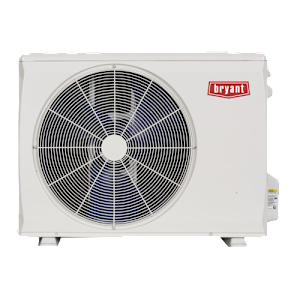
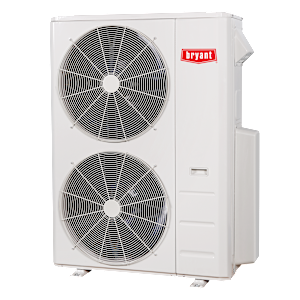
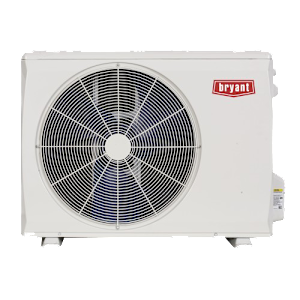
- Learn all about what is a mini split
- Read our guide to mini split cost
- Understand what size mini split do I need?
- Find out are mini splits worth it?
- Learn all about mini split vs central air
- Learn the ins and outs of mini split maintenance
Ductless Heat Pump Installation Guide
A ductless heat pump installation is a streamlined, minimally invasive process where a certified professional mounts an indoor air handler, drills a small 3-inch conduit hole, and connects the unit to an outdoor compressor — no ductwork required. Most single-zone installations are completed in a single day.
Connect with your local Bryant dealer to schedule a ductless heat pump installation.
How is a Ductless Heat Pump Installed?
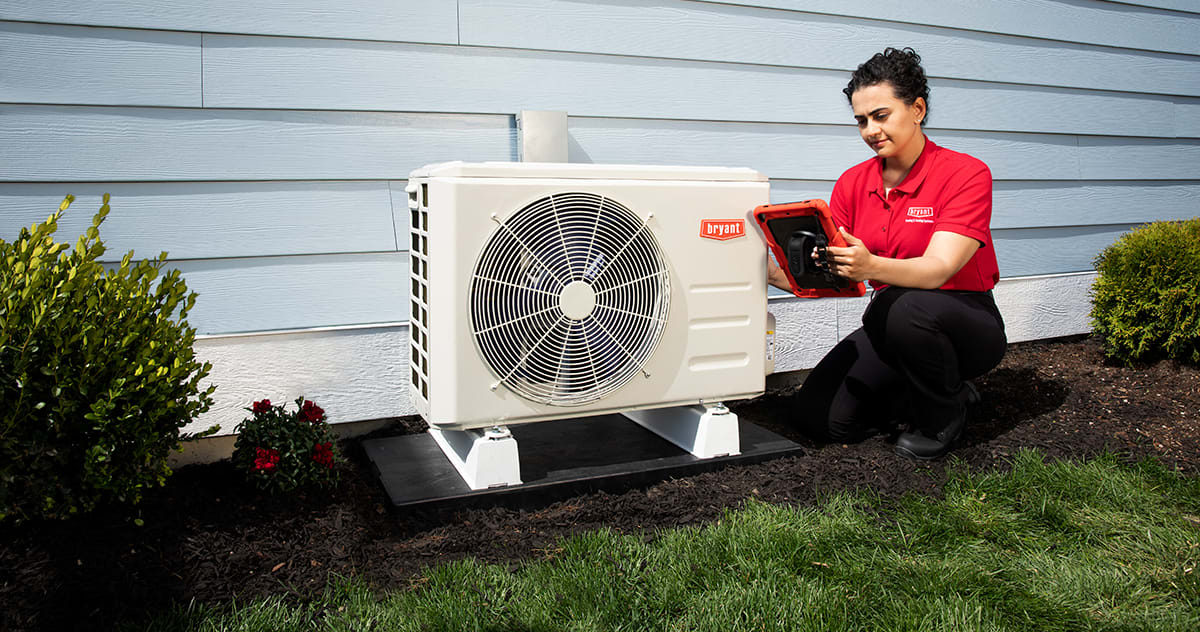
A ductless heat pump is installed by mounting an indoor air handler high on a wall, drilling a small 3-inch hole for the conduit (which carries power, refrigerant, and drain lines), and connecting it to an outdoor compressor unit. The system is then pressure-tested and charged with refrigerant.
Unlike traditional HVAC systems, ductless installation avoids the cost and disruption of adding or extending ductwork — making it an efficient path to zoned, room-by-room comfort.
Step-by-Step Ductless Heat Pump Installation Process
A local Bryant dealer follows a precise protocol to ensure reliable performance from day one:
- Site Assessment: A technician evaluates your home's layout to determine the optimal size and placement of units, ensuring maximum airflow and efficiency.
- Indoor Unit Mounting: The air handler is securely mounted high on an interior wall or ceiling, designed to blend seamlessly with your décor.
- Drilling the Conduit: A small, 3-inch hole is drilled through the exterior wall to connect the refrigerant lines, electrical wiring, and drain line — keeping the installation discreet.
- Outdoor Unit Placement: The compressor is installed on a stable surface outside, such as a concrete pad or wall bracket, and connected to the indoor unit via the conduit.
- System Testing: The technician charges the lines with refrigerant and performs rigorous testing to guarantee safe, reliable performance.
How Much Does Ductless Heat Pump Installation Cost?
Ductless heat pump installation typically costs between $3,000 and $15,000+, depending on system size, efficiency rating (SEER2), and the number of zones required. A single-zone system is the most affordable option, while whole-home multi-zone setups represent the higher end of that range.
Key Factors Influencing Installation Cost
Because every home is unique, the final price depends on several variables:
- System Size: The BTU capacity needed to heat or cool your square footage.
- Number of Zones: A single-zone unit costs less than a multi-zone system designed for the whole home.
- Efficiency Rating: Higher SEER2 ratings may cost more upfront but deliver "efficiency that pays for itself" over time through reduced energy bills.
While the initial investment is higher than a window unit, the long-term energy savings are significant. Additionally, many Bryant systems qualify for local rebates, helping to offset upfront costs. Learn more about mini split cost.
Where Should Ductless Units Be Placed?
To maximize comfort and efficiency, indoor units should be placed high on walls where airflow is unobstructed. Optimal placement varies by room:
- Living Rooms: Centered on a wall to distribute air evenly across the largest space.
- Bedrooms: Mounted away from the bed to avoid direct drafts while sleeping.
- Basements/Attics: Ideal for converting storage spaces into livable zones without extending existing ductwork.
Correct placement is one reason professional site assessment matters — a trained technician can identify airflow patterns, sun exposure, and insulation factors that directly impact system performance.
Can I Install a Ductless Heat Pump Myself?
No. Ductless heat pump installation is not a DIY project. It requires specialized knowledge of refrigerant handling, high-voltage electrical wiring, and structural drilling — work that is regulated and, in many jurisdictions, legally required to be performed by a licensed technician.
Attempting a DIY installation poses significant risks:
- Safety Hazards: Handling high-voltage electricity and pressurized refrigerant without training is dangerous.
- Voided Warranties: Most manufacturers require professional installation to validate the warranty.
- Performance Issues: Improper mini split installation can lead to refrigerant leaks and reduced efficiency.
Trusting a local Bryant dealer ensures your system is installed safely and optimized for long-term durability.
Why Homeowners Are Switching to Ductless Systems
Ductless heat pumps offer a compelling combination of efficiency, flexibility, and air quality benefits that traditional systems simply cannot match:
- Zoned Comfort: Control the temperature in individual rooms independently — no more fighting over the thermostat.
- Energy Savings: Leaky ducts can account for up to 30% of energy consumption in traditional systems. Ductless technology eliminates that loss entirely.
- Improved Air Quality: Advanced filtration reduces dust and allergens, letting your family breathe cleaner air.
- Versatility: Ductless systems are ideal for older homes, new additions, sunrooms, or garages where installing ducts is impractical or impossible.
Ready to Upgrade Your Home Comfort?
Schedule an appointment with your local Bryant dealer to ensure your ductless heat pump is sized, placed, and installed for maximum comfort and efficiency. A Certified Ductless Pro can help you choose the best mini split for your home and provide professional installation that delivers long-term performance.
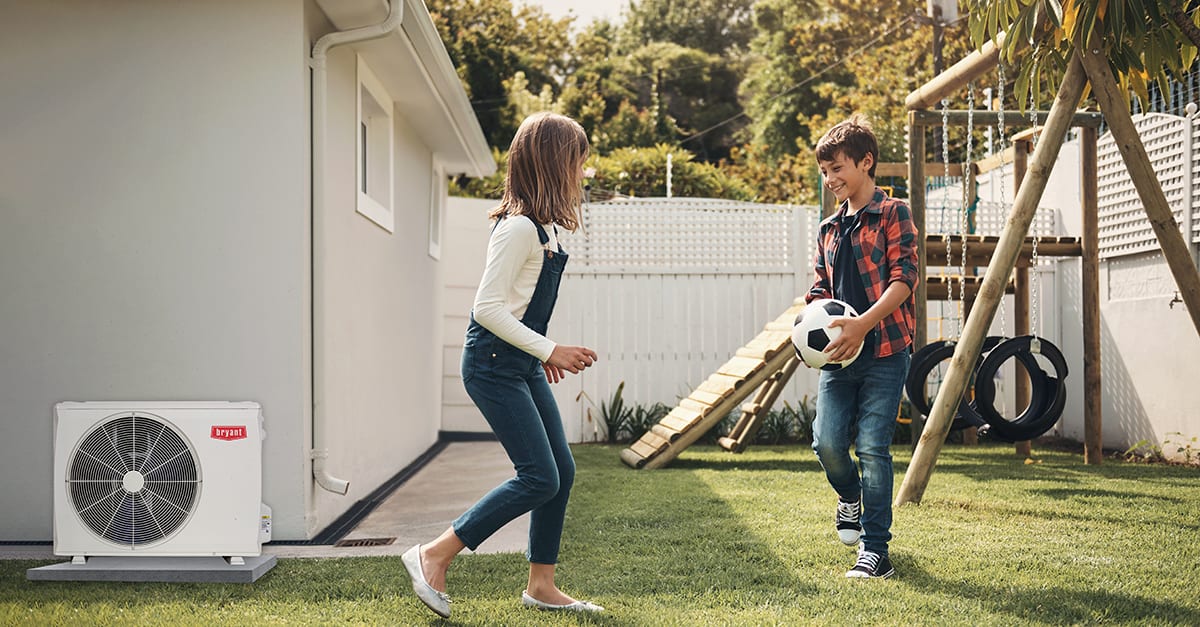
Compare Bryant Ductless Mini Splits
Choose a Bryant ductless mini split for efficient, customizable comfort without the need for ductwork. Ideal for specific rooms or multi-zone cooling and heating, these systems offer precise temperature control and quiet operation. With energy-efficient technology, they help reduce utility costs while providing year-round comfort. The sleek design makes Bryant mini splits a perfect choice for homes, additions, or spaces where traditional ductwork is impractical, delivering reliable performance and convenience.
Ductless Heat Pump Installation FAQs
A typical single-zone ductless heat pump installation can often be completed in just one day, while multi-zone systems may take longer. The process is significantly less disruptive than installing a traditional ducted system.
Absolutely. Modern ductless heat pumps, especially Bryant’s advanced models, are designed to provide reliable heating even when outdoor temperatures drop well below freezing, making them a dependable choice for year-round comfort.
Yes, a properly sized multi-zone ductless heat pump system can effectively heat and cool an entire home. An expert technician can design a system with enough indoor units to provide consistent comfort throughout your living space.
No, installation is minimally invasive. It only requires a small 3-inch hole in the wall for the conduit, avoiding the need for messy renovations or adding bulky ductwork.
Permit requirements vary by location. In most jurisdictions, installation of a heat pump system — including refrigerant handling and electrical work — requires permits and must be performed by a licensed HVAC contractor. Your local Bryant dealer can advise on requirements in your area.
System sizing depends on your home's square footage, insulation quality, ceiling height, and local climate. Undersized units struggle to maintain comfort; oversized units can cycle inefficiently. Learn more in Bryant's guide to what size mini split do I need.


