What Is Auxiliary Heat? Your Complete Guide
Auxiliary heat is a supplemental heating source used with a heat pump when the heat pump alone cannot meet the home's heating demand. It bridges the gap between the heat pump’s heating capacity and the heat loss of your home, helping maintain your thermostat setting when additional heat is needed.
How Does Auxiliary Heat Work?
Auxiliary heat works by automatically turning on a secondary heating source—typically electric resistance coils in an all-electric system or a gas furnace in a dual-fuel system—when the heat pump cannot meet the home's heating demand.
Your heat pump is designed to extract heat from the outside air and transfer it indoors. As outdoor temperatures fall, a heat pump's heating capacity generally decreases, although the exact performance depends on the specific model. This is when your system’s controls can recognize a need for additional heat and engage the auxiliary heat to maintain consistent comfort.
The temperature at which auxiliary heat is needed is called the thermal balance point. It varies based on the heat pump's capacity, the home's heating load, system sizing and controls. The DOE guidance notes that a typical heating balance point can fall in the 26°F to 32°F range1, but modern cold-climate heat pumps can operate effectively at substantially lower temperatures.
For example, Bryant's Evolution Extreme 21 291VAN Cold Climate Heat Pump is designed to maintain 100% heating capacity down to 0°F, illustrating why there is no single outdoor temperature at which every heat pump requires auxiliary heat.
Think of it as a relay race: your heat pump runs the marathon, but the auxiliary heat sprints the final leg when the conditions get tough. This ensures your home stays comfortable without manual intervention.
What Triggers Auxiliary Heat to Turn On?
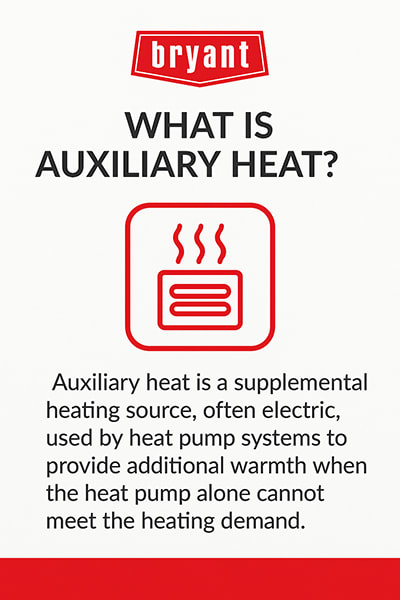
Bryant heat pump systems can use auxiliary heat when the heat pump cannot meet the thermostat's heating demand. The exact trigger depends on the system's controls and operating conditions.
Aside from low outdoor temperatures, your system might trigger auxiliary heat in these scenarios:
- Rapid Temperature Changes: If you increase the thermostat setting by several degrees at once, the system may use auxiliary heat to reach the new temperature faster. Supplemental resistance heat can also operate during recovery from a thermostat setback.
- Defrost Cycle: When frost builds up on the outdoor unit, the heat pump will enter a defrost cycle. During this time, it temporarily reverses operation, and auxiliary heat may turn on to help prevent cool air from being delivered indoors.
- Heating Demand Exceeds Heat Pump Capacity: When the home's heating load is greater than the heat pump can provide at a given outdoor temperature, auxiliary heat can supply the remaining capacity.
“Auxiliary heat adds an extra layer of protection to a home’s heating system, particularly for homeowners in extremely cold climates where a standalone heat pump may need some added power during a cold spell, “ Melissa Frause, owner of Bob’s Heating and Air Conditioning in Woodinville, WA, said.
Bryant's 3-Signal Auxiliary Heat Framework
When determining why auxiliary heat is running, Bryant homeowners can think about three primary signals: outdoor temperature, thermostat demand and system operation.
| Signal | What It Means | What Homeowners May Notice |
| Outdoor temperature | The heat pump's available heating capacity changes as outdoor conditions change. | Auxiliary heat may operate during colder weather. |
| Thermostat demand | The home's heating demand can temporarily exceed the heat pump's available capacity. | Auxiliary heat may activate after a significant thermostat increase. |
| System operation | Events such as a defrost cycle can temporarily require supplemental heat. | The thermostat may display “AUX HEAT” while the system maintains indoor comfort. |
This framework is a practical way to distinguish normal auxiliary-heat operation from situations that may warrant professional troubleshooting. The actual operating sequence varies by Bryant system and thermostat.
How is Auxiliary Heat Different from Emergency Heat?
Auxiliary heat turns on automatically to assist the heat pump when additional heating capacity is needed, whereas emergency heat is a manually selected operating mode that disables or bypasses normal heat-pump heating and uses the backup heat source instead.
Auxiliary Heat vs. Emergency Heat
| Feature | Auxiliary Heat | Emergency Heat |
| Trigger | Automatically activated when additional heating capacity is needed | Manually selected by the homeowner |
| Heat pump operation | Heat pump can continue operating while auxiliary heat assists it | Heat pump is typically shut off or bypassed |
| Energy source | Usually electric resistance heat; can be a furnace in some dual-fuel configurations | Typically the system's backup heat source |
| Cost impact | May increase energy use while operating, particularly with electric resistance heat | Can cost more to operate because the heat pump is no longer providing heat |
| Correct use case | Normal supplemental heating when the heat pump needs assistance | When the heat pump cannot operate properly and backup heat is needed |
Auxiliary heat is therefore not the same thing as emergency heat. Auxiliary heat is an automatic part of normal heat-pump operation, while emergency heat is a manual setting intended for situations when the heat pump should not operate.
Pro Tip: If your heat pump is operating normally, leave the system in its standard heating mode rather than manually selecting Emergency Heat. If the heat pump has stopped working, contact a qualified HVAC professional to determine whether emergency heat should be used.

Do I Need an Auxiliary Heat System?
Whether you need auxiliary heat depends on your climate, heat pump model, home heating load and system design. A standalone heat pump may require supplemental heat when its available heating capacity cannot meet the home's heating load.
Geography plays a major role in this answer. If you live in a mild climate where winter temperatures rarely create heating demands beyond the heat pump's capacity, your system may rarely need auxiliary heat. Cold-climate heat pumps, meanwhile, are designed to maintain substantial heating capacity at lower outdoor temperatures.
The Dual-Fuel Advantage
For homeowners seeking maximum efficiency, a dual-fuel heat system is a game-changer. This setup pairs a heat pump with a gas furnace. Depending on system controls and outdoor conditions, the furnace can provide supplemental or alternate heating when the heat pump cannot efficiently meet the home's heating demand.
The operating cost of a dual-fuel system depends on local electricity and natural-gas prices, equipment efficiency and the system's changeover settings. Unlike electric resistance heat, a gas furnace generates heat through fuel combustion rather than directly converting electricity into heat.
“Families with young kids or elderly residents may find that having auxiliary heat provides peace of mind during unpredictable weather conditions,” Frause said.
It’s worth considering your local climate and consulting your local Bryant dealer to determine whether additional auxiliary heat is necessary for your home.
Troubleshooting Your Auxiliary Heat
If your auxiliary heat runs frequently when outdoor conditions are relatively mild, or if you notice unusual noises and unexpectedly high energy bills, your system may require professional troubleshooting.
Frequent cycling of auxiliary heat when the heat pump should be able to meet the home's heating demand can signal an issue with system sizing, controls, airflow, refrigerant charge or equipment operation. Watch for these signs:
- Unexpectedly High Bills: A sudden spike in energy costs can indicate the system is relying more heavily on electric resistance auxiliary heat, which generally uses more electricity than heat-pump operation.
- Constant Running: The system runs non-stop but the house doesn't feel warm. This can indicate that the heat pump or auxiliary system is not meeting the home's heating demand.
- Strange Noises: Grinding or banging sounds could indicate mechanical distress in the outdoor unit.
If you spot these issues, schedule HVAC maintenance immediately. A qualified professional, such as your local Bryant dealer, can evaluate system performance, airflow, controls and the home's heating load to determine whether auxiliary heat is operating as intended.
Bryant Solutions for Efficient Heating
Bryant delivers innovative solutions designed for exceptional performance, even in the coldest conditions. Our lineup includes advanced cold climate heat pumps that optimize heating efficiency, keeping your home warm and your energy bills low.
Pair your system with a smart thermostats to unlock even greater control. These thermostats allow you to program schedules, adjust settings remotely, and monitor energy use, helping you manage your auxiliary heat effectively and maximize comfort.
Connect With A Bryant Dealer on Auxiliary Heating
A Bryant expert can help you understand the benefits of adding a gas furnace or other auxiliary heating sources to your system, ensuring you stay comfortable no matter how cold it gets outside. They will guide you in selecting the right equipment based on your home's heating needs and provide professional installation and service. Schedule an appointment with your local Bryant dealer today to discuss how auxiliary heating can improve your home's comfort and efficiency.
FAQs On Auxiliary Heat
Auxiliary heat activates when your heat pump can’t keep up with the heating demand, usually in very cold weather or during a defrost cycle.
Yes, auxiliary heat is typically more expensive to run because it relies on electric resistance heating, which uses more energy than the heat pump.
Auxiliary heat should come on only occasionally, such as during extremely cold temperatures or when the system is trying to raise the temperature quickly.
Yes, it’s okay to run auxiliary heat when needed, but it should be temporary—if it runs frequently, it could indicate a problem with your heat pump.
If auxiliary heat runs too long, it can lead to high energy bills, system wear, and may signal that your heat pump is undersized or malfunctioning.
Auxiliary heat is a backup heating feature in heat pump systems that uses electric resistance or a furnace when outdoor temperatures drop too low for efficient heat pump operation.
No, it’s normal during very cold weather or rapid temperature recovery. Frequent use in mild weather, however, may indicate a system issue.
Typically, auxiliary heat activates when outdoor temperatures fall near or below freezing, or when the system can’t maintain the set temperature efficiently.
It turns on automatically when the heat pump can’t meet the thermostat’s demand, such as during extreme cold or defrost cycles.
It’s not recommended—aux heat is meant for temporary use and is less efficient than standard heat pump operation.
It should only run as needed during temperature drops or system defrosts, not continuously.
Yes. The system activates it automatically based on outdoor temperature and thermostat demand.
Generally, yes. Using a gas furnace as auxiliary heat (in a dual-fuel system) is often more energy-efficient and cost-effective than using electric resistance coils, especially in regions with high electricity rates.
It is not recommended to disable it entirely. Without auxiliary heat, your heat pump may freeze up during defrost cycles or fail to reach your desired temperature on freezing days, potentially causing discomfort or system damage.


