About The Author: Travis Baugh is a Digital Brand Marketing Manager for Bryant, where he creates clear, helpful content to guide homeowners through heating, cooling, and indoor air quality decisions. His goal is to empower readers with the knowledge they need to choose the right comfort solutions for their home—confidently and comfortably.
Heat Recovery Ventilation Systems: Fresh Air for Your Home
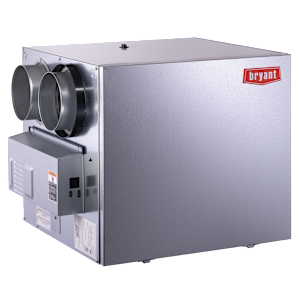
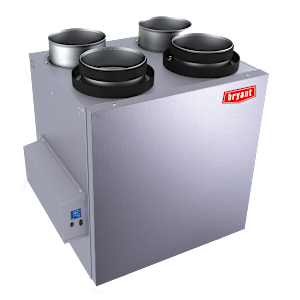
A Heat Recovery Ventilator (HRV) is an advanced mechanical ventilation system that continuously replaces stale indoor air with fresh outdoor air while capturing heat to maximize energy efficiency. It is the ideal solution for homeowners in colder climates who want to reduce indoor pollutants and excess moisture without sacrificing long-term comfort or driving up monthly energy bills.
How Does a Heat Recovery Ventilator Work?
An HRV works by using dual fans to pull stale, warm air out of your home while simultaneously drawing fresh, cold air in through a central heat exchange core. Inside the core, thermal energy transfers from the outgoing stale air to the incoming fresh air without the two air streams ever mixing. This innovative process pre-warms the fresh air before it is seamlessly distributed throughout your home, ensuring you breathe cleaner air without losing valuable heat energy.
The Heat Exchange Process
- Exhaust: Stale, warm air (often from bathrooms or kitchens) is pulled into the HRV unit.
- Intake: Fresh, cold outdoor air is drawn into the unit.
- Exchange: Both air streams pass through the heat recovery core. The warmth from the stale air heats up the core plates, which then transfer that warmth to the incoming cold air.
- Distribution: The now pre-warmed fresh air is circulated through your home's ductwork, while the stale air is vented outside.

What Are the Key Features and Benefits of an HRV?
Upgrading to a Bryant Heat Recovery Ventilator provides reliable, whisper-quiet performance, improved indoor air quality, and long-term energy savings that pay for themselves over time. This smart investment offers significant advantages for your home's comfort and health:
- Maximum Efficiency: High-efficiency heat recovery cores transfer thermal energy from stale air to fresh air, reducing the load on your heating system.
- Improved Air Quality: Removes pollutants, odors, and excess humidity while introducing fresh, filtered air.
- Automatic Defrost: Innovative defrost cycles prevent ice buildup in the core, ensuring reliable performance even in harsh winters.
- Quiet Operation: Designed for whisper-quiet performance so you can enjoy fresh air without the noise.
- Flexible Control: Compatible with select thermostats and dedicated wall controls for seamless integration into your smart home.
- Durability: Warranties on parts and the heat recovery core provide long-term peace of mind.
Who Needs an HRV System?
HRV systems are specifically engineered for homeowners in colder climates and those with tightly sealed, energy-efficient homes who need mechanical assistance to reliably cycle fresh air. While most modern homes benefit from improved ventilation, HRVs are best suited for:
- Colder Climates: Regions where heating seasons are long, and retaining indoor heat is a top priority for energy efficiency.
- Tightly Sealed Homes: Modern, eco-friendly homes that lack natural ventilation and trap indoor air without an advanced mechanical solution.
- Allergy Sufferers: Homeowners looking to invest in comfort by significantly reducing indoor allergens and pollutants through controlled, filtered ventilation.
Samantha Houchin, co-owner of The Weather Changers in Denver, Colorado, emphasized the value of heat recovery ventilators as today’s homes become increasingly airtight and energy efficient.
“Houses are being built so tightly these days, with triple-pane windows and advanced insulation,” Houchin said. “That efficiency keeps conditioned air inside—but it also traps stale air without a natural way to escape. A heat recovery ventilator helps by exhausting that stale indoor air, bringing in fresh outdoor air, and transferring heat between the two air streams.
“This process helps maintain consistent indoor temperatures and improves comfort while reducing the strain on your HVAC system. It’s a great way to keep your home’s air fresh and energy use efficient at the same time.

Connect With A Bryant Dealer On Heat Recovery Ventilators
Connect with a Bryant dealer to explore the best heat recovery ventilator or energy recovery ventilator options for your home. Their expert team can help you select and install a high-performance HRV system that improves indoor air quality, enhances energy efficiency, and integrates seamlessly with your existing HVAC setup. Trust a Bryant dealer for reliable products and professional guidance. Schedule an appointment today.
Explore Bryant Ventilators
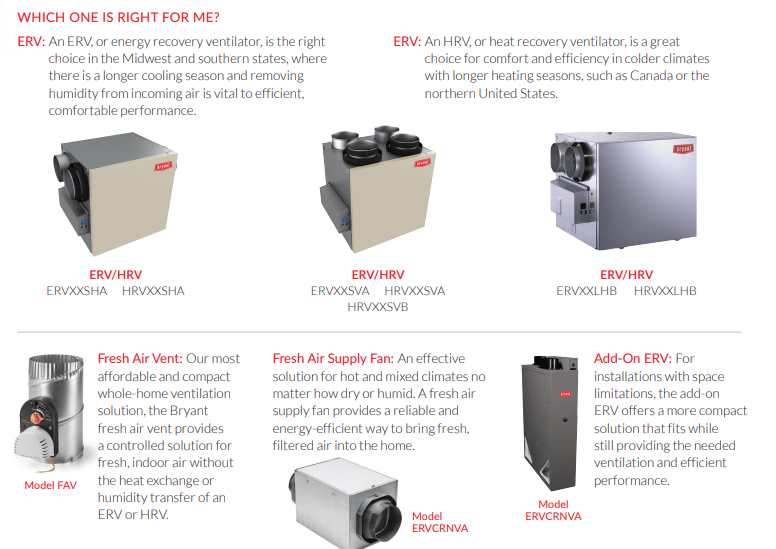
Choose a Bryant ventilator for improved indoor air quality and enhanced comfort in your home. Designed to bring in fresh outdoor air while removing stale indoor air, Bryant ventilators help regulate humidity levels and reduce allergens. With energy recovery or heat recovery options, these systems ensure efficient airflow while minimizing energy loss. Whether you need to boost ventilation in a tightly sealed home or improve overall air quality, a Bryant ventilator is an excellent choice for healthier, more comfortable living.
Heat Recovery Ventilation System FAQs
A heat recovery ventilator (HRV) brings in fresh outdoor air while exhausting stale indoor air, transferring heat from the outgoing air to the incoming air to reduce energy loss.
Yes, an HRV can be worth it well-insulated or airtight homes, as these homes can trap moisture and pollutants inside, and heat recovery ventilators help improve indoor air quality and maintain temperature balance.
An HRV transfers only heat, while an ERV transfers both heat and moisture, making ERVs better for humid or variable climates, and HRVs ideal for cooler, dry environments.
HRVs do not actively cool the home, but they can help by ventilating warm indoor air while minimizing heat gain from incoming air during mild summer weather.
An HRV exchanges stale indoor air with fresh outdoor air while transferring heat between the two streams to maintain indoor comfort and efficiency.
A home HRV system usually costs $2,000 to $4,000 installed, depending on system capacity and installation complexity.
No—an HRV provides a steady supply of fresh air, reducing the need to open windows for ventilation.
Yes, running it continuously helps prevent condensation and keeps indoor air fresh without losing heat.
HRVs are energy efficient, typically consuming 50 to 200 watts—similar to running a few household light fixtures.
It depends. An HRV (Heat Recovery Ventilator) can at times integrate with a smart thermostat, but it depends on the thermostat model and how the HRV is wired into your HVAC system.
No. Bryant heat recovery ventilators are engineered for quiet operation, ensuring your home remains peaceful while it continuously cycles fresh air.


