About The Author: Travis Baugh is a Digital Brand Marketing Manager for Bryant, where he creates clear, helpful content to guide homeowners through heating, cooling, and indoor air quality decisions. His goal is to empower readers with the knowledge they need to choose the right comfort solutions for their home—confidently and comfortably.
What Does a Humidifier Do?
What does a humidifier do? A humidifier is a device that adds moisture to the air in your home to help maintain comfortable indoor humidity levels. Bryant recommends maintaining indoor humidity at approximately 30% to 50%, a range that can help reduce the effects of dry air, improve comfort, and protect wood furnishings.
By releasing water vapor or steam into your living space, it helps alleviate physical discomforts like dry skin and congestion while protecting wood furnishings from cracking.
For homeowners seeking comprehensive, long-term comfort, whole-home humidifiers offer a seamless solution. Unlike portable units that treat a single room, these advanced systems integrate directly with your HVAC unit to maintain more consistent humidity levels throughout your home.
How Does a Humidifier Work?
Humidifiers work by converting water into moisture—steam, mist, or vapor—and distributing it into the air you breathe to maintain a balanced indoor climate.
A whole-home humidifier installs directly into your HVAC system's ductwork. It monitors indoor humidity levels and automatically adds moisture to the airflow coming from your furnace or air handler. This ensures consistent humidity throughout the home without the need for daily refilling or monitoring.
Bryant recommends an indoor relative humidity level of approximately 30% to 50%. Keeping humidity within this range can help improve comfort while avoiding the problems associated with excessively dry or damp indoor air.
"Your home can get very dry during the cold winter months," Samantha Houchin, co-owner of The Weather Changers in Denver, Colorado, said. "There are times when you can’t get off of your couch without static electricity or you can’t wake up without your nose feeling congested. A whole-home humidifier adds moisture into your house to combat those dry-air related issues in your homes. It also helps with hardwood floors.”
Key Benefits of Using a Humidifier
The primary benefit of using a humidifier is transforming dry, harsh indoor air into a more comfortable environment with balanced humidity. Investing in a humidifier does more than just add water to the air; it can help protect your home and improve overall comfort.
Here is how a humidifier creates a healthier, more comfortable home:
- Relieves Physical Discomfort: Properly humidified air can help soothe dry, itchy skin, chapped lips, dry eyes, and irritation associated with dry indoor air.
- Protects Your Home: Wood floors, antique furniture, and musical instruments can warp or crack in dry conditions. Maintaining more stable humidity can help protect these materials from the effects of excessively dry air.
- Reduces Static Electricity: Say goodbye to painful shocks when touching doorknobs or loved ones.
- Enhances Heating Comfort: Humidified air can feel warmer than very dry air at the same temperature, which may allow some homeowners to use a lower thermostat setting while maintaining their desired comfort level. Bryant specifically notes this potential benefit for its fan-powered humidifiers.
For reference, Bryant's whole-home humidifiers provide moisture output based on the model and humidifier type. Bryant models currently range from approximately 12 to 34 gallons of moisture per day: small bypass models provide up to 12 gallons per day, large bypass models up to 17 gallons per day, fan-powered models up to 18 gallons per day, and the Preferred™ Series Steam Humidifier up to 34 gallons per day. Learn more in our guide on humidifier benefits.
3 Types of Whole-Home Humidifiers
Selecting the right type of humidifier depends on your home's size, construction, and comfort needs.
1. Steam Humidifiers
Steam humidifiers are well suited for larger homes and applications requiring precise humidity control.
A steam humidifier heats water in a specialized canister to create steam, which is injected directly into your ductwork. It operates independently of your furnace heat, making it capable of providing humidity even when the furnace is not actively heating. Bryant's Preferred™ Series Steam Humidifier provides up to 34 gallons of moisture per day, depending on voltage and amperage.
2. Fan-Powered Humidifiers
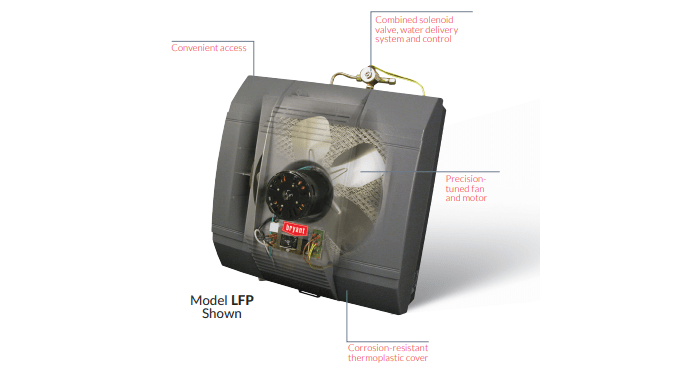
Fan-powered units use an internal fan to move air through a water-saturated evaporator pad, allowing moisture to be distributed through the ductwork.
These units use a built-in fan to push air through a water-saturated wick or pad. As the air passes through, it picks up moisture via evaporation before entering your ductwork. Bryant's Preferred™ Series Large Fan-Powered Humidifier provides up to 18 gallons of moisture per day.
3. Bypass Humidifiers
Bypass humidifiers use the airflow generated by your furnace or fan coil blower to move air through a water-saturated evaporator pad.
Bypass humidifiers rely on the pressure difference created by your furnace's blower motor. They divert (bypass) a portion of warm air from the supply duct, pass it through a water panel, and reintroduce the moistened air into the return duct. Bryant's bypass humidifiers provide up to 12 gallons per day for its small model and up to 17 gallons per day for its large model.
“Fan-powered and bypass humidifiers both use water pads,” Houchin said. “When they turn on, water saturates the pad, and air passes through the humidifier to add moisture to the home. A steam humidifier works differently—steam is produced in a canister and injected directly into the HVAC system. Some HVAC systems don’t have enough space to install a fan-powered humidifier. In those cases, a bypass humidifier is more versatile and easier to install, making it a practical solution for tight spaces. The steam humidifier is the workhorse if you want to maintain consistent humidity throughout your home,” Houchin said. “Fan-powered and bypass humidifiers provide more affordable options while still improving indoor comfort."
How To Clean A Whole-Home Humidifier
To clean a whole-home humidifier, you must replace the water pads, sanitize accessible components, and clear the drain line of any obstructions. Routine maintenance ensures your system operates efficiently and prevents mineral buildup.- Replace Pads/Filters: Change the water panel or filter according to the manufacturer's recommended maintenance schedule, typically at least once per heating season for evaporative models.
- Sanitize: Clean accessible parts to prevent mineral buildup and microbial growth.
- Clear Debris: Ensure the drain line is clear of obstructions.
Connect With A Bryant Dealer On What A Humidifier Can Do for You
Still have questions on what does a humidifier do? Ready to get a humidifier installation scheduled for your home? Connect with your local Bryant dealer to get a quote on whole house humidifier cost.
Bryant whole-home humidifiers integrate with compatible heating and cooling systems to add moisture throughout the home. Bryant offers bypass, fan-powered, and steam humidifier options, with models providing up to 12, 18, or 34 gallons of moisture per day depending on the type and model.
A Bryant dealer can evaluate your home's size, climate, existing HVAC equipment, and comfort needs to help you select the appropriate humidifier. Their expert team can guide you in selecting the best humidifier for your needs. Schedule an appointment today.
Bryant What Does A Humidifier Do FAQs
A whole-home humidifier helps maintain balanced indoor humidity, reducing dry skin, static electricity, respiratory irritation, and protecting wood floors and furniture from cracking.
Negatives include the risk of mold or mildew if not properly maintained and the potential for over-humidification leading to condensation and indoor air issues.
Use a humidifier during cold, dry months when indoor air lacks moisture—typically fall through winter, or whenever your home’s humidity drops below 30%.
Signs you may need a humidifier include dry skin, frequent static shocks, cracked wood surfaces, or low humidity readings on a hygrometer.
A whole-home humidifier doesn’t remove particles or allergens from the air—it adds moisture to help maintain a comfortable humidity balance. For cleaner air, it can be paired with a whole-home air purifier for comprehensive indoor air quality improvement.
Yes, a whole-home humidifier can potentially help reduce energy costs. Because moist air holds heat better and feels warmer than dry air, you can often comfortably set your thermostat at a lower temperature during winter, reducing your heating system's workload.
When properly maintained, a whole-home humidifier typically lasts between 10 and 15 years. Regular pad replacements and annual cleaning are crucial to extending the system's lifespan and ensuring reliable performance.
Learn More About Humidifiers
- Discover the best humidifier for your home
- Find out what humidity should my house be at?
- Learn the ins and outs of humidifier installation
- Explore the factors of whole house humidifier cost


