About The Author: Travis Baugh is a Digital Brand Marketing Manager for Bryant, where he creates clear, helpful content to guide homeowners through heating, cooling, and indoor air quality decisions. His goal is to empower readers with the knowledge they need to choose the right comfort solutions for their home—confidently and comfortably.
A Guide to Whole House Humidifier Maintenance
Proper whole-home humidifier maintenance involves cleaning mineral buildup, replacing the water panel (evaporator pad) annually, and checking for leaks or clogs. Regular maintenance ensures your system runs efficiently, prevents mold growth, and protects your home’s wood furnishings from dry air damage.
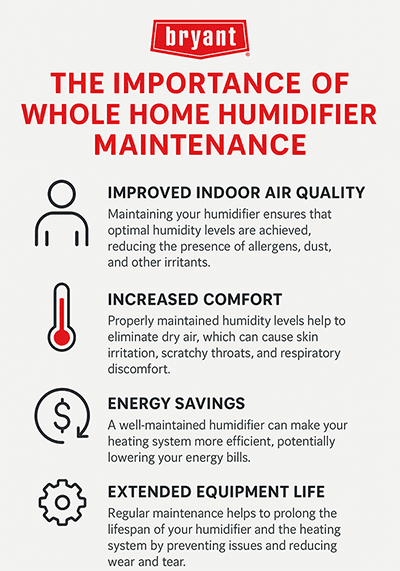
Why is Regular Professional Humidifier Maintenance Important?
Proper maintenance is critical because it keeps your system efficient and your air healthy. Without it, scale buildup and stagnant water can lead to poor performance, higher energy bills, and potential water damage.
Key Benefits of Regular Service
- Reduced Efficiency: Scale buildup and clogged drains can decrease moisture output, forcing the system to run longer and use more energy.
- Poor Air Quality: Stagnant water and biofilm can develop in unmaintained systems, negatively affecting your indoor air.
- Higher Costs: Minor issues like small leaks can escalate into expensive water damage or component failure if not addressed promptly.
How Do I Perform DIY Humidifier Maintenance?
You can handle basic maintenance tasks yourself between professional visits. Always turn off power to the HVAC system and shut off the water supply before starting.
How to Clean a Whole House Humidifier
The cleaning process varies slightly depending on your humidifier type.
- Bypass and Fan-Powered Units: Start by removing the water panel housing and drain pan. Use warm water and a soft brush to gently rinse away any mineral buildup.
- Steam Units: Empty the steam cylinder (if serviceable) and wipe the interior surfaces clean. Follow your owner's manual to descale mineral deposits.
Pro Tip: Avoid harsh chemicals. If needed, use a mild vinegar solution or a manufacturer-approved descaler to break down stubborn mineral buildup.
When to Replace Humidifier Components
- Water Panel (Evaporator Pad): Replace this at least once per heating season. If it looks crusted, discolored, or clogged, swap it out immediately.
- Water Strainer & Feed Tube: Inspect these for debris annually. Flush them out or replace them if water flow is restricted.
- Orifice & Distribution Tray: Ensure these are clear so water distributes evenly across the panel.
Scotty Peters, owner of CK Heating and Cooling in Seminole, Texas, emphasizes that homeowners can safely handle routine humidifier maintenance, especially on bypass and fan-powered systems.
“There are basic service tasks people can do themselves,” he said. “Just always make sure the power is off before working on the unit. From there, you can check things like whether water is reaching the system, confirm valves are open, and replace or clean the humidifier pad when needed.”
Seasonal Maintenance Checklist
To get the most out of your system, follow this seasonal schedule:
Start of Heating Season
- Install a fresh water panel.
- Open the water supply valve.
- Set the humidistat based on outdoor temperatures to prevent window condensation.
Mid-Season Check
- Inspect for water leaks around the unit.
- Ensure the drain line is clear and flowing freely.
- Check for mineral buildup in the drain pan.
End of Heating Season
- Turn off the water supply and power down the humidifier.
- Remove and discard the old water panel.
- Clean all accessible parts to prevent mold growth during the summer.
When to Call a Professional
While DIY care is helpful, professional service ensures your system is calibrated correctly and safe to operate. A certified technician will:
- Calibrate the humidistat and controls.
- Deep clean internal components like steam generators.
- Verify that electrical connections and water lines are secure.
If you notice leaks, strange noises, or if humidity levels aren't improving, schedule an appointment with your local Bryant dealer today.

Humidifier Maintenance FAQs
Common issues include clogged water panels, malfunctioning solenoid valves, or mineral deposits that restrict water flow. Scheduling annual maintenance with your local Bryant dealer can help prevent these problems.
Bryant recommends cleaning your whole home humidifier at least once per season, typically before and after winter use. Regular cleaning helps maintain efficiency and prevents mineral buildup or mold growth.
Most Bryant whole home humidifiers use a water panel or evaporator pad that should be replaced once per heating season. Follow your owner’s manual or contact your Bryant dealer for model-specific instructions.
If your home’s air feels dry, static increases, or wood furnishings crack, your humidifier may not be running correctly. A Bryant professional can test system operation and adjust settings for ideal comfort.
Check for mineral buildup, residue, or uneven moisture output. Many systems have a water panel that should be replaced seasonally.
White scaling, reduced performance, or odors can indicate mineral deposits or stagnant water inside the unit.
Use a manufacturer-approved vinegar or mild cleaning solution to remove scale and deposits from components, then rinse thoroughly. Allow an HVAC professional to clean your humidifier if you are uncomfortable doing so much.
Bypass and fan-powered whole-home humidifiers generally need less frequent maintenance than portable units—usually just seasonal panel replacement and annual inspection.
Learn More About Humidifiers
- Find out what humidity should my house be at?
- Explore what to do if in need of humidifier repair
- Learn the ins and outs of humidifier installation
- Discover humidifier benefits
- Discover whole house humidifier types
- Understand the best humidity level for sleeping


