- Learn all about what is a mini split
- Read our guide to mini split cost
- Understand what size mini split do I need?
- Find out are mini splits worth it?
- Learn all about mini split vs central air
- Learn the ins and outs of mini split maintenance
Do Mini Splits Heat and Cool?
Yes, ductless mini split systems both heat and cool your home. They are highly efficient all-in-one HVAC solutions that work by reversing the flow of refrigerant. In the summer, they move heat out of your house to cool it. In the winter, they capture heat energy from the outside air—even in freezing temperatures—and bring it inside to warm your home.
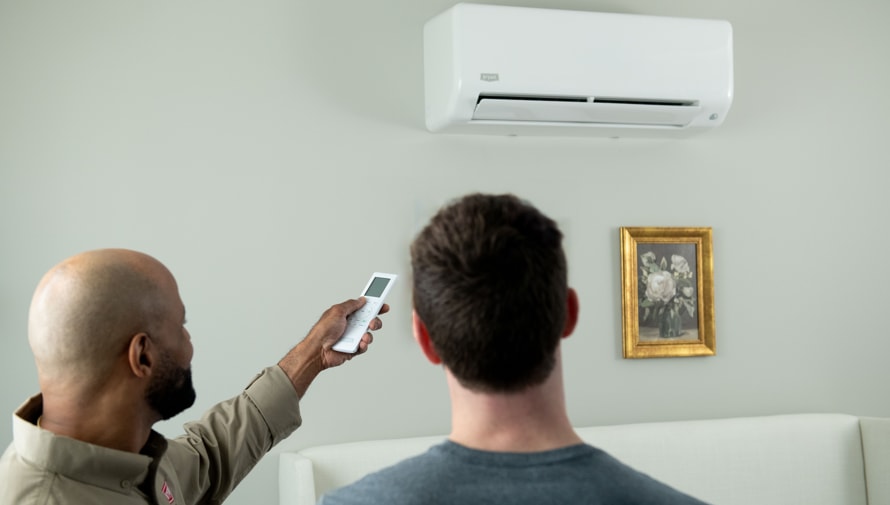
How Do Mini Splits Heat and Cool?
Unlike traditional furnaces that generate heat by burning fuel, mini splits (also known as ductless mini split heat pumps) operate by transferring heat. This innovative heat transfer process makes them an incredibly energy-efficient solution for year-round climate control.
The Cooling Process (Summer)
During warmer months, the mini split functions much like a standard air conditioner but with greater precision:
- Absorption: The indoor unit absorbs heat and excess humidity from the air inside your room.
- Transfer: The refrigerant carries this absorbed heat through the conduit to the outdoor unit.
- Release: The outdoor unit releases the heat into the outside air, leaving your indoor space cool, dry, and comfortable.
The Heating Process (Winter)
In the winter, the system reverses its operation to provide warmth:
- Extraction: The outdoor unit extracts latent heat energy from the outside air. Even in freezing temperatures, there is heat energy available in the air.
- Compression: The refrigerant compresses this captured heat to raise its temperature significantly.
- Delivery: The indoor unit releases this warmth into your home, delivering consistent heating without the energy loss associated with ductwork.
For a deeper dive into the technology, read our guide on what is a mini split.
Why Choose a Mini Split for Heating and Cooling?
Ductless mini splits offer a visionary approach to home comfort, giving you precise control over your environment while reducing your carbon footprint. Here is why homeowners are making the switch:
1. Excellent Energy Efficiency
Because they move heat rather than creating it via combustion, mini splits are highly efficient. This translates to significant savings on your energy bills compared to electric baseboard heaters or traditional central heating systems.
2. Zoning Capabilities
One of the biggest advantages is zoning. You can install indoor units in specific rooms and control the temperature of each zone independently. This means you stop wasting energy heating or cooling empty rooms—why cool the guest room when nobody is visiting?
3. Easy Installation
Without the need for invasive ductwork, installation is quick and minimally disruptive. A small conduit connects the indoor and outdoor units, requiring only a three-inch hole in the wall. Learn more about mini split installation.
Are Mini Splits Effective in Extreme Cold?
Yes, modern mini splits are effective in extreme cold. While early generations of heat pumps struggled in freezing temperatures, today's technology has advanced significantly.
Many systems are now engineered to perform effectively even when outdoor temperatures drop as low as 0°F (-17°C) or below. While standard models are excellent for moderate climates, specialized "high heat" or "cold climate" models are available for regions with harsh winters. It is crucial to check the specific ratings of the unit you are considering to ensure it meets the climate demands of your region.
Connect With Your Bryant Dealer On Mini Splits
To get answers to your remaining questions about Bryant mini split systems, including sizing, installation, and specific model features, connect with your local Bryant dealer today. They are the best resource for a personalized consultation that ensures you choose the most efficient and effective ductless solution for your home.
Mini Split FAQs
Yes, multi-zone mini split systems can effectively heat and cool large homes by connecting multiple indoor units to a single outdoor compressor, allowing for customized comfort in every room.
Generally, yes. Mini splits are often cheaper to run because they eliminate energy loss associated with ductwork and allow for targeted zoning, meaning you only condition the spaces you are using.
In extremely cold climates where temperatures regularly drop below the unit's operating range, a backup heat source may be recommended. However, for most moderate to cold climates, high-performance or "hyper-heat" models are sufficient as a primary heat source.
Absolutely. Many homeowners use mini splits as a supplemental system to fix "hot or cold spots" in specific rooms, or to add heating and cooling to a new addition without extending the existing ductwork.


