About The Author: Travis Baugh is a Digital Brand Marketing Manager for Bryant, where he creates clear, helpful content to guide homeowners through heating, cooling, and indoor air quality decisions. His goal is to empower readers with the knowledge they need to choose the right comfort solutions for their home—confidently and comfortably.
What Is An Air Handler?
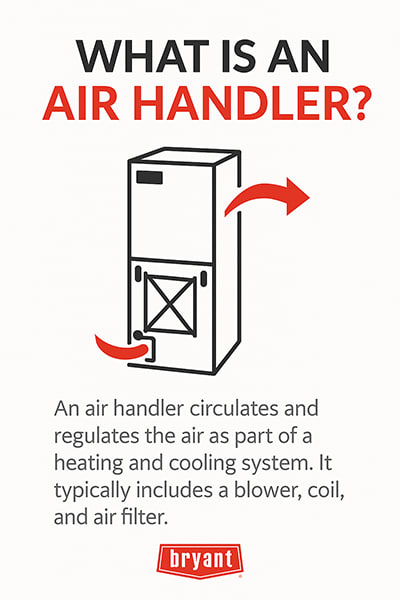
An air handler — also called a fan coil — is the indoor component of an HVAC system that circulates heated or cooled air throughout your home. It pairs with a heat pump or air conditioner to filter air, regulate humidity, and distribute climate-controlled air through your ductwork.
At Bryant, delivering true comfort means building air handlers that go beyond the basics. Every Bryant air handler is engineered for quiet operation, lasting efficiency, and seamless compatibility — because reliable indoor climate control shouldn't be something you think about. It should just work.
How Does An Air Handler Work?
An air handler works by drawing indoor air over heating or cooling coils to condition it, then using a blower motor to push that air back through your home's ductwork.
Without an air handler, the warm or cool air your heat pump or air conditioner produces has no way to travel through your home. The air handler solves this — it moves air continuously and consistently, ensuring every room reaches the right temperature.
“The air handler is basically the HVAC system's lungs,” Samantha Houchin, owner of The Weather Changers in Denver, Colorado, said. “It pushes the air out and moves it through the system. Without it, you wouldn’t have anything to circulate air throughout the house.”
What Does an Air Handler Do? Key Functions Explained
An air handler performs three essential functions: circulating conditioned air, filtering airborne pollutants, and controlling indoor humidity. Together, these functions maintain a healthy, comfortable indoor environment year-round.
Air Circulation
The blower motor inside the air handler pushes conditioned air through your ductwork. Whether it's the middle of a freezing winter or a sweltering summer, the air handler ensures consistent airflow to every corner of your home. Advanced smart systems can further optimize this airflow, maximizing energy efficiency across your entire home.
Air Filtering
Before air is heated or cooled, it passes through an internal filter inside the air handler. This process removes dust, pollen, pet dander, and other allergens — significantly improving indoor air quality and protecting the system's internal components from debris buildup. For homeowners focused on respiratory health or managing allergies, this filtering function is one of the most immediate, tangible benefits of a well-maintained air handler.
Humidity Control
Air handlers play a major role in managing indoor moisture levels. By regulating airflow across the evaporator coil, the unit removes excess humidity during the cooling process — preventing clamminess, reducing the risk of mold growth, and creating a more comfortable living environment. Learn more about what humidity should my house be at?

What Are the Types of Air Handlers?
The three main types of air handlers are upflow, downflow, and horizontal. The right configuration depends on your home's ductwork design and where the unit will be installed.
Upflow Air Handler
Best for: Basements and crawl spaces.
An upflow air handler pulls air in from the bottom and pushes conditioned air upward into supply ducts above. This configuration is common in homes where ductwork runs above the unit.
Downflow Air Handler
Best for: Attics and upper-level utility closets.
A downflow air handler operates in reverse — pulling air in from the top and directing it downward into ductwork that runs beneath the floor.
Horizontal Air Handler
Best for: Tight attics or crawl spaces with limited vertical clearance.
This unit lies on its side and moves air laterally. It is ideal for homes with slab foundations or spaces where a tall vertical unit cannot be installed.
Choosing between types: An upflow unit is better suited for homes with basement mechanical rooms and overhead duct systems, while a horizontal unit works best when ceiling or crawl space height is a limiting factor. A Bryant dealer can assess your space and recommend the right fit.
Why Choose a Bryant Air Handler?
Bryant air handlers deliver advanced energy efficiency, whisper-quiet operation, and seamless compatibility with your existing heating and cooling systems. Investing in a Bryant air handler means choosing technology designed to pay for itself over time.
- Variable-Speed Technology: Whisper-quiet operation with consistent, optimized airflow throughout your home.
- Energy Efficiency: Advanced variable-speed motors reduce energy consumption, helping lower utility bills season after season.
- Durability: Built for long-lasting, reliable performance — delivering comfort year after year.
Connect With A Bryant Dealer On Air Handlers
Choosing the right air handler is about more than picking a model — it's about finding the right fit for your home's layout, ductwork, and comfort goals. A local Bryant expert can help you select the ideal configuration, whether you need a variable-speed unit for ultra-quiet operation or a compact horizontal model for a tight space. Schedule an appointment today to find the perfect match for your home’s comfort needs.
Explore Bryant Air Handlers
Choose a Bryant air handler for efficient and reliable air distribution in your home. Designed for seamless compatibility with Bryant heating and cooling systems, these air handlers ensure optimal comfort year-round. With features like variable-speed motors and quiet operation, Bryant air handlers provide consistent airflow while improving energy efficiency. Their durable construction and flexible installation options make them a smart, long-lasting choice for maintaining a comfortable and healthy indoor environment in any season.
Air Handler FAQs
An air handler circulates conditioned air throughout your home by housing components like the blower fan, coils, and filters, and works with your HVAC system to maintain comfort.
Another name for an air handler is a fan coil.
Yes, most ducted heat pump systems require an air handler to distribute heated or cooled air, unless you're using a ductless mini-split system with individual indoor units.
If an air handler goes bad, you may experience poor airflow, inconsistent temperatures, strange noises, or a complete loss of heating or cooling in your home.
An air handler and a blower are related but not exactly the same. The air handler is a broader term that refers to the entire unit responsible for circulating and conditioning air throughout your home (the filters, coils, and blower), while a blower is just one component inside the air handler – a motorized fan that moves the air through the HVAC system and into the ducts.
The air handler should run whenever your heating or cooling system is actively working to maintain your home’s temperature. For example, when your thermostat signals that the home is too cold or too hot, the air handler helps circulate the conditioned air through the ducts.
Some homeowners choose to run the air handler on a continuous fan mode to improve air circulation, maintain more consistent temperatures, or enhance indoor air quality. This can be especially helpful in larger homes with multiple rooms, as it helps distribute air more evenly.
Running the air handler all the time can increase energy use, as it consumes electricity and puts wear on the system. In most cases, it’s more energy-efficient to allow the air handler to cycle on and off as needed, in response to temperature changes or thermostat settings.
If a home uses a furnace for heating and an air conditioner for cooling, the system usually includes an air handler. The air handler houses the blower fan, heating coils, and possibly a cooling coil (depending on the system) to circulate conditioned air through ducts.
Homes with a heat pump for heating and cooling will also generally have an air handler. The air handler works with the heat pump to distribute heated or cooled air through the home’s ductwork.
If a home has a ductless mini split system, each indoor unit typically serves as its own air handler, so there isn’t a need for a central air handler.
Homes with radiant heating (such as in-floor heating) often don’t use air handlers because the heat is delivered through warm floors or panels rather than forced air.
An air conditioner cools refrigerant, while an air handler circulates that cooled air through the ductwork in your home.
A heat pump both heats and cools by moving heat energy, while an air handler distributes the conditioned air produced by the heat pump or AC.
Not always, but replacing both together ensures matched components for better performance and energy efficiency.
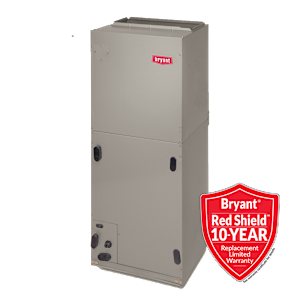
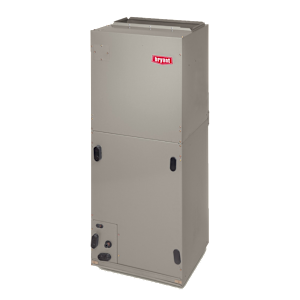
It typically looks like a tall indoor cabinet connected to ducts and refrigerant lines, often installed in a utility room, basement, or attic.


