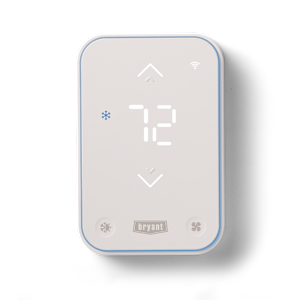
Thermostat Replacement: Your Guide to a Smarter Home

Thermostat replacement involves removing an outdated or malfunctioning control unit and installing a modern model to improve temperature regulation and energy efficiency. Replacing your thermostat can lower utility bills, ensure consistent comfort, and unlock smart features like remote access and programmable schedules.

When Do I Need a Thermostat Replacement?

You likely need a thermostat replacement if your home temperature feels inconsistent, the display screen is unresponsive, or your heating and cooling system cycles on and off frequently. Upgrading is also recommended if you notice sudden spikes in energy bills without a change in usage.

Signs It’s Time for an Upgrade

Several signs indicate it's time for an upgrade:
  • Inconsistent Temperatures: You set the temperature to 72°F, but one room feels like a sauna while another feels like an icebox.
  • Blank or Unresponsive Display: If changing batteries doesn't fix a blank screen, the internal wiring or sensors may have failed.
  • Short Cycling: Your HVAC system turns on and off rapidly, which wastes energy and adds wear and tear to your equipment.
  • High Energy Bills: An inefficient thermostat can cause your system to run longer than necessary, driving up costs.
Upgrading to a new thermostat, especially a smart model, offers significant advantages. Advanced features like programmable schedules, remote access via smartphone apps, and energy-saving modes not only improve comfort but also lead to substantial energy savings over time.

How Much Does Thermostat Replacement Cost?

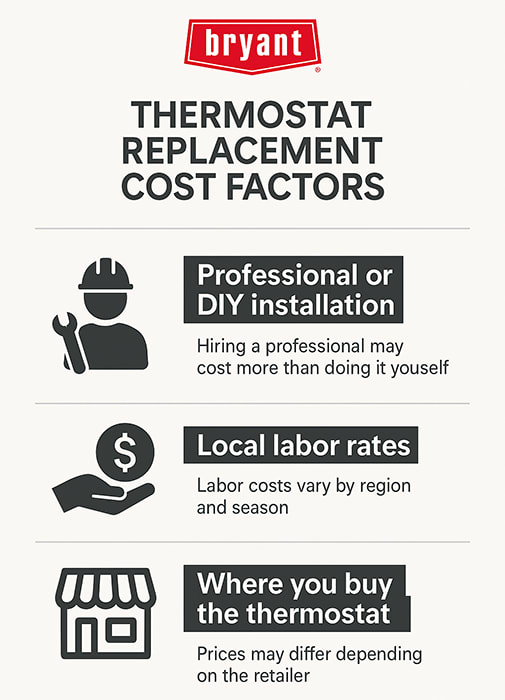
Bryant-branded infographic explaining thermostat replacement cost factors: professional or DIY installation, local labor rates, and where the thermostat is purchased.
The cost of a thermostat replacement typically ranges from $100 to $500. This price includes the cost of the unit itself and professional installation. Simple manual models are the most affordable, while advanced smart thermostats with Wi-Fi connectivity and learning capabilities sit at the higher end of the price spectrum.

Key Factors Influencing Cost

  • Thermostat Type:
    • Manual ($20 - $50): Basic temperature control.
    • Programmable ($50 - $150): Allows you to set schedules for different times of day.
    • Smart ($130 - $300+): Wi-Fi enabled, learns habits, and offers remote control.
  • Installation Method: DIY installation is free but risky if you aren't familiar with C-wire requirements. Professional installation typically costs between $100 and $200 for labor.
  • System Complexity: Homes with multi-zone systems or heat pumps may require more advanced (and expensive) thermostat models.
Working with your local Bryant dealer ensures your new thermostat is installed correctly, maximizing its performance and longevity.

Choosing the Right Thermostat

To choose the right thermostat, evaluate your daily schedule, your desire for smart home integration, and—most importantly—compatibility with your current HVAC equipment. 

1. Match Your Lifestyle

  • Consistent Schedule: A programmable thermostat is perfect if you leave and return at the same time every day. You can set it to lower energy use while you are away.
  • Dynamic Schedule: A smart thermostat is ideal for unpredictable routines. It can use geofencing to detect when you leave and adjust the temperature automatically, or allow you to change settings via a smartphone app if you're running late.

2. Check HVAC Compatibility

This is the most critical step. Not all thermostats work with every system.
  • Voltage: Most modern systems are low-voltage (24V), but some older homes use line-voltage (110V/240V).
  • System Type: Ensure the thermostat supports your specific setup, such as heat pumps, multi-stage heating/cooling, or zoning systems.

3. Look for Key Features

  • Energy Reporting: See exactly how much energy you are saving.
  • Smart Home Integration: Connects with Amazon Alexa, Google Assistant, or Apple HomeKit.
  • Remote Sensors: Helps balance temperatures in hot or cold spots throughout the house.
 

Thermostat Replacement Options From Bryant

Bryant offers a range of innovative smart thermostats designed to elevate your home comfort, improve energy efficiency, and give you seamless control over your home's climate.

Evolution™ System Control

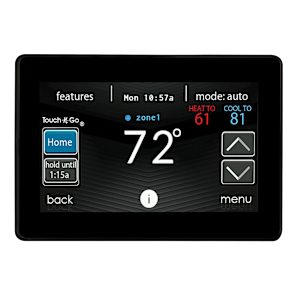
Built to unlock the full potential of Bryant Evolution™ heating and cooling systems, the Evolution System Control offers precision management of temperature, humidity, airflow, and zoning—right from your smartphone or tablet. With Wi-Fi® connectivity and zoning support for up to eight areas, it allows personalized comfort throughout your home.

ecobee for Bryant Smart Thermostats

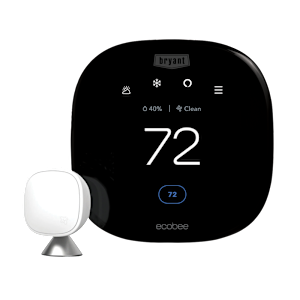
Bryant has partnered with ecobee to bring you intuitive, learning thermostats that adapt to your lifestyle while helping reduce energy usage. When paired with InteliSense™-enabled Performance Series equipment and data sharing is activated, ecobee for Bryant Smart Thermostats support remote diagnostics and deliver proactive alerts. This smart connection empowers your Bryant dealer to monitor performance and often address issues before a service visit is required.

Bryant Smart Thermostat

The Bryant Smart Thermostat offers an accessible entry point into connected home comfort. Featuring a responsive touch display and simple navigation, it lets you adjust temperature, fan settings, and more with ease. It supports both single- and two-stage systems and works with indoor air quality accessories. With the Bryant SmartHome App and data-sharing enabled, dealers can deliver quicker diagnostics and more efficient service.

Connect With a Bryant Dealer to Find Your Ideal Thermostat

Choosing the right thermostat replacement makes a significant difference in your home's comfort and your system's performance. Your local Bryant dealer can help you find the best smart thermostat based on your HVAC system and lifestyle needs. Contact your local Bryant dealer today to schedule a consultation and explore the best options for your home.

Thermostat Replacement FAQs

You may need to replace your thermostat if it's unresponsive, inaccurate, or if your HVAC system fails to turn on or off properly, despite being in good working order.
Common signs include inconsistent temperatures, blank display, frequent short cycling, or the system not responding to temperature adjustments.
Yes, many thermostats are DIY-friendly, especially basic or smart models with installation guides, but always ensure compatibility and turn off power before starting. Work with your local Bryant dealer if you have any questions or concerns about thermostat installation.
Replacing a thermostat typically costs between $100 and $500, including the unit and labor, depending on whether it's manual, programmable, or smart.
Most thermostats last 10–15 years before replacement is needed.
You should ensure the new model is compatible with your HVAC system before buying it.
Most replacements take under an hour for a qualified technician.
Yes—upgrading to a programmable or smart thermostat can be worth it as its settings can help you better optimize energy usage within your home.
Set your thermostat to "heat" and raise the temperature by 5 degrees. If the furnace doesn't kick on, try replacing the thermostat batteries. If it still fails, or if you can short the wires behind the thermostat to start the furnace, the thermostat is likely the culprit. If shorting the wires does nothing, the issue is likely with the furnace.
The average lifespan of a thermostat is roughly 10 years. As technology advances, newer models offer significantly better efficiency and control than units from a decade ago.
Learn More

About The Author: Travis Baugh is a Digital Brand Marketing Manager for Bryant, where he creates clear, helpful content to guide homeowners through heating, cooling, and indoor air quality decisions. His goal is to empower readers with the knowledge they need to choose the right comfort solutions for their home—confidently and comfortably.
Chat-Icon