About The Author: Travis Baugh is a Digital Brand Marketing Manager for Bryant, where he creates clear, helpful content to guide homeowners through heating, cooling, and indoor air quality decisions. His goal is to empower readers with the knowledge they need to choose the right comfort solutions for their home—confidently and comfortably.
How Does a Thermostat Work?
A thermostat works by sensing the ambient temperature in your home and acting as a control switch for your HVAC system. When sensors detect that the room is too hot or too cold compared to your set point, the thermostat signals your heating or cooling unit to turn on or off until the desired temperature is reached.
How Do Smart Thermostats Work?
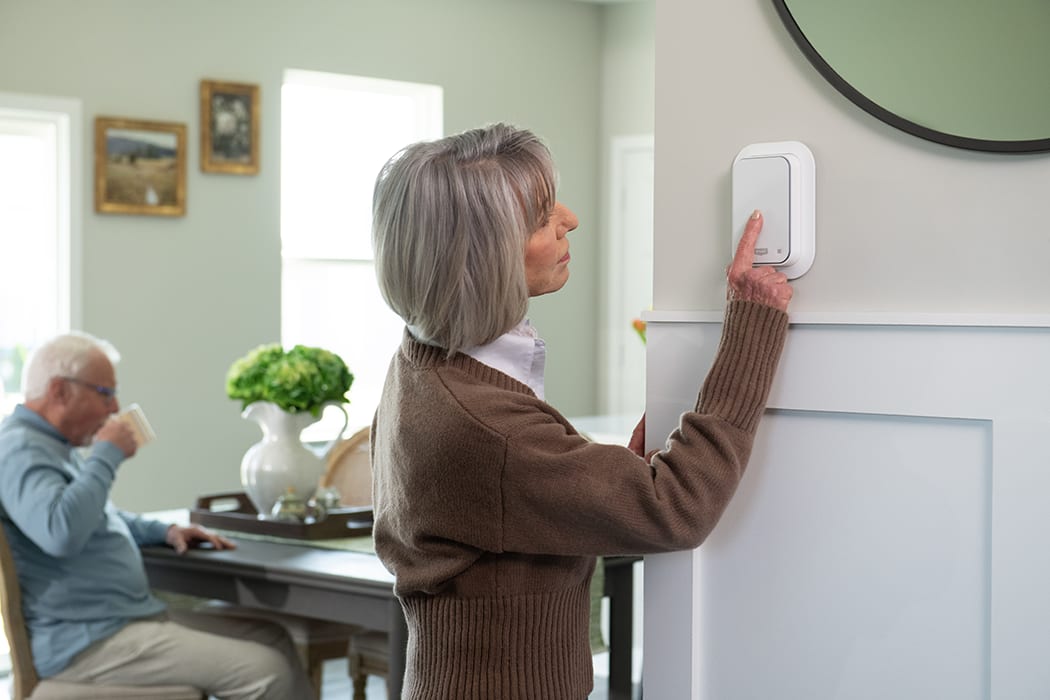
A smart thermostat uses temperature sensors to monitor your home's indoor conditions, then signals your HVAC system to heat or cool based on your selected temperature settings. A Wi-Fi connection allows you to control the thermostat remotely through an app, while some smart thermostats can learn your schedule or use occupancy information to automatically adjust settings.
How a Smart Thermostat Works in 5 Steps
- Sense: The thermostat's electronic temperature sensor, such as a thermistor, detects changes in indoor temperature.
- Connect: A Wi-Fi-enabled smart thermostat connects to your home's network so you can monitor and adjust settings through a smartphone app.
- Learn: Some smart thermostats, including ecobee for Bryant Smart Thermostats, can learn your routine and temperature preferences to help automate temperature settings.
- Signal: When the indoor temperature differs from your set point, the thermostat communicates with your HVAC equipment to start, stop, or adjust heating and cooling.
- Optimize: Smart features can use schedules, occupancy information, and remote control to help manage comfort and energy use. ENERGY STAR reports that certified smart thermostats save approximately 8% on average on heating and cooling bills, or about $50 per year.
The Basics of Thermostat Operation
Think of your thermostat as the brain of your home comfort system. It constantly monitors your indoor environment to ensure your heating and cooling equipment operates efficiently. The process breaks down into three core steps: sensing, signaling, and controlling.
Sensing Temperature
How does a thermostat know when to turn on? It starts with detection.
- Electromechanical models: Older units use a bimetallic strip or mercury switch that physically moves as it heats up or cools down.
- Digital and smart models: Modern thermostats utilize electronic sensors called thermistors to detect precise temperature changes in the air.
Signaling the System
Once the sensor detects a drift from your "set point" (your desired temperature), it completes an electrical circuit to trigger action.
- Heating Cycle: If the temperature falls below your set point, the thermostat signals the furnace or heat pump to turn on.
- Cooling Cycle: If the temperature rises above your set point, it signals the air conditioner to activate.
Controlling the Cycle
The system continues to run until the sensors confirm the desired temperature has been reached. The thermostat then opens the circuit, turning the HVAC system off. This cycle repeats automatically to maintain a steady, comfortable environment.
Types of Thermostats Explained
While the fundamental principle of "sensing and switching" remains constant, the technology varies significantly. Choosing the right type impacts your home's energy efficiency and convenience.
Manual Thermostats
These are the traditional models often found in older homes. You adjust them manually using a dial or lever. They are simple to use but lack the precision and energy-saving features of modern options.
Digital Thermostats
Digital models replace the dial with an electronic display, offering more accurate temperature readings. Many allow for basic scheduling, letting you program different temperatures for different times of the day.
Smart Thermostats
How do smart thermostats work? Smart thermostats use Wi-Fi connectivity to offer advanced control. They allow you to adjust settings remotely via a smartphone app. Over time, many smart models "learn" your schedule and preferences, automatically adjusting temperatures to save energy when you are away and ensuring comfort when you return.
Benefits of Upgrading to Modern Thermostats
Upgrading your thermostat is an investment in both comfort and efficiency that pays for itself over time.
- Energy Efficiency: ENERGY STAR reports that certified smart thermostats save approximately 8% on heating and cooling bills on average, or about $50 per year. 1 Actual savings vary based on climate, occupancy, temperature preferences, and HVAC equipment.
- Convenience: Programmable and smart features mean you never have to come home to a freezing or sweltering house. You can set schedules or adjust the climate from your phone before you even leave work.
- Precise Comfort: Smart devices can eliminate temperature swings, maintaining a steady, comfortable environment. Some even support zoning, allowing different rooms to be kept at different temperatures.
Bryant Thermostat Options
Bryant offers a range of thermostats designed to boost energy efficiency and maintain comfort throughout your home with intelligent, connected control.
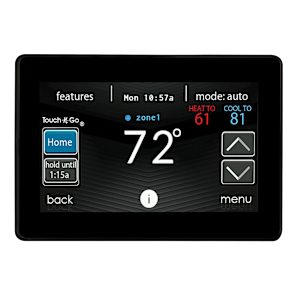
Evolution™ System Control
Bryant’s Evolution System Control is built to maximize the performance of your Evolution heating and cooling system. With advanced features and Wi-Fi® connectivity, it gives you control over temperature, humidity, airflow, ventilation, and indoor air quality—all from your smartphone or tablet. It supports zoning for up to eight areas, allowing for customized comfort throughout your home.
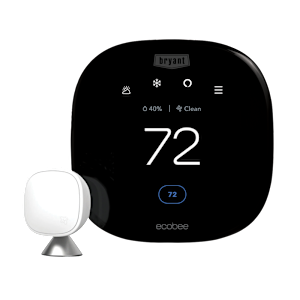
ecobee for Bryant Smart Thermostats
Bryant and ecobee offer smart thermostats that adapt to your routine and help lower energy usage. When paired with InteliSense-enabled Performance Series systems and with data sharing enabled, ecobee for Bryant Smart Thermostats get you access to remote monitoring, alerts, and diagnostics. InteliSense™ technology allows your Bryant dealer to monitor system performance and provide timely, efficient support.
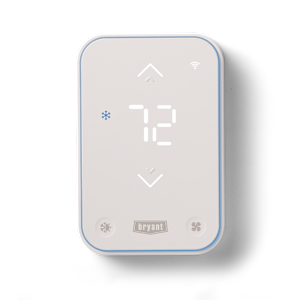
Bryant Smart Thermostat
The Bryant Smart Thermostat provides reliable, Wi-Fi-connected comfort in a modern, easy-to-use design. Touch-sensitive controls and a clear display make managing temperature and fan settings simple.
It supports single- and two-stage systems, integrates with indoor air quality products, and offers scheduling via the Bryant SmartHome App. With data-sharing enabled, your dealer can deliver faster, more informed service.
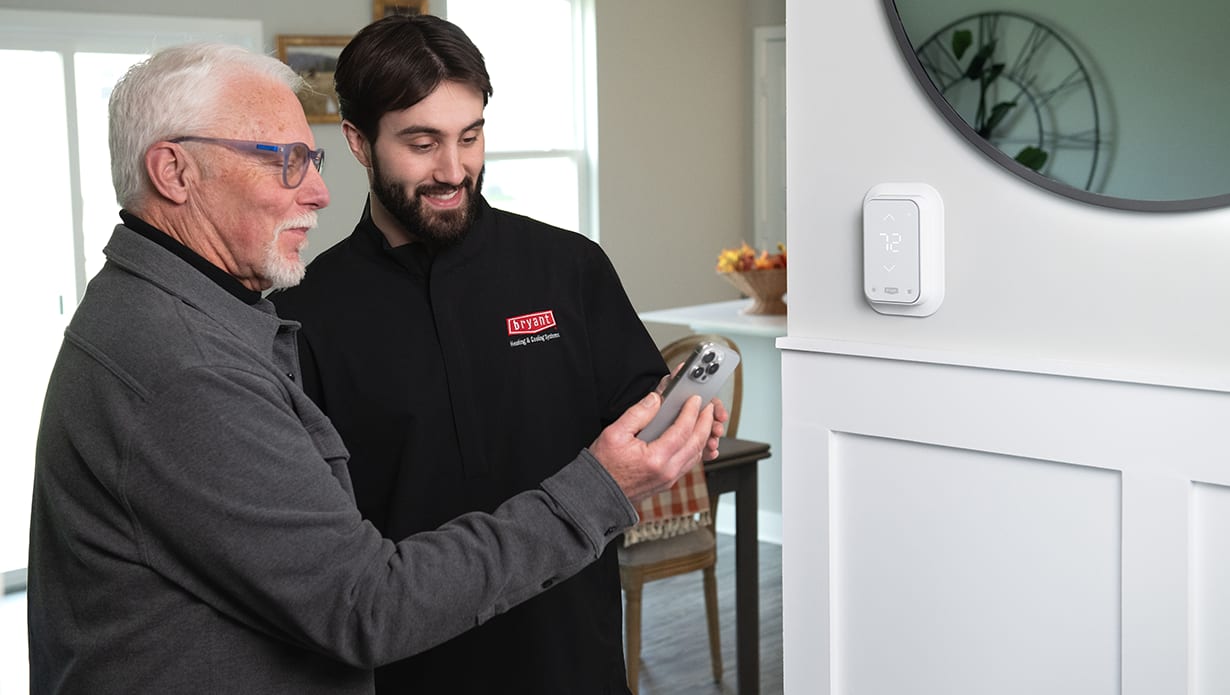
Connect With a Bryant Dealer to Find the Right Thermostat
Ready to upgrade your home comfort? Work with a Bryant dealer to find the ideal thermostat for your HVAC system. They’ll help you choose a solution that aligns with your home’s needs and maximizes comfort and efficiency. Schedule your appointment today.
1 https://www.energystar.gov/products/heating_cooling/smart_thermostats/smart_thermostat_faq
Discover Bryant Smart Thermostats
Choose a Bryant Smart Thermostat for enhanced comfort, convenience, and energy savings. With its intuitive interface and Wi-Fi connectivity, you can easily control your home’s temperature from anywhere using your smartphone. The thermostat learns your preferences, optimizing heating and cooling to fit your schedule, reducing energy waste. It’s also compatible with Bryant heating and cooling systems, offering seamless integration and improved performance. Enjoy greater control and efficiency while keeping your home comfortable year-round.
FAQs
Modern thermostats use a thermistor (a resistor that changes resistance with temperature) to measure electrical currents and determine the precise room temperature. Older models use a bimetallic strip that expands or contracts to physically bridge an electrical circuit.
Yes. By learning your schedule and adjusting the temperature when you are away or asleep, smart thermostats significantly reduce energy waste, which can lower your monthly utility bills.
A programmable thermostat follows a set schedule you input manually. A smart thermostat connects to Wi-Fi, allows for remote control via phone, and often uses AI to learn your habits and adjust the schedule automatically for better efficiency.
Learn More
- Read our thermostat buying guide
- Find out more about wireless thermostats
- Learn about thermostat replacement
- Read our energy saving thermostat guide


