About The Author: Travis Baugh is a Digital Brand Marketing Manager for Bryant, where he creates clear, helpful content to guide homeowners through heating, cooling, and indoor air quality decisions. His goal is to empower readers with the knowledge they need to choose the right comfort solutions for their home—confidently and comfortably.
Carbon Monoxide Detector Beeping? Why It Happens & What To Do
If your carbon monoxide detector is beeping continuously with 4 loud beeps, it indicates a dangerous CO leak and requires immediate evacuation. If it is chirping every 30-60 seconds, it likely has a low battery or has reached the end of its 5-7 year lifespan.
At Bryant, our innovative CO alarm is centered on our customers’ needs—and nothing is more important than your family's safety. Understanding the specific sound pattern of your alarm is critical for protecting your home and maximizing your peace of mind.
Why Is My Carbon Monoxide Detector Beeping?
A carbon monoxide (CO) detector beeps to alert you to one of three things: the presence of dangerous gas, a low battery, or an end-of-life malfunction. Recognizing these alerts ensures you can take swift, confident action.
What Do 4 Beeps on a Carbon Monoxide Detector Mean?
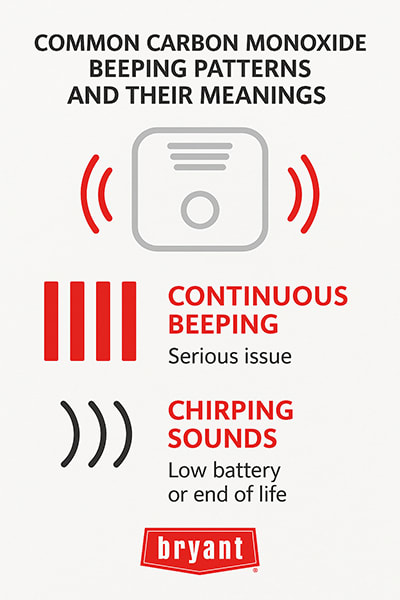
A pattern of four loud beeps, a pause, and four more beeps means dangerous levels of carbon monoxide have been detected. This is a life-threatening emergency requiring you to leave the home immediately.
Carbon monoxide is an odorless, colorless gas that can cause dizziness, unconsciousness, and death. Because it is undetectable by human senses, a reliable, advanced CO alarm is your only line of defense.
What Does It Mean When a Carbon Monoxide Detector Chirps Intermittently?
A single chirp every 30 to 60 seconds usually indicates a maintenance issue, such as a dying battery or an expired unit.
- Low Battery: The most common cause for chirping. Replacing the battery usually fixes this.
- End of Life: Detectors typically last 5–7 years. If replacing the battery doesn't stop the chirping, the unit likely needs to be replaced.
- Malfunction: Dust, debris, or humidity can cause error codes or erratic beeping.
What Steps Should I Take When My Carbon Monoxide Detector Beeps?
If you hear the emergency 4-beep pattern, immediately evacuate your home, check your family for symptoms of CO poisoning, and call 911 from outside. Reacting quickly and calmly to a carbon monoxide alarm going off can save lives.
- Evacuate Immediately: Do not try to find the source of the leak yourself. Get everyone, including pets, into fresh air immediately.
- Check for Symptoms: Look for signs of CO poisoning, such as headaches, dizziness, nausea, or confusion.
- Call 911: Once you are safely outside, call emergency services.
- Do Not Re-enter: Stay outside until emergency responders declare the home safe.
- Inspect & Repair: Once cleared, hire a professional to inspect fuel-burning appliances (furnace, water heater, stove) to fix the leak.
How Do I Maintain My Carbon Monoxide Detector?
To maintain your carbon monoxide detector, test the alarm monthly, change the batteries annually, and replace the entire unit every 5 to 7 years. Regular maintenance ensures your advanced technology works flawlessly when you need it most.
- Test Monthly: Press the "Test" button on your unit to ensure the siren works.
- Change Batteries Annually: Replace batteries at least once a year, or immediately if the unit starts chirping.
- Clean Regularly: Gently vacuum the unit to remove dust that might block sensors.
- Replace Every 5-7 Years: Check the date of manufacture on the back of the alarm. If it's expired, replace the entire unit immediately.
Connect With A Bryant Dealer On A Bryant Carbon Monoxide Alarm
You should connect with a professional if your current detector is over 7 years old, malfunctions frequently, or if you want to upgrade to a system with smart home integration. Don't gamble with your family's safety.
Connect with a Bryant dealer near you to learn about advanced Carbon Monoxide Alarms that feature real-time digital monitoring, seamless smart controls, and long-lasting lithium-ion backup batteries. Investing in reliable performance today ensures quiet, safe comfort for years to come.

Carbon Monoxide Detector Beeping FAQs
If your carbon monoxide detector is beeping, evacuate the home immediately, call 911 or emergency services, and do not re-enter until the area is declared safe.
Most carbon monoxide alarms emit four loud, consistent beeps, followed by a pause, indicating dangerous CO levels are present.
Four beeps in a repeating pattern typically means carbon monoxide is detected and immediate action is required.
False alarms can be caused by humidity, steam, strong chemical fumes, or placing the detector near fuel-burning appliances with minor exhaust leaks.
Early signs include headache and dizziness, which may be followed by nausea, confusion, or shortness of breath with continued exposure.
Beeping (usually 4 loud pulses) indicates a carbon monoxide emergency requiring immediate evacuation. Chirping (single, intermittent sounds every 30–60 seconds) typically signals a low battery or that the unit has reached the end of its life.
Yes, false alarms can occur due to high humidity, proximity to chemical fumes (like paint or cleaning supplies), or if the detector is placed too close to fuel-burning appliances. However, always treat an alarm as an emergency until proven otherwise.
To stop chirping, first replace the batteries with fresh ones. If the chirping continues, check the manufacture date on the back; if the unit is over 5–7 years old, it has expired and must be replaced immediately.
Install carbon monoxide detectors on every level of your home, especially near sleeping areas, and keep them at least 15 feet away from fuel-burning appliances to avoid false alarms.


