About The Author: Travis Baugh is a Digital Brand Marketing Manager for Bryant, where he creates clear, helpful content to guide homeowners through heating, cooling, and indoor air quality decisions. His goal is to empower readers with the knowledge they need to choose the right comfort solutions for their home—confidently and comfortably.
What is a Boiler? Your Guide To Boiler Basics
A boiler is a residential heating system that uses water or steam to provide consistent, radiant warmth to a home. Instead of blowing hot air through vents like a furnace, boilers heat water in a tank and circulate it through pipes to radiators, baseboard heaters, or radiant floor systems. This process delivers quiet, even heat without the drafts or dust associated with forced-air systems, making it an ideal investment in long-term comfort.
How Does A Boiler Work?
Boilers operate on a closed-loop cycle to maintain your home's temperature efficiently, generating heat through combustion or electricity and distributing it via water or steam.
- Heat Generation: The boiler burns fuel (natural gas, oil, propane) or uses electricity to heat water inside a combustion chamber.
- Conversion: The water is heated to a high temperature (for hydronic systems) or boiled to create steam (for steam systems).
- Distribution: An electric pump pushes the hot water or steam through a network of pipes to radiators or radiant floor loops in your rooms.
- Radiant Warmth: As the hot water or steam flows through these terminals, it releases heat into the room.
- Return Cycle: The water cools (or steam condenses back to water) and returns to the boiler via a return pipe to be reheated, continuing the cycle.
Boiler vs. Furnace: What is the Difference?
The main difference lies in how they distribute heat: boilers circulate heated water or steam through pipes and radiators, whereas furnaces heat air and blow it through ductwork and vents.
- Boilers (Hydronic Heating): Use water or steam circulated through pipes to radiators or radiant floors. They offer quiet, dust-free heat but require specific infrastructure. A boiler is better suited for homes seeking targeted radiant heat or those lacking existing ductwork.
- Furnaces (Forced-Air Heating): Heat air and blow it through ductwork and vents. They are common in homes with central air conditioning ductwork. A furnace works best when you already have intact, sealed ducts installed.
If your home has radiators or you want heated floors, a boiler is the required system. If you have air vents, you likely have a furnace. Learn more about a furnace vs boiler.
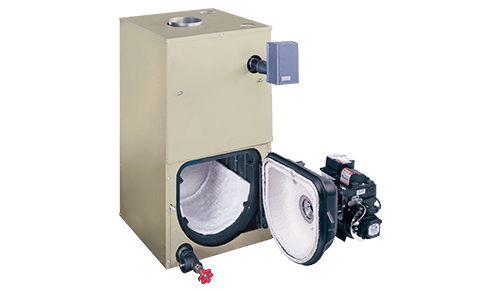
Four Key Benefits of Installing a Boiler
For homeowners seeking long-term comfort and efficiency, advanced boiler systems offer distinct advantages over other heating methods.
- Consistent, Even Heating: Experience efficiency that pays for itself. Boilers deliver steady radiant heat, eliminating the cold spots and drafts often associated with forced-air systems.
- Superior Air Quality: Breathe cleaner air. Because boilers do not rely on ducts to circulate air, they don't blow dust, allergens, or dander from room to room. This makes them an excellent choice for improved indoor air quality.
- Quiet Operation: Enjoy a peaceful home environment. Without the sound of fans or rushing air, boilers operate almost silently in the background.
- High Energy Efficiency: Modern condensing boilers are engineered for optimal energy use, with many models achieving efficiency ratings of 90% or higher. They recover heat from exhaust gases that older systems waste, helping to lower your energy bills.
Types of Boilers
Bryant offers a vast portfolio of boiler solutions designed to meet specific infrastructure needs, including gas-fired, oil-fired, hydronic, and steam boilers.
Gas-Fired Boilers
Gas-fired boilers are fueled by natural gas. They are highly efficient and cost-effective in areas where natural gas is affordable. Modern condensing gas boilers maximize energy savings by capturing latent heat from exhaust gases.
Oil-Fired Boilers
Oil-fired boilers burn heating oil stored in a tank on your property. They are a robust solution for rural areas or homes without access to natural gas lines. While slightly less efficient than top-tier gas models, they still offer reliable, powerful heating performance.
Hydronic Boilers
Hydronic boilers heat liquid water and circulate it through the home. They are versatile and can be powered by gas, oil, or electricity. Because water conducts heat better than air, these systems are renowned for their ability to retain warmth longer.
Steam Boilers
Steam boilers boil water to create steam, which moves through pipes to radiators without the need for a pump (using pressure). These are typically found in older, historic homes. While effective, they generally require more energy than modern hot water systems.
Do I Need A Boiler Or A Different Type Of Home Heating System?
Your home's infrastructure is the biggest deciding factor when choosing between a boiler and a furnace.
- Choose a Boiler: If you have radiators, baseboard heaters, or want radiant in-floor heating.
- Choose a Furnace: If your home already has ductwork and air vents.
Boiler Maintenance
To ensure your system provides reliable performance for years to come, regular boiler maintenance is non-negotiable.
DIY Boiler Maintenance
- Check Pressure: Ensure the boiler pressure gauge reads within the manufacturer's recommended range.
- Visual Inspection: Look for water leaks or signs of corrosion on pipes and the tank.
- Clear the Area: Keep the area around your boiler free of clutter and combustible materials to ensure proper ventilation.
Professional Boiler Maintenance
Schedule annual service with a professional to ensure safe operation. Call a pro immediately if you notice strange noises, smells, or inconsistent heating.
Connect with Your Bryant Dealer For Your Boiler Needs
Bryant boilers offer a variety of efficiency ranges and performance. With gas-fired and oil-fired models, as well as hydronic and steam units, we have the options to meet nearly every heating need. Your Bryant dealer can recommend the appropriate boiler for your home and region or assist with your boiler installation or boiler repair needs. Schedule an appointment with your local Bryant dealer today and experience the Bryant difference.

What Is A Boiler FAQs
A boiler’s purpose is to heat water to provide either hot water or steam for space heating, domestic use, or radiant floor systems.
No. A boiler heats the home (space heating), whereas a water heater is designed solely to provide hot water for showers, sinks, and appliances.
A furnace heats and distributes air through ducts, while a boiler heats water or steam and distributes it through radiators or pipes for home heating.
The two main types of boilers are gas boilers and oil boilers. Both offer dependable heating and efficient performance to create the warmth you need when the weather turns cold.
Yes. A boiler is part of a home’s HVAC system and provides heating by circulating hot water or steam instead of forced air.
With proper maintenance, a high-quality boiler typically lasts between 15 and 30 years, often outlasting conventional furnaces.
Modern condensing boilers are extremely efficient (often 90%+ AFUE) because water retains heat better than air, but overall system efficiency depends on the home's insulation and distribution method.
Yes, many modern "combi" (combination) boilers provide both space heating for the home and on-demand hot water for faucets and showers in a single unit.
Boilers are highly durable, often lasting between 15 and 30 years with proper maintenance. Their high energy efficiency ratings and radiant heat distribution also can help reduce long-term energy bills.


