About The Author: Travis Baugh is a Digital Brand Marketing Manager for Bryant, where he creates clear, helpful content to guide homeowners through heating, cooling, and indoor air quality decisions. His goal is to empower readers with the knowledge they need to choose the right comfort solutions for their home—confidently and comfortably.
How Long Does A Furnace Last?
By Travis Baugh
The average gas furnace lasts 15 to 20 years with regular maintenance, while some electric models can operate efficiently for up to 30 years. Once a gas heating system reaches the 15-year mark, it often begins losing efficiency and reliability, signaling that a replacement may be a smarter, long-term investment for your home comfort.
At Bryant, our innovative solutions are centered on our customers’ needs. Knowing what impacts your system's longevity empowers you to optimize your home for energy efficiency, improve indoor air quality, and reduce your monthly utility bills over time
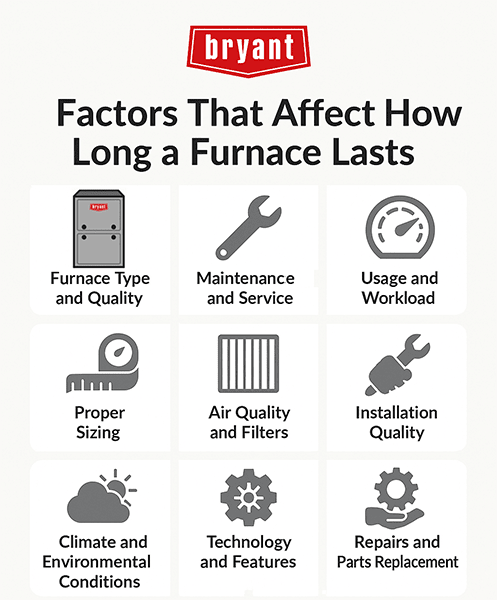
What Factors Affect How Long A Furnace Lasts?
A furnace's lifespan is primarily determined by maintenance habits, proper sizing during installation, usage intensity, and overall component quality. While 15 to 20 years is the industry standard, these variables dictate whether your unit hits the high or low end of that range.
Andrew Mackey, owner of Superior Service in Lake St Louis, Missouri, points to three major factors that affect furnace lifespan.
“The three keys are regularly changing the filter, having the unit serviced yearly, and ensuring the quality of the original installation,” Mackey said. “Homeowners need to schedule yearly maintenance to check out the entire HVAC system to prevent breakdowns and ensure that the furnace will last its full life expectancy.”
Here is a closer look at what influences longevity:
How Do Maintenance Habits Impact Furnace Life?
Regular furnace maintenance is the single most effective way to extend furnace life. Neglecting tasks like furnace filter changes or annual furnace tune-ups forces the system to work harder, leading to overheating and premature component failure.
Why Is Proper Sizing and Installation Important?
A furnace must be properly sized for your specific home to prevent undue mechanical strain. Oversized units turn on and off frequently (short cycling), causing excessive wear on the blower motor and heat exchanger. Conversely, undersized units run constantly to reach the set temperature, leading to burnout. Quality furnace installation ensures airflow is balanced and ductwork is sealed, preventing strain from day one.
How Does Usage Intensity Affect Longevity?
Homes in extreme climates, such as the Northern US, require furnaces to run longer and harder than those in milder regions. Constant operation accelerates wear and tear, meaning systems in colder climates may skew closer to the 15-year lifespan mark.
Does Component Quality Matter?
High-efficiency models feature advanced technologies like variable-speed blowers and modulating gas valves that reduce mechanical stress. By ramping up slowly rather than blasting at full capacity immediately, these premium components enhance energy savings and improve system durability.
What Are The Signs Your Furnace Is Nearing the End of Its Life?
Key signs your furnace needs replacing include rising energy bills, frequent repair calls, uneven heating, strange mechanical noises, and a yellow burner flame. Even with the best care, furnaces eventually reach the end of their reliable service life.
Watch for these warning signs that a system upgrade may be imminent:
- Rising Energy Bills: If usage habits haven't changed but costs are spiking, the unit is losing efficiency.
- Frequent Repairs: If you are calling a technician multiple times a winter, the cost of furnace repairs may soon outweigh the cost of a new, reliable system.
- Uneven Heating: Cold spots in certain rooms suggest the furnace can no longer distribute air effectively.
- Strange Noises: Banging, rattling, or squealing often indicate serious mechanical failures in the blower or motor.
- Yellow Flames: A healthy furnace flame should be blue. A flickering yellow flame can indicate a combustion issue or a carbon monoxide leak.
How Can You Extend the Life of Your Furnace?
You can extend the life of your furnace by changing filters quarterly, scheduling annual tune-ups, sealing ductwork, managing home humidity, using smart thermostats, and keeping air vents clear. Reducing daily strain maximizes efficiency and ensures long-term comfort.
- Change Filters Quarterly: A clogged filter restricts airflow, causing the heat exchanger to overheat. Check filters monthly and replace them every 1–3 months.
- Schedule Annual Tune-Ups: Have a professional Bryant dealer perform a furnace inspection and furnace cleaning before winter. They can catch small issues—like a worn belt or dirty burner—before they become catastrophic failures.
- Seal Your Ductwork: Leaky ducts waste heat and force the furnace to run longer to compensate. Sealing them improves efficiency and comfort.
- Manage Humidity: Dry air forces the furnace to work harder to make the home feel warm. Installing a whole-home humidifier can reduce the heating load. Discover what humidity should my house be at?
- Use Smart Thermostats: Avoid drastic temperature swings. Set a consistent schedule or use a smart thermostat to ramp temperatures up gradually, reducing stress on the system.
- Keep Vents Clear: Ensure furniture, rugs, or curtains aren't blocking supply or return vents. Blocked vents disrupt pressure balance and strain the blower motor.
Connect With A Bryant Dealer On How Long A Furnace Lasts
Bryant dealers can perform a furnace tune-up and help you assess the age and condition of your current system, provide regular maintenance tips, and guide you through the process of choosing the right furnace replacement when the time comes. With a Bryant furnace, you can expect reliability, energy efficiency, and long-term performance. Schedule an appointment with your local Bryant dealer to ensure your home stays comfortable for years to come.

How Long Does A Furnace Last FAQs
While rare, a furnace can last up to 30 years with excellent maintenance, but most systems begin to lose efficiency and reliability after 15 to 20 years.
You may need to replace your furnace if it's over 15–20 years old, requires frequent repairs, struggles to heat evenly, or causes rising heating bills.
Signs your furnace is dying include strange noises, inconsistent heating, excessive dust, yellow burner flames, and a noticeable increase in repair frequency or energy use.
Generally, it's not worth fixing a 20-year-old furnace, as the cost of repairs often outweighs the benefits compared to installing a new, energy-efficient model.
Most gas furnaces last 15 to 20 years with regular maintenance and filter changes.
A cracked heat exchanger is a serious issue that often requires professional diagnosis. Symptoms can include soot buildup, a yellow burner flame, strong odors, or water pooling around the furnace base.
High-efficiency furnaces often use variable-speed technology that reduces stress on components by ramping up slowly. This can potentially contribute to a longer lifespan compared to standard single-stage models that cycle on and off abruptly.
Yes, investing in a reputable brand with a proven history of durable, high-quality components and strong warranties can significantly impact your furnace’s longevity and reliable performance.
Yes, a smart thermostat can help a furnace last longer by optimizing heating cycles and reducing the frequency of rapid temperature adjustments, which decreases mechanical wear and tear.
Learn More About Furnaces
- Read our guide to furnace service
- Explore what is a furnace
- Discover the value of a high efficiency furnace
- Get help with a furnace not turning on
- Read our guide on furnace troubleshooting
- Understand how much is a new furnace


