About The Author: Travis Baugh is a Digital Brand Marketing Manager for Bryant, where he creates clear, helpful content to guide homeowners through heating, cooling, and indoor air quality decisions. His goal is to empower readers with the knowledge they need to choose the right comfort solutions for their home—confidently and comfortably.
Furnace Tune-Up: The Key to Efficiency and Home Comfort
By Travis Baugh
A furnace tune-up is a comprehensive preventative maintenance service performed by a professional HVAC technician to inspect, clean, and adjust a home heating system. This annual service ensures a furnace operates safely, maximizes energy efficiency, and prevents unexpected breakdowns during winter.
Your furnace is the heartbeat of your home during the chilly months. Just as you wouldn't drive a car for years without an oil change, your heating system requires regular attention to deliver the reliable, quiet performance you expect. Investing in a routine furnace tune-up doesn't just fix problems—it optimizes your home for long-term comfort and peace of mind. Proactive maintenance is better suited for homeowners seeking steady energy savings, while waiting for a breakdown inevitably leads to stressful, costly emergency repairs.
Why is a Furnace Tune-Up Important?
A furnace tune-up is important because it ensures safe equipment operation, lowers monthly energy bills, and extends the overall lifespan of your furnace. Regular furnace maintenance is one of the smartest investments a homeowner can make for reliable climate control. Beyond simple functionality, a tune-up delivers tangible benefits that impact both your wallet and your indoor environment.
1. Improved energy efficiency
A furnace tune-up improves energy efficiency by ensuring the system isn't working harder than it needs to. A Bryant dealer conducts a rigorous furnace inspection and furnace cleaning to remove buildup that forces the system to consume more fuel. A clean, well-adjusted system uses less energy to heat a home, which can lead to measurably lower monthly heating bills.
2. Extended Equipment Lifespan
Regular care helps extend the lifespan of your furnace. Technicians can catch minor wear and tear before it escalates into a catastrophic emergency HVAC repair. This proactive approach minimizes the need for premature furnace replacement, ensuring your system serves you well for years to come.
3. Enhanced Indoor Air Quality
A furnace tune-up improves indoor air quality by removing the dust and debris that accumulate inside the unit. During a tune-up, a technician will typically replace or clean furnace filters and optimize ventilation—reducing the circulation of allergens and pollutants for a healthier living environment. Lubricating moving parts also reduces operational strain, helping the system run more quietly.
“Properly maintaining your HVAC equipment ensures it will operate efficiently when you need it most – keeping you warm during those freezing winter months without the risk of an unexpected system malfunction,” Melissa Frause, owner of Bob’s Heating and Air Conditioning in Woodinville, WA, said.
What is Included in a Furnace Tune-Up?
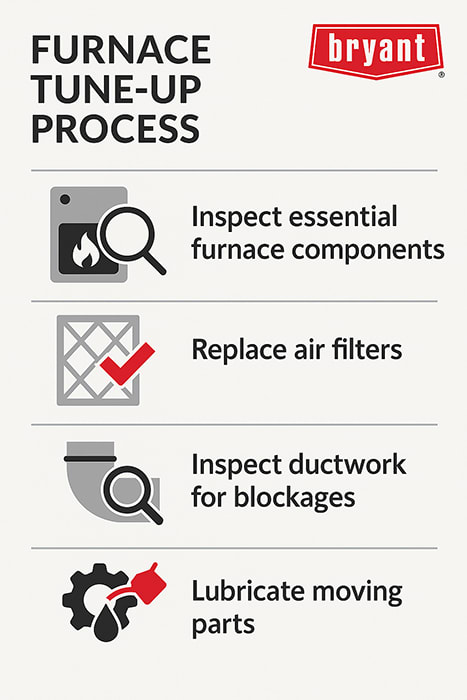
A standard furnace tune-up includes a safety inspection of the heat exchanger, deep cleaning of burners, filter replacement, moving part lubrication, and comprehensive system testing.
When you schedule professional furnace service, you are paying for a meticulous, multi-point inspection designed to catch issues early. Here is what typically happens during a professional appointment:
- Safety Inspection: The technician checks the heat exchanger, burners, and ignition system for cracks or leaks to prevent carbon monoxide hazards.
- Deep Cleaning: Removal of dust and soot from burners and internal components to ensure optimal airflow and combustion.
- Filter Replacement: Checking and replacing dirty air filters to maintain system efficiency.
- Lubrication: Applying lubricant to moving furnace parts to reduce friction and wear.
- System Testing: verifying gas pressure, testing thermostat settings, and ensuring the system cycles on and off correctly.
Addressing these areas early prevents the inconvenience and cost of furnace repairs in the middle of of winter.
How Much Does a Furnace Tune-Up Cost?
A professional furnace tune-up typically costs between $80 and $3001, depending on your location, the service provider, and the complexity of your system. Basic inspections tend to fall on the lower end of that range, while more comprehensive service calls or older, more complex systems may run higher. Considering that a tune-up can reduce energy bills and prevent expensive emergency repairs, most homeowners find the investment worthwhile.
When Should You Schedule a Furnace Tune-Up?
The optimal time to schedule a furnace tune-up is in late summer or early fall, right before the winter heating season begins.
Scheduling early means beating the winter rush. By booking service before the first frost, homeowners ensure their system is ready the moment it's needed. HVAC technicians are also generally more available during this window, allowing for more flexible scheduling.
“We always recommend servicing your equipment slightly ahead of when you know you’ll be needing it most,” Frause said. “For furnaces, we suggest late summer or early fall and for air conditioners, we recommend a springtime service.”
That said, don't wait for your annual appointment if warning signs appear. Unusual noises, uneven heating, or a system struggling to reach the set temperature are all signs you should schedule a check-up immediately
Signs Your Furnace Needs a Tune-Up
Regular furnace maintenance can help prevent unexpected breakdowns, improve efficiency, and extend the life of your heating system. If you notice any changes in your furnace's performance, it may be time to schedule a professional tune-up.
Common signs your furnace needs a tune-up include:
- Unusual noises: Rattling, banging, squealing, or grinding sounds may indicate loose components, airflow issues, or worn parts that need attention.
- Uneven heating: Rooms that feel colder than others or inconsistent temperatures throughout your home may signal airflow or system performance problems.
- Rising energy bills: A furnace that uses more energy than usual to heat your home may be losing efficiency and working harder than necessary.
- Frequent cycling: If your furnace turns on and off more often than normal, it may need adjustments or a professional inspection.
- Reduced airflow: Weak airflow from vents can be caused by a dirty filter, blower issues, or other system problems.
- Strange odors: Persistent burning smells, musty odors, or unusual smells when the furnace runs should be inspected.
- Longer heating times: A furnace that struggles to reach the thermostat setting may need cleaning, adjustments, or repairs.
- It's been more than a year since your last service: Annual maintenance helps identify small issues before they become larger, more expensive repairs.
Scheduling a furnace tune-up before the heating season begins can help ensure your system operates safely and efficiently when you need it most. If you notice any of these warning signs, a qualified HVAC technician can inspect your system and recommend the appropriate service.
DIY vs. Professional: Can I Do A Furnace-Up Myself?
Many homeowners wonder whether they can complete a furnace tune-up themselves or if they need professional service. While there are a few maintenance tasks you can safely handle on your own, a complete furnace tune-up requires specialized tools, training, and knowledge of HVAC safety procedures.
Homeowners can typically handle basic HVAC maintenance tasks, including:
- Replacing the air filter regularly.
- Keeping the area around the furnace clear of dust, clutter, and stored items.
- Cleaning dust from accessible vents and registers.
- Checking thermostat settings and replacing batteries if needed.
- Inspecting the furnace area for unusual noises, odors, or visible issues.
A professional HVAC technician should handle tasks such as:
- Inspecting and cleaning burners and internal components.
- Checking heat exchanger condition for cracks or damage.
- Testing gas pressure, combustion, and carbon monoxide levels.
- Inspecting electrical connections and safety controls.
- Checking blower motor operation and airflow.
- Verifying overall system performance and efficiency.
While DIY maintenance can help keep your furnace operating smoothly between service visits, a professional tune-up can identify potential safety issues and performance problems before they lead to breakdowns. For most homeowners, scheduling annual furnace maintenance with a qualified HVAC technician is the best way to protect system reliability and extend equipment life.
Schedule a Furnace Tune-Up With Your Local Bryant Dealer
Scheduling a furnace tune-up with a local Bryant dealer is the most reliable way to keep your heating system running efficiently and safely all season long. A certified Bryant technician will inspect, clean, and optimize your system to ensure peak performance and comfort. Contact your local Bryant dealer today.
1https://www.angi.com/articles/ac-service-cost.htm
Furnace Tune-up FAQs
A furnace tune-up typically includes cleaning burners and components, inspecting the heat exchanger, checking electrical connections, testing safety controls, and replacing or cleaning the air filter.
You should schedule a furnace tune-up once a year, preferably in the fall before heating season begins.
A tune-up helps ensure safe operation, reduces the risk of breakdowns, extends the lifespan of the furnace, and can lower energy costs by improving efficiency.
A typical furnace tune-up costs between $80 and $250, depending on your location and the level of service provided.
Yes, regular furnace tune-ups can significantly improve energy efficiency by keeping components clean and ensuring the system runs at optimal performance.
Expect to pay $100–$300 for a professional tune-up, depending on location and system type.
Yes. Annual maintenance helps maintain efficiency, reduce breakdowns, and preserve warranty coverage.
Late summer or early fall is ideal, before the heating season begins.
Yes, a professional tune-up can reduce operational noise. By cleaning debris and lubricating moving components, technicians help your heating system return to a quiet state.
Yes, most HVAC manufacturers require documented proof of annual maintenance. Skipping your yearly tune-up can void your warranty, leaving you responsible for the cost of future replacement parts.
A comprehensive furnace tune-up generally takes between one to two hours. This timeframe allows the technician to thoroughly inspect, clean, and test all critical safety and performance components.
Learn More About Furnaces
- Learn how much is a new furnace
- Explore what is a furnace
- Get help with a furnace not turning on or a furnace leaking water
- Read our guide on furnace troubleshooting
- Find out how to fix a furnace blowing cold air