About The Author: Travis Baugh is a Digital Brand Marketing Manager for Bryant, where he creates clear, helpful content to guide homeowners through heating, cooling, and indoor air quality decisions. His goal is to empower readers with the knowledge they need to choose the right comfort solutions for their home—confidently and comfortably.
Expert Furnace Installation: The Step-by-Step Process
By Travis Baugh
Professional furnace installation is the critical process of safely sizing, connecting, and calibrating a heating system to ensure maximum energy efficiency and long-term reliable performance. While advanced equipment matters, the expertise of the installer is the single most significant factor in guaranteeing your home's comfort and maximizing the lifespan of your system.
Choosing a local Bryant dealer for this investment ensures local code compliance, seamless smart home integration, and whisper-quiet operation—backed by a 100% satisfaction guarantee.
How to Install A Furnace: The 6-Step Professional Process
Installing a furnace requires a comprehensive six-step professional process: home assessment, model selection, site preparation, precision installation, system testing, and final education.
A seamless installation relies on a systematic, proven approach. When you work with a Bryant dealer, you can expect a rigorous installation process designed to deliver lasting peace of mind and efficient performance:
- Home Assessment and Sizing: Your local Bryant dealer evaluates your square footage, insulation levels, and ductwork to determine the precise heating load required for your home.
- Model Selection: Based on the assessment, your local Bryant dealer will help you select the ideal furnace model, balancing AFUE ratings, comfort features, and your budget.
- Site Preparation: Your installer ensures the installation area is clear and that existing ventilation and gas lines are ready for the new unit.
- Precision Installation: The unit is installed according to strict factory specifications, with all gas, electrical, and flue connections secured correctly.
- System Testing and Calibration: The technician fires up the system to test airflow, temperature rise, and safety controls—making real-time adjustments to ensure quiet, efficient operation.
- Final Inspection and Education: Your local Bryant dealer will walk you through the operation of your new system, explain furnace maintenance requirements, and answer any questions to ensure you feel confident in your new investment.
What Factors Should I Consider Before Installing a Furnace?
Before installing a furnace, homeowners must weigh critical safety risks, local permit requirements, the specialized tools required, and the strict venting and airflow specifications demanded by modern high-efficiency units.
Safety
Furnace installation involves working with gas lines, electrical components, and combustion systems—all of which carry serious risk when handled incorrectly. Power and fuel supply must be safely shut off before any work begins, and proper protective equipment is essential throughout. Improper installation can create life-threatening hazards, including gas leaks and carbon monoxide exposure.
Local Permits and Code Requirements
Most furnace installations require permits and inspections to confirm compliance with local building and mechanical codes. In many areas, a licensed HVAC contractor must pull the permit and complete the work. Confirming permit requirements ahead of time helps prevent delays, fines, or complications when selling your home.
Specialty Tools and Technical Skills
A durable, high-performing installation requires specialized tools—combustion analyzers, gas pressure gauges, multimeters, sheet metal tools, and venting equipment. Proper system sizing, duct connections, gas line adjustments, and airflow configuration all demand technical expertise. Incorrect setup reduces efficiency and shortens system lifespan.
Venting and Airflow Requirements
High-efficiency furnaces require specific venting materials and correctly routed exhaust to operate safely. Adequate return and supply airflow must be verified to prevent overheating and ensure consistent, energy-efficient heating throughout the home. Ductwork modifications may be necessary to support the new system.
High-Risk Steps
Connecting gas lines, adjusting manifold pressure, and configuring electrical controls all carry significant risk when handled improperly. Mistakes can lead to fire hazards, system damage, or unsafe operating conditions. For safety, code compliance, and reliable warranty protection, professional HVAC installation is strongly recommended.
How Much Does Furnace Installation Cost?
The average cost of a professional furnace installation ranges from $2,000 to $14,200, depending on the furnace type, fuel source, home size, and any required ductwork or venting modifications.
The exact cost of furnace installation varies based on the type of furnace (single-stage, two-stage, or variable-speed), fuel source (natural gas, propane, or electric), and the size of your home. Higher-efficiency models with advanced smart features carry a higher upfront investment but typically reduce monthly energy bills significantly over time. Ductwork modifications, venting upgrades, or gas line adjustments can increase total costs.
Labor rates, local permit requirements, and regional climate demands may further influence final pricing. While upfront cost is an important consideration, proper sizing, safe gas and vent connections, and professional calibration are essential to ensure reliable performance and long-term value. Learn more about furnace replacement cost.
Why Professional Furnace Installation Is Non-Negotiable
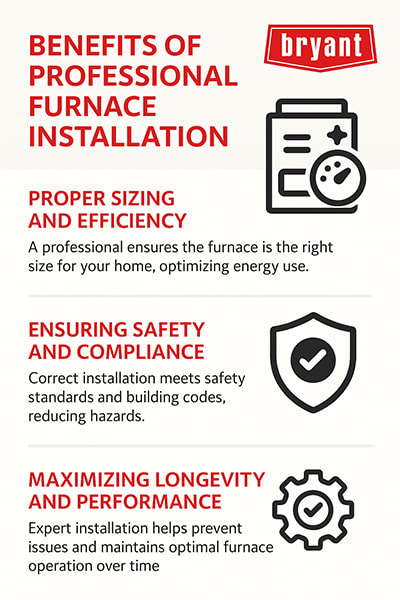
Professional furnace installation is necessary to guarantee safety, maximize system efficiency, and maintain valid warranty coverage. Licensed technicians expertly manage complex requirements—including gas line connections, electrical wiring, and hazardous venting—that are critical for preventing carbon monoxide leaks and ensuring peak rated efficiency.
Key Benefits of Expert Installation
Investing in professional installation does more than get the heat running. It optimizes your system for the future and safeguards your home for years to come.
- Precision Sizing for Efficiency: Professionals perform detailed load calculations to recommend the exact furnace size your home needs. This prevents short-cycling high efficiency heating, helping you reduce energy bills over time. Learn more about what size furnace you need.
- Safety and Code Compliance: Licensed installers navigate local building codes and handle hazardous elements like natural gas and carbon monoxide venting. As Andrew Mackey of Superior Service notes, untrained installation can risk serious injury to you and your family. Andrew Mackey, owner of Superior Service in Lake St Louis, Missouri, stresses the importance of having a licensed, qualified contractor perform the furnace installation.
“A homeowner that does not know the proper codes and is not trained to install the unit could cause serious injury to themselves or others,” Mackey said.
- Maximized Longevity: A correctly installed unit runs smoother and experiences fewer breakdowns. Manufacturers often require proof of professional installation to honor warranties—protecting your investment for the long haul.
-
How Long Does A Furnace Last After Installation
-
Most furnaces last 15 to 20 years after installation, although the actual lifespan depends on the type of furnace, how often it runs, installation quality, and ongoing maintenance. With annual professional tune-ups and regular air filter changes, some well-maintained furnaces can continue operating efficiently for 20 years or more.As a furnace ages, it may become less efficient and require more frequent repairs. If your furnace is more than 15 years old, your energy bills are increasing, or you're facing expensive repairs such as a heat exchanger or blower motor replacement, it may be more cost-effective to replace the system with a newer, high-efficiency model. An HVAC professional can evaluate your furnace's condition and help determine whether repair or replacement is the better long-term investment. Learn more in our guide on how long a furnace lasts.
-
How to Verify an HVAC Installer's Credentials
Choosing a qualified HVAC contractor is just as important as choosing the right furnace. Before hiring an installer, use this checklist to help ensure you're working with a reputable professional.
Verify state and local licensing. Confirm the contractor holds any required HVAC licenses in your state or municipality.
Ask for proof of insurance. The company should carry both general liability insurance and workers' compensation insurance to protect you if an accident occurs during installation.
Look for manufacturer certification. Many manufacturers, including Bryant, have dealer programs that recognize contractors who meet specific training and customer service standards.
Confirm EPA certification. If the installation involves refrigerant handling (such as replacing an air conditioner or heat pump along with the furnace), technicians should hold EPA Section 608 Certification.
Request a written estimate. A detailed proposal should include equipment model numbers, labor costs, warranty information, permits, and any additional work, such as ductwork or electrical upgrades.
Ask about load calculations. A reputable installer should perform a Manual J load calculation rather than simply replacing your old furnace with the same size.
Review warranties and maintenance options. Ask what manufacturer warranties are included, whether labor warranties are offered, and if preventive maintenance plans are available after installation. - Check reviews and references. Read recent online reviews and, if possible, ask for references from homeowners who have had similar furnace installations completed.
Taking a few minutes to verify an installer's credentials can help ensure your furnace is installed safely, operates efficiently, and qualifies for applicable manufacturer warranties and available rebates or tax credits. -
Why Choose Bryant for Your Furnace Installation?
Bryant Factory Authorized Dealers deliver elite, expertly trained installation services backed by a 100% satisfaction guarantee—ensuring your new high-efficiency system delivers reliable comfort and unparalleled performance.
Bryant Factory Authorized Dealers
Bryant Factory Authorized Dealers are an elite group of professionals who have met the highest standards for skills, service, and business practices. - Training and Expertise: Bryant dealers receive specialized training on advanced Bryant technology, ensuring precision installation of systems like the Evolution™ Series.
- 100% Satisfaction Guarantee: If you are not satisfied with your Bryant equipment within one year of installation, Factory Authorized Dealers will correct the problem—or remove the equipment and refund your purchase price.
- Trust and Reliability: Bryant dealers maintain all required local licenses and insurance, giving you complete peace of mind.
“Each Bryant Factory Authorized Dealer is thoroughly evaluated and held to a high standard,” Melissa Frause, owner of Bob’s Heating and Air Conditioning in Woodinville, WA, said. “They’ve been recognized by Bryant as having the knowledge and experience to sell, install, and maintain the best heating and cooling systems for homeowners.”
Options for Every Home
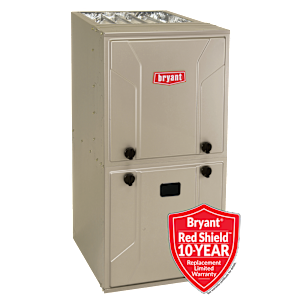
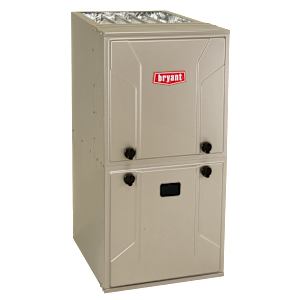
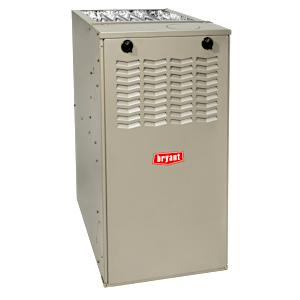
Whether your home demands the advanced, variable-speed precision of the Evolution™ 98 Gas Furnace or the dependable reliability of the Legacy™ Line, Bryant offers a solution designed for your needs. Variable-speed operation is better suited for homes requiring precise, energy-efficient temperature control, while single-stage operation works best when minimizing upfront costs is the priority.
With high AFUE ratings and robust warranties—including a 10-year parts limited warranty upon timely registration—Bryant furnaces are an investment in quality that lasts.
“Bryant’s equipment continues to improve in energy efficiency rankings, noise level reductions, and overall quality of performance, keeping our customers satisfied,” Frause said. “Not only is Bryant equipment the best of the best, but they back it with their own limited warranty to protect how long your furnace lasts should any furnace parts need replaced within 10 years of their equipment registration.
| Category | BEST – EVOLUTION® SYSTEM | BETTER – PREFERRED™ SERIES | GOOD – LEGACY™ LINE |
| Energy Management | Modulating Operation (987M)
Our highest efficiency models make subtle 1% adjustments up and down as conditions change to deliver comfort with much higher precision than standard or two-stage models. Two-Stage Operation (987T & 986T) Automatically chooses between low and high settings to maintain more consistent temperature and efficient operation. |
Two-Stage Operation (927T & 926T)
Automatically chooses between low and high settings to maintain more consistent temperature and efficient operation. Single-Stage Operation (926S) Helps keep operating costs low all season long. |
Single-Stage Operation (912S & 916S)
Helps keep operating costs low all season long. |
| Humidity Management | Perfect Humidity® Technology
This proprietary feature leverages multi-speed systems to enhance humidity removal. SmartEvap™ Technology Reduces indoor humidity by reducing the amount of condensate reintroduced into the air after dehumidification cycles. |
SmartEvap™ Technology
Reduces indoor humidity by reducing the amount of condensate reintroduced into the air after dehumidification cycles. |
Basic Humidity Management
Provides basic humidity removal during cooling operation. |
| Comfort Management | Evolution Connex™ Control
Our most advanced Wi-Fi®-enabled control. It can maximize efficiency by communicating with components of a complete Evolution® system. Communicating Variable-Speed Blower Communicates with the system to automatically adjust airflow, maintaining outstanding comfort through consistent temperatures and advanced humidity management. |
ecobee for Bryant Smart Thermostat
Wi-Fi-enabled smart thermostat learns your schedule for greater efficiency and comfort. Variable-Speed Blower Increased speed options allow for optimized airflow at installation and improved humidity control for excellent comfort. |
Bryant Smart Thermostat
Wi-Fi-enabled smart thermostat that offers convenient and connected comfort control. Fixed-Speed Blower Traditional, reliable performance. |
Schedule A Furnace Installation Appointment With A Bryant Dealer
By choosing a local Bryant dealer, you can trust that your furnace installation will be handled by a professional trained to deliver exceptional furnace service. Schedule an appointment with a Bryant Factory Authorized Dealer near you to get started with your furnace installation and to find out how much is a new furnace. When searching for furnace installers near me, Bryant is a great choice.
Compare Bryant Furnaces
Choose a Bryant furnace for reliable, efficient heating that keeps your home comfortable throughout the winter. Known for their durability and advanced technology, Bryant furnaces offer quiet operation, precise temperature control, and energy-saving features like variable-speed motors and two-stage heating. With a range of models to suit different home sizes and needs, Bryant furnaces are built to last and come with industry-leading warranties, providing peace of mind and long-term value for your home heating system.
Furnace Installation FAQs
Installation costs typically range from $2,000 to $14,200, depending on the furnace type, efficiency, and home size.
No. Furnace installation involves gas, electrical, and venting connections that require professional training and code compliance.
Most replacements take one day, though complex installations may take longer.
Yes, qualifying high-efficiency models may be eligible for federal tax credits or local utility rebates.
An incorrectly sized furnace will lead to inefficient heating, frequent on-and-off cycling, and predictably higher energy bills. Professional load calculations ensure your system is perfectly matched to your home's unique requirements.
Modern advanced furnaces can seamlessly integrate with superior air filtration and humidity control systems to capture indoor pollutants, helping your family breathe cleaner, healthier air.
Look for a licensed and insured HVAC contractor with positive customer reviews, proper certifications, and experience installing your type of furnace. Compare multiple quotes, ask about warranties, and choose an installer who performs a load calculation to ensure your new furnace is properly sized for your home.
Learn More About Furnaces
- Discover what is a heat pump vs furnace
- Explore what is a furnace
- Understand natural gas furnaces
- Explore types of furnaces
- Understand gas vs electric furnaces
- Understand the ins and outs of a furnace tune-up
 1 The limited warranty period is five years if not registered within 90 days except in jurisdictions where warranty benefits cannot be conditioned on registration will automatically receive a 10-year unit furnace replacement limited warranty. See limited warranty certificate at Bryant.com for complete details and restrictions.


