About The Author: Travis Baugh is a Digital Brand Marketing Manager for Bryant, where he creates clear, helpful content to guide homeowners through heating, cooling, and indoor air quality decisions. His goal is to empower readers with the knowledge they need to choose the right comfort solutions for their home—confidently and comfortably.
HVAC Replacement: A Guide to Upgrading Your Home Comfort
By Travis Baugh
HVAC replacement is the process of removing an outdated or malfunctioning heating and cooling unit and installing a modern, energy-efficient system. A successful HVAC replacement restores everyday reliability, enhances indoor air quality, significantly reduces energy bills, and integrates smart home technology for superior, customized comfort control.
Bryant's innovative solutions are centered on customer needs—keeping homeowners comfortable and in control of their home health. Schedule professional HVAC replacement with your local Bryant dealer.
Is It Time for an HVAC Replacement?
It is typically time for an HVAC replacement when your current system is 10 to 15 years old, requires frequent repairs, or causes sudden, unexplained spikes in your monthly energy bills. Knowing the warning signs early empowers you to take action and can prevent the need for emergency HVAC repair during extreme weather.
Most traditional HVAC systems have a lifespan of 10–15 years. If your equipment is approaching this age or struggles to maintain consistent temperatures, it is likely time to schedule a professional assessment.
Key Indicators You Need a New System
- Age of Equipment: Most systems last 10–15 years. If yours is approaching this milestone, its operational efficiency is likely declining rapidly. Learn more about how long HVAC systems last.
- Rising Energy Bills: A sudden spike in utility costs without a change in usage often signals that the system is working overtime to maintain your desired temperature.
- Frequent & Costly Repairs: If you are constantly calling a technician, or if a single HVAC repair approaches 50% of the cost of a new unit, replacement is the smarter, more forward-looking financial move.
- Inconsistent Comfort: Hot and cold spots, high humidity, or weak airflow indicate the system can no longer keep up with your home's unique demands.
- Excessive Noise: Grinding, squealing, or banging sounds often point to severe internal wear or loose mechanical components.
Not sure whether to repair or replace? The $5,000 rule offers a practical starting point: multiply your system's age by the estimated repair cost. If the total exceeds $5,000, replacement is typically the smarter financial move.
What Are the Benefits of Replacing Your HVAC System?
Upgrading your HVAC system delivers unmatched energy efficiency, superior indoor comfort through zoned control, smart home integration, and eco-friendly performance. Investing in a new HVAC system is about more than just temperature control—it is an investment in your home's future and your family's daily well-being. Modern technology transforms how you experience comfort, offering a seamless blend of efficiency and innovation.
1. Unmatched Energy Efficiency
Newer systems utilize advanced technology, such as variable-speed motors, to operate more efficiently. By upgrading to a unit with a high SEER2 (Seasonal Energy Efficiency Ratio), EER2 (Energy Efficiency Ratio), HSPF2 (Heating Seasonal Performance Factor) or AFUE (Annual Fuel Utilization Efficiency) you can significantly lower your monthly heating and cooling bills while reducing your carbon footprint.
2. Superior Indoor Comfort
Advanced systems offer zoned heating and cooling, ensuring every room stays comfortable regardless of the season—ending the hot and cold spots that aging systems can no longer correct.
3. Smart Home Integration
Integrating a smart thermostat allows homeowners to adjust schedules, monitor energy usage, and receive maintenance alerts directly on their smartphone—from anywhere.
4. Eco-Friendly Performance
New systems often use Puron Advance™ refrigerant, also known as R-454B, which has a lower global warming potential than outdated refrigerants like R-22 or R-410A. This shift supports a healthier planet while ensuring compliance with modern environmental standards.
“There’s so much cool technology in modern HVAC systems, and some really great options for homeowners,” Samantha Houchin, owner of The Weather Changers in Denver, Colorado, said. “You can solve those problem spots and finally feel comfortable in your home. Your upstairs doesn’t have to be hot in the summer.”
How To Choose The Right HVAC System
The best HVAC system for your home depends on more than just square footage. Choosing the right equipment requires considering your home's size, local climate, energy source, budget, and long-term comfort goals. A properly selected and professionally sized system can improve efficiency, lower utility bills, and provide more consistent indoor comfort.
When comparing HVAC systems, keep these factors in mind:
- Choose the right size. An oversized system can short cycle and leave excess humidity behind, while an undersized system may run continuously and struggle to maintain the desired temperature. A qualified HVAC contractor should perform a Manual J load calculation to determine the correct capacity for your home.
- Consider your climate. Heat pumps are an excellent choice for mild and many cold climates thanks to advances in cold-climate technology, while homes in regions with long, harsh winters may benefit from a high-efficiency gas furnace or a dual fuel system.
- Compare fuel types. Gas furnaces typically offer powerful heating where natural gas is available. Electric heat pumps provide both heating and cooling in one system with high efficiency, while dual fuel systems combine the benefits of a heat pump and gas furnace for year-round performance.
- Look beyond the purchase price. Higher-efficiency systems often cost more upfront but can reduce monthly energy bills and may qualify for rebates.
- Think about future needs. Upgrading to a complete matched system can improve comfort, efficiency, and warranty coverage compared to replacing only one piece of equipment.
The right HVAC system isn't necessarily the biggest or most expensive; it's the one that's properly sized, professionally installed, and matched to your home's heating and cooling needs. An experienced HVAC contractor can evaluate your home and recommend the best solution based on your climate, energy costs, and comfort preferences.
How Much Does HVAC Replacement Cost?
The average cost of HVAC replacement ranges from $5,000 to $25,000, depending heavily on the size of your home, the system's capacity, efficiency ratings, and installation complexity. Understanding these cost drivers helps homeowners budget effectively for this long-term investment.
- System Capacity: Larger homes require units with higher BTUs, which increases the upfront price.
- Efficiency Levels: High-efficiency units cost more initially but deliver greater long-term savings on energy bills.
- System Type: Costs differ between type of HVAC systems. Combining a furnace and air conditioner, a heat pump, a ductless mini split system, a geothermal heat pump, and a packaged system all have different costs.
- Additional Components and Upgrades: Adding extras such as an air purifier, UV light, humidifiers, or dehumidifiers can increase the overall system cost but improve indoor air quality and comfort.
- Installation Complexity: Geographic location, local labor rates, and necessary ductwork modifications all influence the final quote.
Houchin advises homeowners to explore every available option for managing upfront costs:
“Looking into rebates and financing can help open up the number of systems you can realistically afford,” Houchin said.
For a detailed cost breakdown by system type, visit Bryant's HVAC pricing guide.
What to Expect During Installation
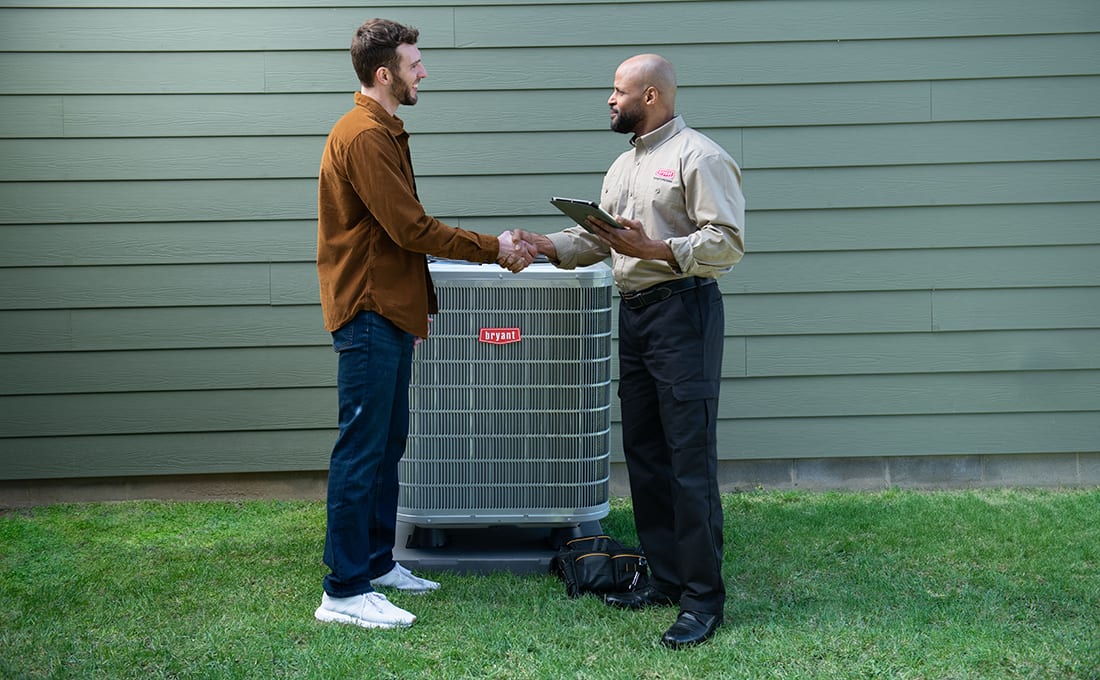
During an HVAC replacement, a certified technician will assess your home's layout, help select the ideal system, safely remove the old unit, and professionally install and test the new equipment. Most standard HVAC replacements are completed within one full day, though complex installations may require two.
Understanding the HVAC installation process builds confidence and eliminates guesswork. Here is what the process looks like step by step:
- Consultation: A local Bryant dealer assesses your home’s layout and your specific comfort needs.
- Selection: You choose a system that balances budget, efficiency, and capacity.
- Installation: Professionals remove the old unit, install the new equipment, and perform rigorous testing to ensure optimal performance.

HVAC Replacement by System Type
Different HVAC systems have different replacement costs, installation timelines, and ideal applications. The table below provides a quick comparison to help you understand what to expect when replacing the most common residential HVAC systems.
| System Type | Typical Replacement Time | Best for | ||
| Air Conditioner | 1 day | Homes with an existing furnace that only need cooling | ||
| Gas Furnace | 1 day |
|
||
| Heat Pump | 1-2 days |
|
||
| Dual Fuel System | 1-2 days |
|
||
| Geothermal Heat Pump | Several days |
|
Schedule HVAC Replacement With A Bryant Dealer
Your local Bryant dealer is dedicated to providing top-notch HVAC service and helping you find the perfect HVAC system for your home. Contact your local Bryant dealer today to schedule your initial consultation and start your HVAC replacement journey! Read our in depth articles about AC replacement, heat pump replacement, and furnace replacement for specifics on replacing these three popular types of HVAC systems.
HVAC Replacement FAQs
The $5,000 rule helps determine whether to repair or replace an HVAC system—multiply the unit’s age by the repair cost, and if the total exceeds $5,000, replacement is usually the smarter choice.
Most HVAC systems should be replaced every 12 to 20 years, depending on the type of system, usage, and how well it's maintained.
The spring and fall are typically the cheapest times to replace HVAC systems, as demand is lower and contractors may offer seasonal discounts or promotions.
Replacing HVAC means removing your existing heating and cooling equipment and installing a new, more efficient system for improved comfort and reliability.
Steps typically include an in-home assessment, equipment selection, removal of old units, professional installation, testing, and system calibration.
HVAC replacement costs generally range from $5,000 to $12,000, depending on system size, efficiency, and installation complexity.
Most HVAC systems last 10–20 years with proper maintenance and timely repairs.
Frequent breakdowns, rising energy bills, uneven comfort, or systems over 15 years old often signal it’s time to consider replacement.
A standard HVAC replacement usually takes one full day, though complex installations may require two days.
Yes, installing a new, energy-efficient HVAC system can increase your home's resale value and make the property more attractive to potential buyers by assuring them of modern reliability and lower energy costs.
While you can replace just the AC, it is highly recommended to replace both the AC and furnace at the same time to ensure system compatibility, maximize energy efficiency, and avoid future mismatched equipment failures.
Repair is better suited for systems under 10 years old with isolated, low-cost issues, while replacement is the smarter choice when a system is over 15 years old, requires repeated repairs, or when repair costs approach 50% of the price of a new unit.
Learn More About HVAC
- Check out our HVAC pricing guide
- Understand HVAC zoning systems
- Explore HVAC options for old houses
- Discover the importance of HVAC maintenance
- Read our guide on what is HVAC?