About The Author: Travis Baugh is a Digital Brand Marketing Manager for Bryant, where he creates clear, helpful content to guide homeowners through heating, cooling, and indoor air quality decisions. His goal is to empower readers with the knowledge they need to choose the right comfort solutions for their home—confidently and comfortably.
What Is a Natural Gas Furnace?
By Travis Baugh
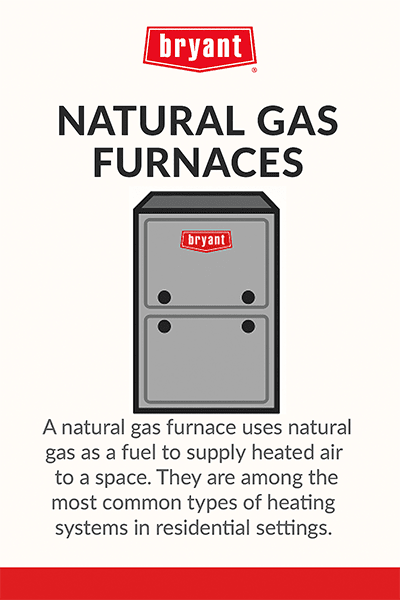
A natural gas furnace is a forced-air heating system that burns natural gas to generate heat, which is then circulated through your home's ductwork. Known for their reliability and ability to produce high temperatures quickly, these systems are a premier choice for homeowners seeking consistent warmth and long-term energy efficiency.
How Does a Natural Gas Furnace Work?
A natural gas furnace operates through a precise, continuous cycle to deliver warm air to every room in your home.
- Ignition: When the thermostat calls for heat, natural gas flows to the burners and is ignited.
- Heat Exchange: The burning gas heats the heat exchanger, a metal component that separates combustion gases from the breathable air.
- Air Circulation: A blower fan pushes cool household air over the hot heat exchanger.
- Distribution: The warmed air travels through the air ducts to vents throughout your home, while combustion exhaust is safely vented outside.
This process ensures your home reaches the desired temperature quickly, even during the coldest winter spikes. Understand gas vs electric furnaces
How Do I Choose the Right Natural Gas Furnace?
Choosing the right natural gas furnace requires balancing efficiency, size, and budget to meet your home's specific comfort needs. Key factors to consider include your home's size, local climate, and desired energy savings.
“Energy efficiency, size of the home, warranty coverage, budget, and compatibility with existing ductwork system are all important things to consider when looking for a new natural gas furnace,” Melissa Frause, owner of Bob’s Heating and Air Conditioning in Woodinville, WA, said.
1. Size and Capacity
Correct sizing is vital. A furnace that is too small won't keep up with demand, while an oversized unit will cycle on and off frequently, wasting energy and causing temperature swings. Your local Bryant dealer will perform a load calculation based on your home’s square footage and insulation to ensure a perfect fit.
2. AFUE Rating (Energy Efficiency)
The Annual Fuel Utilization Efficiency (AFUE) rating measures how much fuel your furnace converts into usable heat. Modern high-efficiency furnaces have AFUE ratings of 90% or more, with some advanced Bryant models reaching up to 98.5%. A higher rating is especially beneficial in colder climates.
3. Types of Natural Gas Furnaces?
There are three main types of natural gas furnaces, each offering different levels of efficiency and comfort control.
- Single-Stage Furnace: Operates at one fixed, high-capacity setting. It runs at full power or is off, which can sometimes lead to temperature fluctuations. This is typically the most budget-friendly option upfront.
- Two-Stage Furnace: Features two settings—low and high. It primarily runs on the lower, more energy-efficient setting to maintain a consistent temperature and only switches to high power when needed during very cold weather.
- Modulating Furnace: Delivers the most precise temperature control by adjusting its heat output in very small increments. This ensures even, consistent temperatures and the highest energy efficiency, leading to the lowest heating bills over time.
“A homeowner should never have to figure it all out on their own,” Frause said. “A sales representative will assess each customer’s home to ensure they are offered the best options for their specific home design, budget, and comfort needs.”
Maintenance and Troubleshooting
Protecting your investment with regular furnace maintenance ensures your system operates safely and efficiently for its full lifespan (typically 15–20 years).
DIY Maintenance:
- Replace the Air Filter: Check and replace your furnace filter regularly, typically every three months. A clogged filter restricts airflow and hurts efficiency.
- Check Thermostat: Ensure batteries are fresh and settings are correct.
Professional Maintenance Tasks:
A local Bryant dealer can perform these tasks during a scheduled maintenance visit:
- Clean the blower assembly to maintain proper airflow.
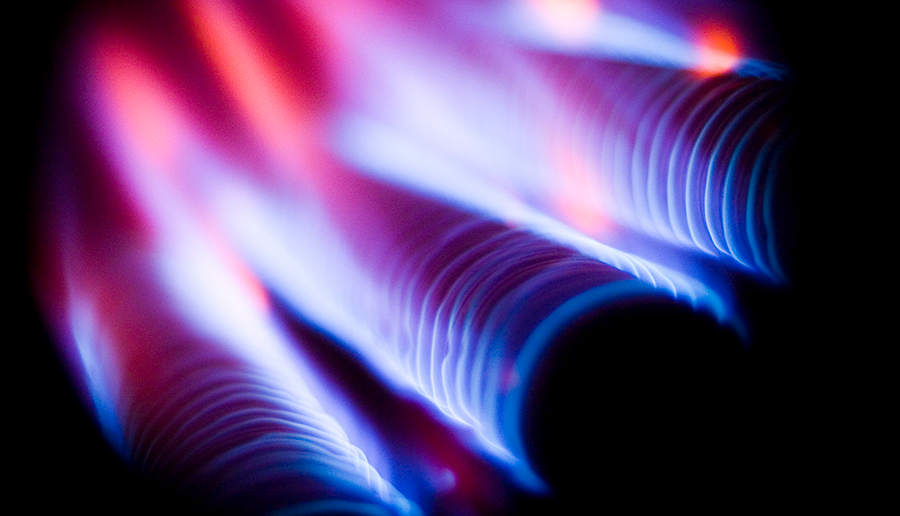
- Inspect burner flames to ensure proper combustion (flames should be steady and blue).
- Check and clear the outdoor vent pipe of any obstructions.
What Are Common Natural Gas Furnace Issues?
Even with regular maintenance, you may encounter some common problems. Here are a few furnace troubleshooting tips:
- Furnace Not Producing Heat: Check that your thermostat is set to "heat" and the temperature is set correctly. Also, verify that the furnace's circuit breaker has not been tripped.
- Frequent Cycling: If the furnace turns on and off too often, it could be due to a dirty air filter or a faulty flame sensor.
- Unusual Noises: Rattling or banging sounds may indicate a problem with the blower motor or other internal components. Contact a professional for furnace inspection and furnace repair
Why Choose A Bryant Evolution™ Natural Gas Furnace?
- Maximize Savings: Achieve up to 98.5% AFUE, helping you save on winter heating bills.
- Consistent Comfort: Our systems automatically adjust to changing conditions, reducing temperature swings.
- Easy-to-Use Control: Manage your home's comfort via a full-color touch screen, mobile app, or voice commands.
- Long-Term Reliability: Bryant Evolution furnaces come with a ten-year furnace parts limited warranty and a lifetime heat exchanger limited warranty upon timely registration.
Explore Bryant Furnaces
Choose a Bryant furnace for reliable, efficient heating that keeps your home comfortable throughout the winter. Known for their durability and advanced technology, Bryant furnaces offer quiet operation, precise temperature control, and energy-saving features like variable-speed motors and two-stage heating. With a range of models to suit different home sizes and needs, Bryant furnaces are built to last and come with industry-leading warranties, providing peace of mind and long-term value for your home heating system.
“Bryant’s equipment continues to improve in energy efficiency rankings, noise level reductions, and overall quality of performance, keeping our customers satisfied,” Frause said. “Not only is Bryant equipment the best of the best, but they back it with their own limited warranty to protect the lifespan of a customer’s purchase should any parts need replaced within 10 years of their equipment registration.”
1 When connected to the Internet through a Wi-Fi® network
2 Voice command requires using Amazon™ Alexa™ smart skills.
3 The limited warranty period is five years and 20 years on the heat exchanger on parts if not registered within 90 days. Jurisdictions where warranty benefits are not conditioned on registration will automatically
receive a 10-year parts limited warranty and lifetime heat exchanger warranty. See warranty certificate at bryant.com for complete details and restrictions.
4 Unit replacement limited warranty is not available to subsequent owners. The limited warranty period is five years if not registered within 90 days except in jurisdictions where warranty benefits cannot be
conditioned on registration will automatically receive a 10-year unit replacement limited warranty. See limited warranty certificate at Bryant.com for complete details and restrictions.
Natural Gas Furnace FAQs
You should consider replacing a natural gas furnace every 15 to 20 years, or sooner if it becomes inefficient, unreliable, or costly to repair.
The average cost of a new natural gas furnace ranges from $3,800 to $12,000 installed, depending on the brand, efficiency rating, and installation complexity.
A well-maintained natural gas furnace typically lasts 15 to 20 years, though lifespan depends on your local climate, usage rates, and maintenance history.
It’s a heating system that burns natural gas to heat air, which is then distributed throughout the home via ducts.
No. Without gas, the burners cannot ignite, though the blower or fan may still operate.
On average, a home of that size may use 50–100 therms per month during peak heating season, depending on climate and insulation.
The installed cost typically ranges from $3,800 to $12,000. This varies based on the unit's efficiency (AFUE), size, and the complexity of the installation in your home.
No. Furnace installation involves gas lines, high-voltage electricity, and venting dangerous exhaust gases. It must be performed by a licensed professional to ensure safety and warranty compliance.
Learn More About Furnaces
- Find out what is a propane furnace
- Explore what is a furnace
- Find out how long does a furnace last
- Explore types of furnaces
- Discover the differences between a furnace vs boiler
- Explore down flow furnaces


