About The Author: Travis Baugh is a Digital Brand Marketing Manager for Bryant, where he creates clear, helpful content to guide homeowners through heating, cooling, and indoor air quality decisions. His goal is to empower readers with the knowledge they need to choose the right comfort solutions for their home—confidently and comfortably.
Gas vs Electric Furnace: Which Heating System is Right for You?
By Travis Baugh
The main difference between a gas and electric furnace is how they generate heat and their associated costs. A gas furnace burns natural gas to produce powerful heat quickly, often resulting in lower monthly utility bills in colder climates. An electric furnace uses resistance coils to warm the air, offering lower upfront installation costs and quieter operation but typically higher monthly operating costs.
Deciding between a gas vs electric furnace is a significant investment in your home’s long-term comfort. This guide breaks down the critical differences in cost, efficiency, and performance to help you make a confident choice.
What is the Difference Between Gas and Electric Furnaces?
While both systems are designed to circulate warm air and maintain a cozy environment, their underlying technology and fuel sources set them apart.
How Gas Furnaces Work
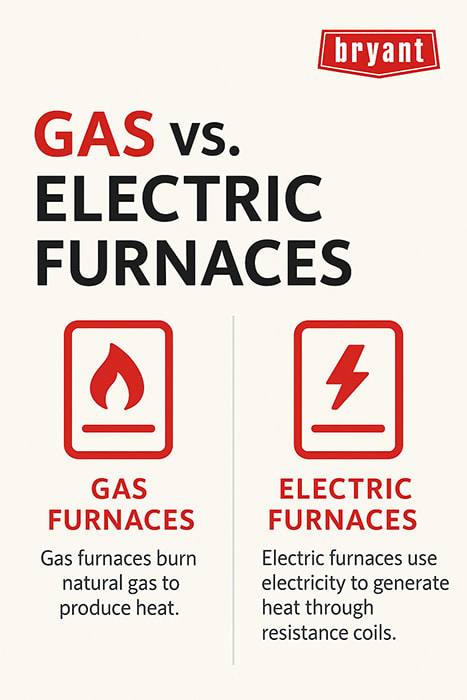
Gas furnaces rely on combustion. A burner ignites natural gas (or propane), creating hot combustion gases that pass through a heat exchanger. Air from your home flows over this exchanger, absorbs the heat, and is circulated back into your rooms. Learn more about what is a furnace.
- Best for: Homes in colder climates requiring powerful, fast heating.
- Requirement: Access to a natural gas line and a venting system.
How Electric Furnaces Work
Electric furnaces operate like a giant toaster. They use electric resistance coils that heat up when current passes through them. A blower fan pushes air over these hot coils and distributes it throughout the home.
- Best for: Moderate climates or homes without access to natural gas.
- Requirement: Sufficient electrical panel capacity (often 200 amps).
Comparing Costs: Gas vs Electric Furnaces
When evaluating electric vs gas furnace costs, you must look at the total cost of ownership: the initial price tag versus what you will pay every month.
Upfront Installation Costs
Electric furnaces are generally more affordable to purchase and install. Their simpler design means fewer components and no need for complex gas piping or venting infrastructure. Conversely, natural gas furnaces typically involve a higher initial investment due to the specialized installation required for combustion safety. Learn more about how much a furnace costs.
Long-Term Operating Costs
For ongoing expenses, natural gas is often the clear winner. In many regions, the cost of natural gas is significantly lower than electricity per unit of heat. Although electric furnaces are technically 100% efficient at converting energy to heat, the higher price of electricity often leads to higher monthly energy bills.
- Gas: Typically lower monthly heating bills; more regular furnace maintenance required.
- Electric: Typically higher monthly heating bills; fewer moving furnace parts leading to the potential for less frequent furnace repair.
Efficiency and Environmental Impact
Efficiency is measured by Annual Fuel Utilization Efficiency (AFUE).
- Gas Efficiency: Modern high efficiency furnaces are marvels of modern engineering, reaching AFUE ratings of up to 98%. This means 98% of the fuel is converted directly into heating comfort.
- Electric Efficiency: Electric furnaces boast a 100% AFUE rating since there is no flue loss. However, environmentally conscious homeowners should consider how that electricity is generated.
If your goal is sustainability, pairing an electric furnace with renewable energy sources (like solar) creates the greenest possible heating solution. Meanwhile, modern gas furnaces use fossil fuels more efficiently than ever before, minimizing waste.

Selecting the Ideal Furnace for Your Home
Choosing the right furnace type depends on your local climate, utility rates, and existing home infrastructure. If your home is already set up for gas, a modern furnace replacement with a high-AFUE unit is often the smartest economic choice. For warmer climates without gas lines, electric heating offers a seamless solution.
Consult a Professional
Don't guess when it comes to long-term comfort. A local Bryant dealer can assess your home's insulation, size, and energy needs to recommend the perfect system. They ensure proper furnace installation and furnace service, preventing common issues that reduce how long a furnace lasts and furnace efficiency. Schedule an appointment with a Bryant dealer today.
Explore Bryant Furnaces
Choose a Bryant furnace for reliable, efficient heating that keeps your home comfortable throughout the winter. Known for their durability and advanced technology, Bryant furnaces offer quiet operation, precise temperature control, and energy-saving features like variable-speed motors and 2-stage heating. With a range of models to suit different home sizes and needs, Bryant furnaces are built to last and come with industry-leading warranties, providing peace of mind and long-term value for your home heating system.
Gas vs Electric Furnace FAQs
It depends on your climate and energy rate.
In most areas, natural gas is cheaper than electricity for heating, making gas furnaces more cost-efficient for long-term operation.
Switching to electric heat may be worthwhile if you're focused on reducing carbon emissions, using renewable energy, or if natural gas prices in your area are high, but upfront costs can be significant.
Yes, but it may require electrical upgrades and new wiring. Electric furnaces can be a good option where natural gas isn’t available.
Your furnace still uses electricity to power the blower and controls, and other appliances or poor insulation can drive electric bills up.
A cracked heat exchanger is a serious issue that often requires professional diagnosis. Symptoms can include soot buildup, a yellow burner flame, strong odors, or water pooling around the furnace base.
High-efficiency furnaces often use variable-speed technology that reduces stress on components by ramping up slowly. This can potentially contribute to a longer lifespan compared to standard single-stage models that cycle on and off abruptly.
Learn More About Furnaces
- Learn how much is a new furnace
- Discover what is a heat pump vs furnace
- Explore what is a furnace
- Find out how long does a furnace last
- Discover the differences between a furnace vs boiler
- Learn about the importance of furnace cleaning


