About The Author: Travis Baugh is a Digital Brand Marketing Manager for Bryant, where he creates clear, helpful content to guide homeowners through heating, cooling, and indoor air quality decisions. His goal is to empower readers with the knowledge they need to choose the right comfort solutions for their home—confidently and comfortably.
What is a 2-Stage Furnace?
By Travis Baugh | Expert Review By Seth Faber - Product Manager, Furnaces
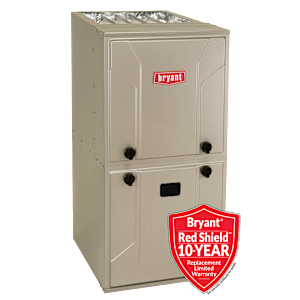
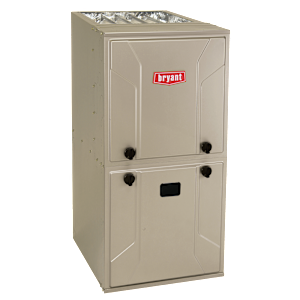
A 2-stage furnace is a heating system that operates at two capacity levels—low and high—to better match your home's heating requirements. According to Bryant, a two-stage gas valve typically operates at about 60% to 65% capacity during mild weather and opens to 100% capacity when more heat is needed. Bryant's Preferred™ 97 927T is a current two-stage gas furnace rated up to 97% AFUE, with a 60,000–120,000 BTUH heating capacity.
Unlike a single-stage furnace that operates at 100% capacity whenever it is running, a Bryant two-stage furnace can spend more time operating at its lower stage before increasing output when heating demand rises. This can provide more consistent heating and airflow than a single-stage system.
How Does a Two-Stage Furnace Work?
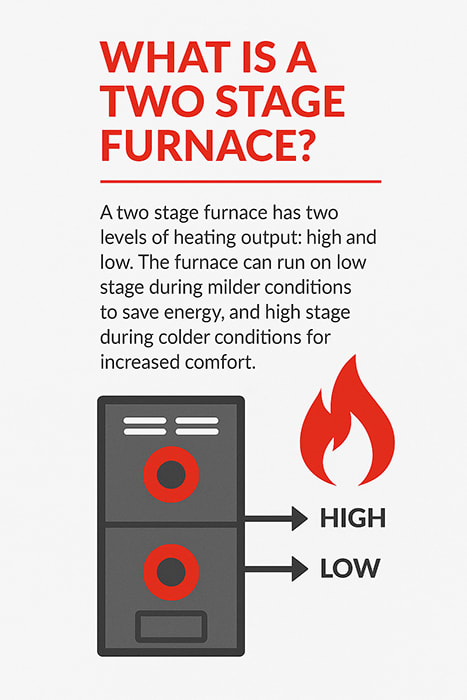
A two-stage furnace functions like a car with two gears, designed to adapt its performance based on the temperature outside rather than running at 100% capacity every time it activates. Bryant describes two-stage operation as a way to provide longer, more consistent heating cycles on low stage for efficiency and comfort.
- The Low Stage (Energy Saver): Bryant places the low stage at approximately 60%–65% capacity for two-stage gas valves, although the exact operating capacity can vary by equipment and application. This "low and slow" approach can provide longer heating cycles and more consistent airflow.
- The High Stage (Power Boost): When outdoor temperatures drop significantly and the thermostat signals that the home needs a rapid boost of heat, the system transitions to its high stage, operating at 100% capacity.
Bryant does not publish a universal percentage of winter runtime that every two-stage furnace spends in low stage, so the actual runtime split depends on outdoor temperature, thermostat settings, home insulation, equipment sizing, and other conditions.
Two-stage operation can also reduce the need for repeated full-output cycles, but it does not establish a guaranteed reduction in component wear or a specific extension of furnace life.
Bryant Two-Stage Furnace Comparison
The following comparison summarizes Bryant's published operating descriptions and current furnace examples. It is a practical comparison, not a proprietary Bryant scoring system.
| Feature | Single-Stage | Two-Stage | Variable-Speed/Modulating |
| Heating capacity | 100% when running | Approximately 60%–65% low stage and 100% high stage for a typical two-stage gas valve | Modulating furnaces can adjust output in smaller increments; blower speed is also continuously variable on some models |
| Operating levels | One | Two | Multiple/modulating levels |
| Heating cycles | Typically shorter, full-output cycles | Longer, more consistent low-stage cycles are possible | Can make smaller output adjustments to closely match heating demand |
| Bryant example | 926S, 912S or 916S | Preferred™ 97 927T or Preferred™ 96 926T | Evolution™ 98 987M |
| Bryant efficiency example | Varies by model | 927T: up to 97% AFUE | 987M: up to 98.5% AFUE |
An important distinction: “two-stage” describes the furnace's heating output levels, while “variable-speed” describes the blower motor's ability to operate at multiple airflow speeds. A furnace can have both technologies. Bryant's 927T, for example, combines two-stage heating with a variable 25-speed, constant-torque ECM blower.
2-Stage vs. Single-Stage: What is the Difference?
The primary difference between these furnace types lies in operational flexibility and comfort control. A single-stage furnace is an "all-or-nothing" machine, while a 2-stage furnace adapts to your environment.
Single-Stage Furnaces
A single-stage furnace has only one setting: full blast. When there is a call for heat, its gas valve opens to deliver its single operating level, typically 100% capacity. It turns on at maximum capacity, heats the house rapidly, and then shuts off. This operating pattern can create more noticeable temperature changes than a system capable of operating at a lower stage.
Two-Stage Furnaces
In contrast, a two-stage furnace can operate at a lower output during periods of moderate heating demand and transition to its higher output when additional heat is needed. Bryant says this two-stage operation allows longer, more consistent heating cycles on low stage for efficiency and comfort.
Key Benefits of Upgrading to a Two-Stage Furnace
Investing in a two-stage heating solution offers potential improvements in your living environment and system operation.
1. Superior Temperature Consistency
Because the system can adjust its output, it can operate at a lower capacity when heating demand is moderate rather than delivering full output every time. This can help reduce temperature swings and provide more consistent comfort.
2. Enhanced Energy Efficiency
Operating at a lower stage can reduce the amount of fuel used during periods when the home does not require full heating output. However, Bryant does not publish a universal percentage of energy savings for two-stage furnaces versus single-stage models, so actual savings depend on equipment efficiency, runtime, climate, sizing, and operating conditions. Learn more about energy efficient furnaces.
3. Quiet Operation
A furnace operating at a lower heating stage can provide less abrupt airflow than a system that immediately operates at full output. Bryant's 927T also uses a variable 25-speed blower and an insulated cabinet for quieter performance.
Bryant does not publish a specific decibel reduction for two-stage operation versus single-stage operation, so a fixed dB savings claim would depend on the equipment and installation.
“Being able to operate in a lower stage means the system uses less energy but will kick into high when temperatures reach too low of a level,” Frause said. "The 2-stage furnaces run much quieter than single-stage, can help save on energy, and provide steady, effective comfort.”
Why Choose a Bryant 2-Stage Furnace?
At Bryant, two-stage technology is used in models designed to provide more consistent heating cycles and temperature control. The current Preferred™ 97 927T, for example, uses a two-stage gas valve, variable 25-speed ECM blower, and Perfect Heat™ technology, and delivers up to 97% AFUE.
Bryant also offers the Preferred™ 96 926T, another two-stage gas furnace rated up to 96.7% AFUE. Both models have a 60,000–120,000 BTUH capacity range and can be converted from natural gas to liquid propane with an accessory kit.
Two-stage and variable-speed technologies serve different functions: the two-stage gas valve controls heating output, while the variable-speed blower motor controls airflow. Together, these technologies can provide longer heating cycles, more consistent airflow, and temperature contr
Choosing Bryant means investing in a future-proof home. You get the innovative technology required to reduce energy consumption without sacrificing the reliability you need during a winter storm. With industry-leading warranties and a reputation for durability, a Bryant system is built to deliver peace of mind for years to come.
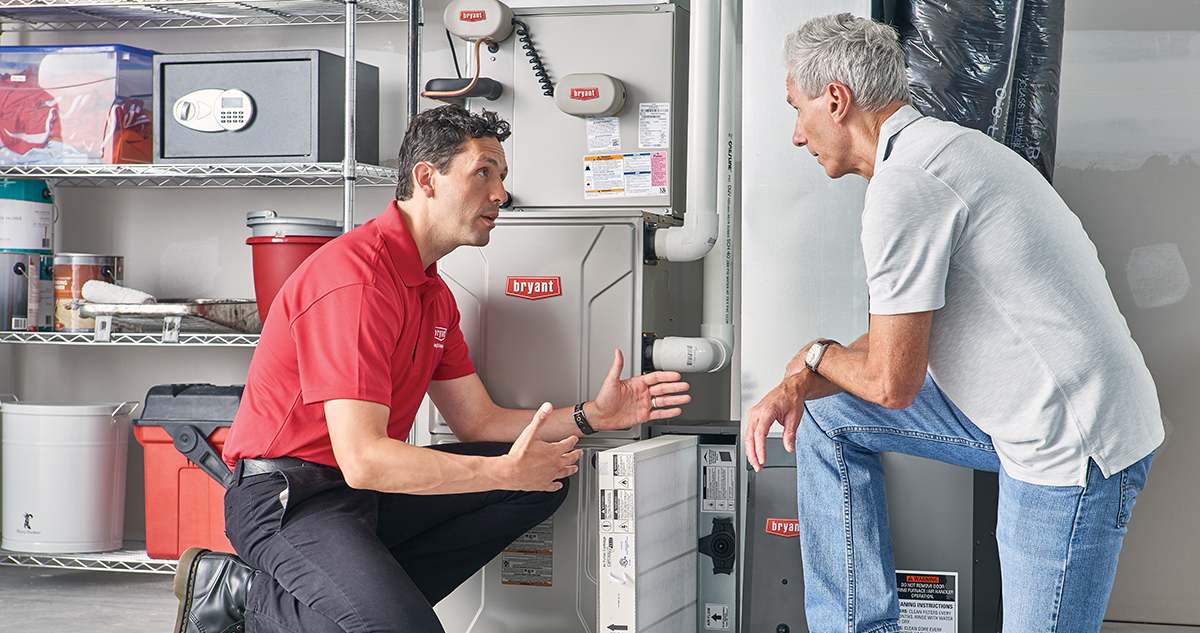
“Bryant has been, and remains to be, the best of the best when it comes to home comfort equipment,” Frause said. “Their team remains well on the forefront of advanced technologies as well as industry standards and regulations, making for a top-tier experience by both dealers and customers alike.”
Work With A Bryant Dealer On The Best Two-Stage Furnace For Your Home
Work with your local Bryant dealer to find the best two-stage furnace tailored to your home's size, layout, and comfort needs. A Bryant dealer will help you choose the right model and determine the appropriate heating capacity based on your home's heating load, insulation, climate, and other factors. They can also ensure professional furnace installation for long-term performance. Schedule an appointment for furnace replacement today.
Explore Bryant Furnaces
Choose a Bryant furnace for reliable, efficient heating that keeps your home comfortable throughout the winter. Known for their durability and advanced technology, Bryant furnaces offer quiet operation, precise temperature control, and energy-saving features like variable-speed motors and two-stage heating. With a range of models to suit different home sizes and needs, Bryant furnaces are built to last and come with industry-leading warranties, providing peace of mind and long-term value for your home heating system.
2-Stage Furnace FAQs
Yes, a compatible two-stage thermostat is recommended to fully control both stages, although some models can self-adjust based on your existing thermostat setup.
A two-stage furnace doesn’t run constantly, but it runs longer at a lower speed, which helps maintain consistent temperatures and help reduce energy use compared to single-stage models.
Yes, a two-stage furnace can potentially be worth it for improved comfort, quieter operation, and energy savings, especially in climates with frequent temperature fluctuations.
A two-stage furnace has two levels of heat output—a low stage for mild days and a high stage for colder days—offering more precise temperature control and better efficiency.
Installed costs range from $4,000 to $12,000, depending on brand and efficiency.
Similar to standard models—around 15 to 20 years with regular furnace maintenance.
They have more complex controls, so furnace repairs can be slightly more expensive, but they generally offer quieter, more efficient operation.
About The Author: Seth Faber serves as Product Manager for Residential Furnaces at Bryant, where he contributes to the development of heating solutions designed for dependable operation and lasting home comfort. His work takes into account homeowner needs, advances in energy efficiency, and evolving industry standards to help support reliable residential heating.
Learn More About Furnaces
- Learn how much is a new furnace
- Explore what is a furnace
- Discover the value of a high efficiency furnace
- Learn the importance of the AFUE furnace rating
- Explore types of furnaces
- Read our guide to furnace service


