About The Author: Travis Baugh is a Digital Brand Marketing Manager for Bryant, where he creates clear, helpful content to guide homeowners through heating, cooling, and indoor air quality decisions. His goal is to empower readers with the knowledge they need to choose the right comfort solutions for their home—confidently and comfortably.
60,000 BTU Furnace Guide: Sizing, Features & Performance
By Travis Baugh | Expert Review By Seth Faber - Product Manager, Furnaces
A 60,000 BTU furnace generally covers about 1,200 to 2,000 square feet, although the appropriate furnace size varies based on climate, insulation, ceiling height, windows, and air leakage. A professional load calculation can help determine the heating capacity your home actually requires.

What size house needs a 60,000 BTU furnace?
a 60,000 BTU furnace generally covers about 1,200 to 2,000 square feet. However, square footage is just one factor; your local climate, insulation levels, ceiling height, windows, and air leakage also play important roles in determining the right furnace siz
Understanding Heating Capacity
BTU (British Thermal Unit) measures heat energy—the higher the rating, the greater the furnace's heating capacity. For example, Bryant estimates that a 2,000-square-foot home may require roughly 60,000 to 120,000 BTUs depending on climate and insulation, illustrating why square footage alone should not determine furnace size.
- Avoid Oversizing: A furnace that is too powerful will cycle on and off frequently (short cycling), leading to wear and tear and uneven temperatures.
- Avoid Undersizing: A unit that is too small will run constantly, struggling to keep you warm during cold snaps.
To ensure efficient performance, it's best to have your local Bryant dealer perform a professional load calculation, such as Manual J, to determine whether a 60,000 BTU gas furnace is appropriate for your home. Learn more about what size furnace you need.

Why choose a Bryant 60,000 BTU furnace?
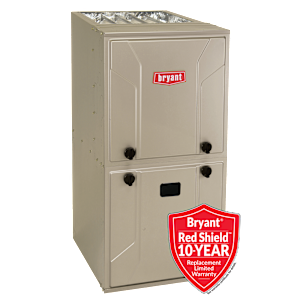
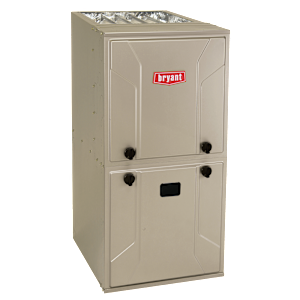
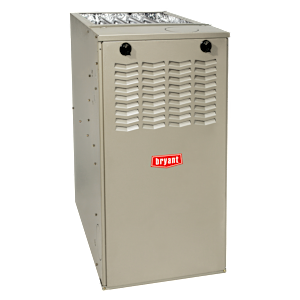
Bryant offers several furnace models with 60,000 BTUH capacity, including the Evolution™ 98 Variable-Speed Modulating Gas Furnace 987M, Preferred™ 97 Two-Stage Gas Furnace 927T, and Legacy™ Multi 18-Speed Gas Furnace 810S. Their specifications range from up to 98.5% AFUE with modulating operation and a variable-speed ECM blower on the 987M, to 97% AFUE with two-stage operation and a variable 25-speed ECM blower on the 927T, and 80% AFUE with single-stage operation and a multi 18-speed ECM blower on the 810S.
Bryant 60,000 BTU Furnace Models
| Bryant model | AFUE | Heating operation | Blower |
| 987M | Up to 98.5% | Modulating | Variable-speed constant-airflow ECM |
| 927T | Up to 97.0% | Two-stage | Variable 25-speed constant-torque ECM |
| 810S | 80% | Single-stage | Multi 18-speed ECM |
The 987M has a 60,000–120,000 BTUH capacity range, the 927T has a 60,000–120,000 BTUH capacity range, and the 810S has a 45,000–135,000 BTUH capacity range.
Efficiency and AFUE
High-efficiency models - measured by AFUE rating - convert more fuel into usable heat, reducing waste and lowering monthly heating bills. Bryant offers high-efficiency furnaces such as the Evolution™ 98 987M, which offers up to 98.5% AFUE.
Advanced Comfort Features
- Modulating Heating: The Bryant 987M uses a modulating gas valve to adjust heating output to match changing heating demand, along with a variable-speed constant-airflow ECM blower.
- Two-Stage Heating: Two-stage gas furnaces operate at a lower, energy-saving capacity most of the time, ramping up only when temperatures drop significantly. This reduces temperature swings and eliminates cold spots. Bryant's 927T uses two-stage operation and a variable 25-speed ECM blower.
- Smart Integration: Pair your furnace with a smart thermostat to control your heating system and, with compatible Bryant equipment and controls, access features such as equipment performance data and maintenance reminders.
- Variable-Speed Airflow: The 987M uses a variable-speed constant-airflow ECM blower, while the 927T uses a variable 25-speed constant-torque ECM blower. These blower technologies can help provide more controlled airflow than a basic fixed-speed blower.
How do I maintain a 60,000 BTU furnace?
Routine furnace maintenance is essential to help maintain safe and reliable operation and preserve system performance.
- Professional Installation: Proper furnace installation ensures correct venting and ductwork connections, which are vital for safety and performance.
- Regular Inspections: Schedule annual furnace inspections to check heat exchangers, burners, and safety controls.
- Filter Changes: Replace furnace filters according to the manufacturer's recommendations and check the filter regularly to help maintain proper airflow and indoor air quality.
Signs your furnace needs attention:
- Rising Energy Bills: A spike in costs often signals declining efficiency.
- Uneven Heating: Cold rooms suggest airflow or capacity issues.
- Unusual Noises: Banging or rattling can indicate mechanical failure.
- Short Cycling: Frequent on/off cycles may mean the unit is struggling to maintain temperature.

Connect With A Bryant Dealer On The Best Furnace For Your Home
A Bryant dealer can help you choose the best furnace for your home based on its heating load, climate, insulation, and comfort needs.. They’ll walk you through efficiency options, the furnace replacement process, and the long-term benefits of upgrading.
A 60,000 BTU furnace can be appropriate for many homes, but the correct capacity should be based on a professional assessment rather than square footage alone. Bryant's current 60,000 BTUH furnace options include the 987M, 927T, and 810S, with different AFUE ratings, heating stages, and blower technologies to accommodate different installation and comfort requirements.
Connect with a local Bryant dealer to get personalized recommendations and a professional quote for furnace cost.
Compare Bryant Furnaces
Choose a Bryant furnace for reliable, efficient heating that keeps your home comfortable throughout the winter. Known for their durability and advanced technology, Bryant furnaces offer quiet operation, precise temperature control, and energy-saving features like variable-speed motors and two-stage heating. With a range of models to suit different home sizes and needs, Bryant furnaces are built to last and come with industry-leading warranties, providing peace of mind and long-term value for your home heating system.
60,000 BTU Furnace FAQs
A 2,000 sq. ft. home usually requires 50,000–75,000 BTUs, but the exact size depends on climate zone, insulation quality, ceiling height, and window efficiency. Your local Bryant dealer can determine the proper furnace size for your home.
The correct BTU size should be determined with a Manual J load calculation performed by your local Bryant dealer, which accounts for home size, insulation, windows, climate zone, and air leakage to accurately match heating demand.
No. BTU output and HVAC “tons” measure different things. A ton represents cooling capacity (1 ton = 12,000 BTUs of cooling), while furnace BTUs measure heating output. A 60,000 BTU furnace is not equivalent to a 5-ton AC.
The cost is influenced by the furnace’s efficiency rating (AFUE), installation complexity, brand, fuel type, necessary venting or duct changes, and local labor rates.
A 60,000 BTU furnace typically costs $ 2,000 - $14,200 installed, depending on efficiency, brand, local labor rates, and additional work like duct modifications or venting upgrades.
About The Author: Seth Faber serves as Product Manager for Residential Furnaces at Bryant, where he contributes to the development of heating solutions designed for dependable operation and lasting home comfort. His work takes into account homeowner needs, advances in energy efficiency, and evolving industry standards to help support reliable residential heating.
Learn More About Furnaces
- Explore what is a furnace
- Learn about furnace repair
- Explore furnace replacement
- Read our guide to furnace parts
- Learn how much is a new furnace
- Read our guide to furnace service


