About The Author: Travis Baugh is a Digital Brand Marketing Manager for Bryant, where he creates clear, helpful content to guide homeowners through heating, cooling, and indoor air quality decisions. His goal is to empower readers with the knowledge they need to choose the right comfort solutions for their home—confidently and comfortably.
What Is A Heat Pump and How Does a Heat Pump Work?
By Travis Baugh | Expert Review By Michelle Notaro - Product Manager, Heat Pumps
A heat pump is an HVAC system that heats and cools your home by transferring heat energy rather than burning fuel to create it. A heat pump can act like an air conditioner in summer, removing heat from your home, and reverse the process in winter to transfer heat from the outdoor air into your home. Because heat pumps transfer existing thermal energy rather than generate heat through combustion, they can provide efficient heating and cooling from one system.
How Does A Heat Pump Work?
Heat pump systems use a continuous refrigeration cycle to transfer thermal energy between the indoors and outdoors. Bryant heat pumps use this process to provide both heating and cooling from the same system.
“A heat pump uses electricity to provide both heating and cooling to a home,” Mike Lea, co-owner of Lea Heating & Air Conditioning in East Dundee, IL, said. “A heat pump transfers heat from one place to another. In the winter, a heat pump transfers heat from the outdoors and moves it inside. In the summertime, it reverses and it moves the heat from indoors to outdoors. In heating mode, a heat pump works like an air conditioner, but in reverse. Instead of using refrigerant to keep your home cool, it uses refrigerant to warm your home.”
What Is the 3-Step Process of Heat Transfer?
Bryant heat pumps use a refrigerant cycle that can be simplified into three key stages: heat absorption, compression and heat distribution. The exact components and controls vary by system.
- Heat Absorption: The outdoor unit in an air-source heat pump absorbs thermal energy from the outdoor air through the refrigerant cycle. Even when outdoor temperatures are below freezing, outdoor air still contains thermal energy that a heat pump can extract.
- Compression: The compressor raises the refrigerant's pressure and temperature, preparing it to release the transferred heat.
- Heat Distribution: The refrigerant carries the transferred heat to the indoor coil, where the heat is released into the home. In cooling mode, the refrigeration cycle reverses and moves heat from indoors to outdoors.
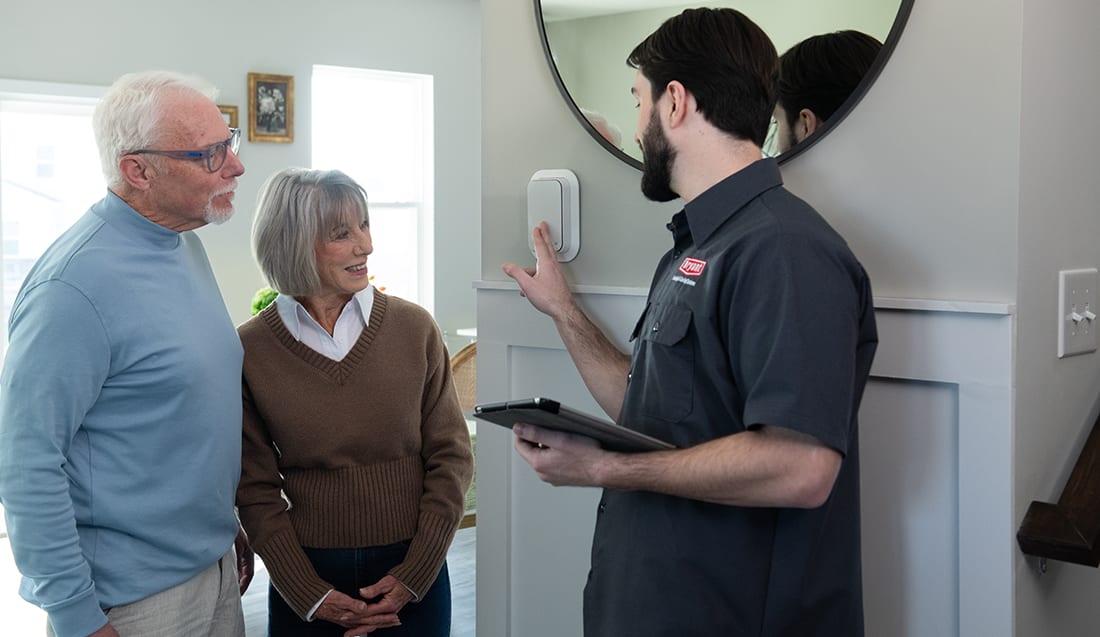
Mark Lea, co-owner of Lea Heating & Air Conditioning in East Dundee, IL, uses a relatable analogy to explain the process.
“When I sit at the kitchen table with a homeowner, I like to use the analogy of a refrigerator,” Lea said. “We do not pump cold air into the refrigerator. Inside the refrigerator, what we do is we take and extract all the heat out of the refrigeration to lower the temperature. That's why you have the kick plate at the bottom of the refrigerator blowing warm air out. And every time you open the door and you leave the refrigerator on too long, the compressor comes on.
It’s just the opposite for a heat pump. We take the warm air that we're sitting here in the kitchen and we put it back into the box.”
What Are the Types of Heat Pumps?
Heat pumps can be classified by the source they use to exchange heat, including air-source and ground-source (geothermal) systems. Ductless mini-split heat pumps are a type of air-source heat pump that uses an outdoor unit connected to one or more indoor units. Understanding their differences can help you choose the best heat pump for your climate, budget, and property.
Air-Source Heat Pumps
Air-source heat pumps are the most common type in North America. Air source heat pumps transfer heat between your home and the outside air. Modern air source heat pumps can provide efficient heating and cooling across a wide range of climates, while cold climate heat pumps are specifically tested for low-temperature performance. ENERGY STAR® cold-climate requirements include performance testing at 5°F.
Ground-Source (Geothermal Heat Pumps)
Geothermal heat pumps take advantage of the relatively stable temperature of the earth or a nearby water source. By transferring heat to and from the ground, geothermal systems can provide consistent heating and cooling performance without relying on outdoor air as the heat source or heat sink.
Ductless Mini Split Heat Pumps
For homes without existing ductwork, ductless mini split heat pumps offer a flexible solution. Mini-splits connect an outdoor compressor to individual indoor air-handling units, allowing for zoned temperature control in specific rooms. They can be useful in additions, older homes, or spaces where installing traditional ductwork is impractical or costly.
Bryant Heat Pump Efficiency and Performance Examples
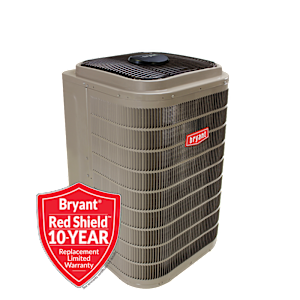
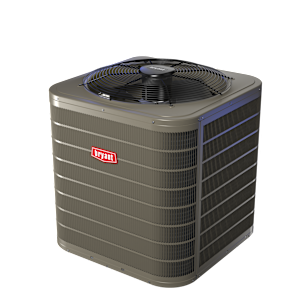
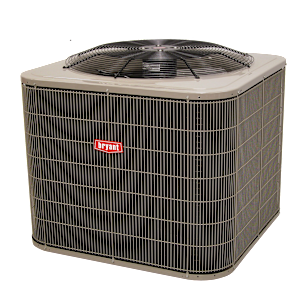
Bryant offers heat pumps across multiple efficiency levels and configurations. The following examples show published performance specifications for three Bryant models:
| Bryant model | Configuration | Cooling efficiency | Heating efficiency | Sound rating |
| 293VAN Evolution™ Extreme | Variable-speed | Up to 23 SEER2 | Up to 10.5 HSPF2 | As low as 53 dB |
| 248TAN Preferred™ | Two-stage | Up to 18.5 SEER2 | Up to 8.5 HSPF2 | As low as 65 dB |
| 235SAN Legacy™ | Single-stage | Up to 16 SEER2 | Up to 8.1 HSPF2 | As low as 70 dB |
What Are the Key Benefits of Installing a Heat Pump?
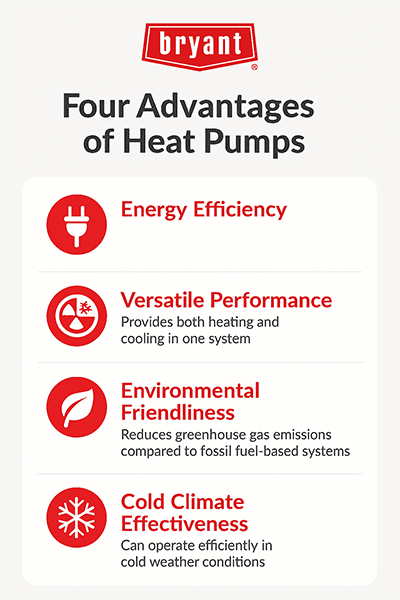
Homeowners are increasingly considering heat pumps because they can provide heating and cooling from one system, efficient electric operation, and cold-weather performance when properly selected for the climate.
- Energy Efficiency: By transferring heat instead of burning fuel, high efficiency heat pumps can significantly lower your energy bills.
- Versatile Performance: A heat pump can provide both heating and cooling in one system, reducing the need for separate heating and cooling equipment.
- Electric Operation: Heat pumps use electricity to transfer heat. When electricity comes from renewable sources, the home's heating and cooling can be powered in part or entirely by renewable energy.
- Cold Climate Reliability: Modern cold climate heat pumps are engineered to perform efficiently in sub-zero temperatures, making them a viable option even in northern regions.
Learn more about heat pump benefits.
Do Heat Pumps Work in Cold Climates?
Yes. Modern heat pumps, particularly cold-climate models, are designed to provide heating at low outdoor temperatures. ENERGY STAR® evaluates cold-climate heat pumps at 5°F, and qualifying systems must meet specific heating-capacity and efficiency requirements at that temperature.
Bryant offers models designed for cold-weather operation. For example, the Bryant 291VAN is designed to maintain 100% heating capacity down to 0°F, while the 290VAN is rated for heating operation down to -11°F.
Actual performance at very low temperatures varies by model, equipment combination, installation and operating conditions.
Connect With a Bryant Dealer On All Things Heat Pumps
Working with your local Bryant dealer ensures that you receive expert guidance and reliable service when it comes to heat pump maintenance and heat pump replacement. Their knowledgeable team can help you choose the perfect advanced system tailored to your unique needs, ensuring optimal efficiency and whisper-quiet comfort. Plus, they offer ongoing support to keep your heat pump running smoothly for years to come. Schedule an appointment with your local Bryant dealer today.
Heat Pump vs. Air Conditioner
While both heat pumps and central air conditioners cool your home using the same refrigeration process, the biggest difference is that a heat pump can both cool and heat, while a standard air conditioner only provides cooling and requires a separate furnace or other heating system for winter.
In terms of cost, heat pumps typically have a higher upfront installation cost than a central air conditioner because they perform two functions in one system. However, they can also reduce annual energy costs in many climates by using electricity to move heat rather than generate it. In moderate climates, a heat pump may provide lower heating costs than electric resistance heat or propane, while homeowners in colder regions often pair a heat pump with a gas furnace for maximum comfort and efficiency.
For homeowners who already have an efficient gas furnace, replacing only the air conditioner may be the most cost-effective option. If you're installing a new HVAC system or want an all-electric heating and cooling solution, a heat pump may offer greater year-round efficiency and long-term energy savings. The best choice depends on your local climate, energy costs, existing equipment, and comfort goals.
Learn more in our dedicated guide on heat pumps vs. air conditioners.
Compare Bryant Heat Pumps
Choose a Bryant heat pump for reliable, energy-efficient heating and cooling all year round. Known for their durability and advanced technology, Bryant heat pumps offer superior comfort while potentially lowering energy costs. With quiet operation and smart features like variable-speed motors, Bryant systems ensure optimal temperature control. Backed by industry-leading warranties and professional heat pump installation from your local Bryant dealer, a Bryant heat pump is a long-term investment in comfort, efficiency, and peace of mind for your home.
Heat Pump FAQs
A heat pump works like an AC in cooling mode, but unlike a standard AC, it can reverse its operation to also provide heating in cooler months.
A heat pump is a two-in-one system that moves heat in or out of your home—pulling heat inside to warm your house in winter and pushing it out to cool it in summer.
Yes, modern heat pumps—especially cold-climate models—work efficiently in winter, even at freezing or subfreezing temperatures, by extracting heat from the outside air.
A heat pump is one part of an HVAC system—it provides both heating and cooling using a single piece of equipment.
Most heat pumps last 10 to 15 years, depending on usage, maintenance, and climate.
Running costs vary by electricity rates and climate, but heat pumps are generally less expensive to operate than oil, propane, or electric resistance heaters because they move heat rather than generate it.
In many climates, a heat pump can fully replace a furnace. In extremely cold regions, some homeowners choose a "dual fuel" system that pairs a heat pump with a gas furnace for backup heat during the coldest days of the year.
Yes, modern heat pumps seamlessly integrate with smart home thermostats, allowing you to easily monitor your energy usage, adjust temperatures remotely, and maximize your home's energy efficiency from your smartphone.
Modern heat pumps are engineered for quiet operation. Advanced models feature variable-speed compressors and sound-dampening technology that make them significantly quieter than older, traditional HVAC systems.
Yes. A properly sized central heat pump can cool an entire home just like a traditional central air conditioner.
A heat pump is an HVAC system that moves heat instead of creating it. It cools your home in summer and reverses operation to provide heat during winter.
Look at your outdoor unit during winter. If it continues operating while your home is heating—and occasionally enters a defrost cycle—you likely have a heat pump. Learn more about how do I know if I have a heat pump?
About The Expert Reviewer: Michelle Notaro is a Product Manager for Residential Air Conditioners at Bryant, helping guide the direction of residential cooling products. She considers changing homeowner priorities, emerging market developments, and regulatory requirements to support air conditioning solutions that address today's comfort and efficiency expectations.
Learn More About Heat Pumps
- Explore heat pump repair
- Read our guide to heat pump cost
- Discover the differences between a heat pump vs furnace
- Learn about 3 ton heat pumps
- Read up on dual fuel heat pumps
- How do I know if I have a heat pump?


