About The Author: Travis Baugh is a Digital Brand Marketing Manager for Bryant, where he creates clear, helpful content to guide homeowners through heating, cooling, and indoor air quality decisions. His goal is to empower readers with the knowledge they need to choose the right comfort solutions for their home—confidently and comfortably.
What Are the Main Types of Heat Pump Systems?
By Travis Baugh
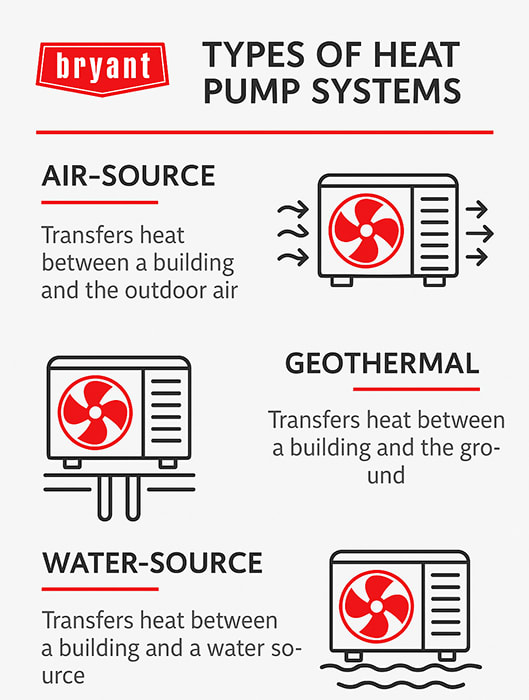
The three main types of heat pump systems systems are air-source, geothermal (ground-source), and air-to-water. Each system is designed to transfer heat rather than generate it, providing a highly energy-efficient solution for year-round heating and cooling that can be tailored to different climates and home layouts.
Heat pump systems represent a visionary cornerstone of modern, energy-efficient home comfort. By understanding the differences between these systems—including ducted and ductless configurations—you can make a confident, future-focused investment in your home’s long-term value and everyday comfort.
How Do Heat Pump Systems Work?
Heat pumps work by transferring heat from an external source—like the air, ground, or water—into your home using a circulating refrigerant. This innovative process is fully reversible, allowing the exact same system to cool your home in the summer by drawing indoor heat and releasing it outside.
Because they move heat rather than burn fossil fuels to generate it, heat pumps deliver significantly more energy than they consume. This leads to a smaller environmental footprint and continuous efficiency that pays for itself through lower heating and cooling bills over time.
Modern advancements have also introduced cold climate heat pumps, engineered to provide reliable warmth even when outdoor temperatures drop significantly. Learn more about what is a heat pump and how heat pumps work.
What Are the Three Main Types of Heat Pumps?
The three primary types of heat pumps are air-source, geothermal, and air-to-water. They are categorized based on where they extract their ambient heat, with each offering unique, powerful benefits for residential heating and cooling.
Air-source heat pumps
Air-source heat pumps extract heat from the outside air and transfer it indoors, making them the most common and versatile system for homes today. This intelligent process works even in cold weather, as a specialized refrigerant absorbs ambient heat and circulates it through the system.
Key Benefits of Air-Source Heat Pumps:
- Energy Efficiency: They can produce up to three times more heat energy than the electrical energy they consume.
- Easier Installation: Compared to other systems, they are simpler and quicker to install, requiring less space.
- Adaptability: Their versatility makes them a popular choice for a wide range of climates and homes.
Geothermal (Ground-Source) Heat Pumps
Geothermal heat pumps use a system of buried pipes to absorb heat from the ground, leveraging the earth's stable underground temperatures for extreme efficiency. A circulating fluid absorbs heat from the ground in the winter and seamlessly dissipates heat back into it during the summer.
Key Benefits of Geothermal Heat Pumps:
- Exceptional Efficiency: These are among the most energy-efficient heating and cooling systems available, leading to major reductions in energy costs.
- Long Lifespan: Geothermal systems often outlast air-source units because their underground components are completely protected from harsh weather elements.
- Quiet Operation: They operate very quietly, enhancing home comfort.
Air-to-Water Heat Pumps
Air-to-water heat pumps extract heat from the outside air and transfer it directly to water, which then circulates through hydronic systems like radiators or in-floor radiant heating. These systems are an innovative solution gaining massive popularity for homeowners seeking low-carbon alternatives to traditional boilers. Thanks to advanced inverter technology, they offer robust performance in cold climates and stand as a key driver of the modern electrification movement.
Understanding these main types of heat pump systems can assist homeowners in selecting the most appropriate option, ensuring year-round comfort and energy efficiency. Learn more about heat pump benefits.
What Is the Difference Between Ducted vs. Ductless Heat Pumps?
Ducted heat pumps distribute conditioned air through a home's existing network of ducts, while ductless mini-split systems use a single outdoor unit connected to individual indoor air handlers for targeted, zoned control.
- Ducted Heat Pumps: Ducted systems are ideal for homes that already have existing ductwork installed. They provide consistent, whole-home heating and cooling by delivering conditioned air to every connected room. However, if your home lacks ductwork, retrofitting can be a more involved and costly process.
- Ductless Mini-Split Systems: Ductless mini-split systems offer exceptional, targeted flexibility. They consist of an outdoor unit linked to one or more sleek indoor units mounted on walls or ceilings. This setup allows for precision zoned heating and cooling, meaning you can control the temperature of individual rooms independently. Installation is notably less invasive, requiring only a small hole in the wall.
Ductless systems often provide greater overall energy efficiency because they eliminate the energy losses that naturally occur through ductwork, keeping your heating and cooling bills as low as possible.
How Do I Choose the Right Heat Pump for My Home?
To choose the right heat pump, evaluate your local climate, the total square footage of your home, your existing insulation, and desired energy efficiency ratings. While an HVAC professional can provide a precise, customized load calculation, always consider these foundational factors:
- Your Local Climate: While heat pumps have always been excellent for moderate climates, new cold climate models perform efficiently even in freezing temperatures, making them a viable and sustainable option for colder regions.
- The Size of Your Home: A system that is too small will run constantly, while one that is too large will cycle on and off too frequently. An HVAC professional should perform a load calculation to determine the correct size for your home.
- Your Home’s Insulation: A well-insulated home retains heat more effectively, maximizing your heat pump's efficiency and reducing energy bills. Consider upgrading your insulation before installing a new system.
- Energy Efficiency Ratings: Look for high SEER2 (Seasonal Energy Efficiency Ratio) and HSPF2 (Heating Seasonal Performance Factor) ratings. Higher ratings mean greater efficiency and lower operating costs over the life of the unit.
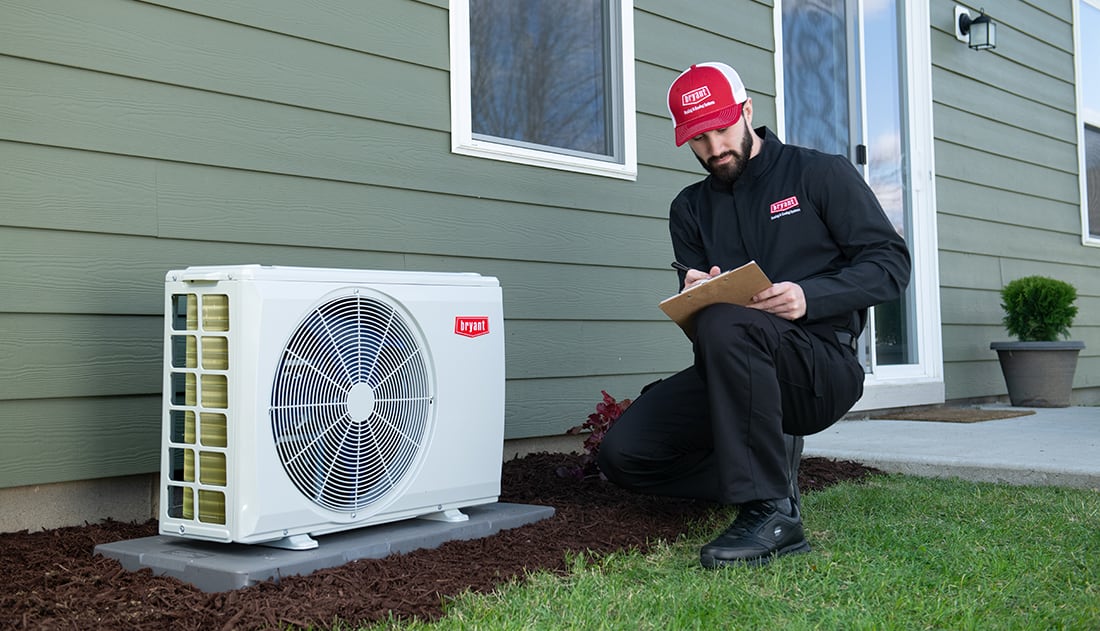
Connect With A Bryant Dealer Today
Choosing the right heat pump is a pivotal decision that impacts your home's comfort, energy bills, and environmental footprint for years to come. At Bryant, we offer a complete range of innovative heat pump systems designed for superior performance and reliability.
Your local Bryant dealer has the expertise to guide you to the perfect solution for your home. Schedule an appointment today to get a quote for heat pump cost and ensure you invest in a system that delivers optimal comfort and efficiency.
Discover Bryant Heat Pumps
Choose a Bryant high efficiency heat pump for reliable, energy-efficient heating and cooling all year round. Known for their durability and advanced technology, Bryant heat pumps offer superior comfort while lowering energy costs. With quiet operation and smart features like variable-speed motors, Bryant systems ensure optimal temperature control. Backed by industry-leading warranties and professional heat pump installation from your local Bryant dealer, a Bryant heat pump is a long-term investment in comfort, efficiency, and peace of mind for your home.
Learn More About Heat Pumps
- Discover the differences between a heat pump vs furnace
- Understand what is an electric heat pump
- Discover what is auxiliary heat
- Learn about heat pump maintenance
- Find out more about heat pump replacement
- Read up on dual fuel heat pumps


